If the engine is underprimed (most likely in cold weather with a cold
engine) it will not fire at all, and additional priming will be necessary.
As soon as the cylinders begin to fire, open the throttle slightly to keep
it running.
After starting, if the oil gage does not begin to show pressure with-
in 30 seconds in the summertime and about twice that long in very cold
weather, stop engine and investigate. Lack of oil pressure can cause
serious engine damage. After starting, avoid the use of carburetor heat
unless icing conditions prevail.
TAXIING.
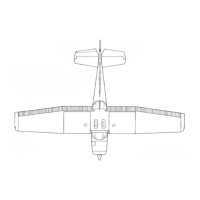
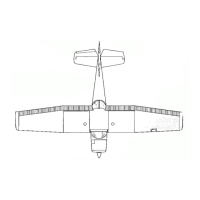
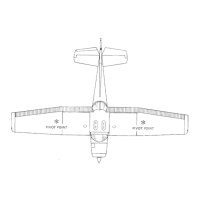
When taxiing, it is important that speed and use of brakes be held to
a minimum and that all controls be utilized (see taxiing diagram, figure
2-5) to maintain directional control and balance.
Taxiing over loose gravel or cinders should be done at low engine
speed to avoid abrasion and stone damage to the propeller tips.
The nose wheel is designed to automatically center straight ahead
when the nose strut is fully extended. In the event the nose strut is over-
inflated and the airplane is loaded to a rearward center of gravity posi-
tion, it may be necessary to partially compress the strut to permit steer-
ing. This can be accomplished prior to taxiing by depressing the airplane
nose (by hand) or during taxi by sharply applying brakes.
BEFORE TAKE-OFF.
WARM-UP.
Most of the warm-up will have been conducted during taxi, and addi-
tional warm-up before take-off should be restricted to the checks out-
lined in Section I. Since the engine is closely cowled for efficient in-flight
cooling, precautions should be taken to avoid overheating on the ground.
MAGNETO CHECK.
The magneto check should be made at 1700 RPM as follows: Move the
ignition switch first to "R" position and note RPM. Then move switch
2-7



 To Next Page