Chapter 2
Cylinder and Components
68 SAFETY FIRST Edition 1 – December 2019
MSA G1 Electronic Breathing Apparatus
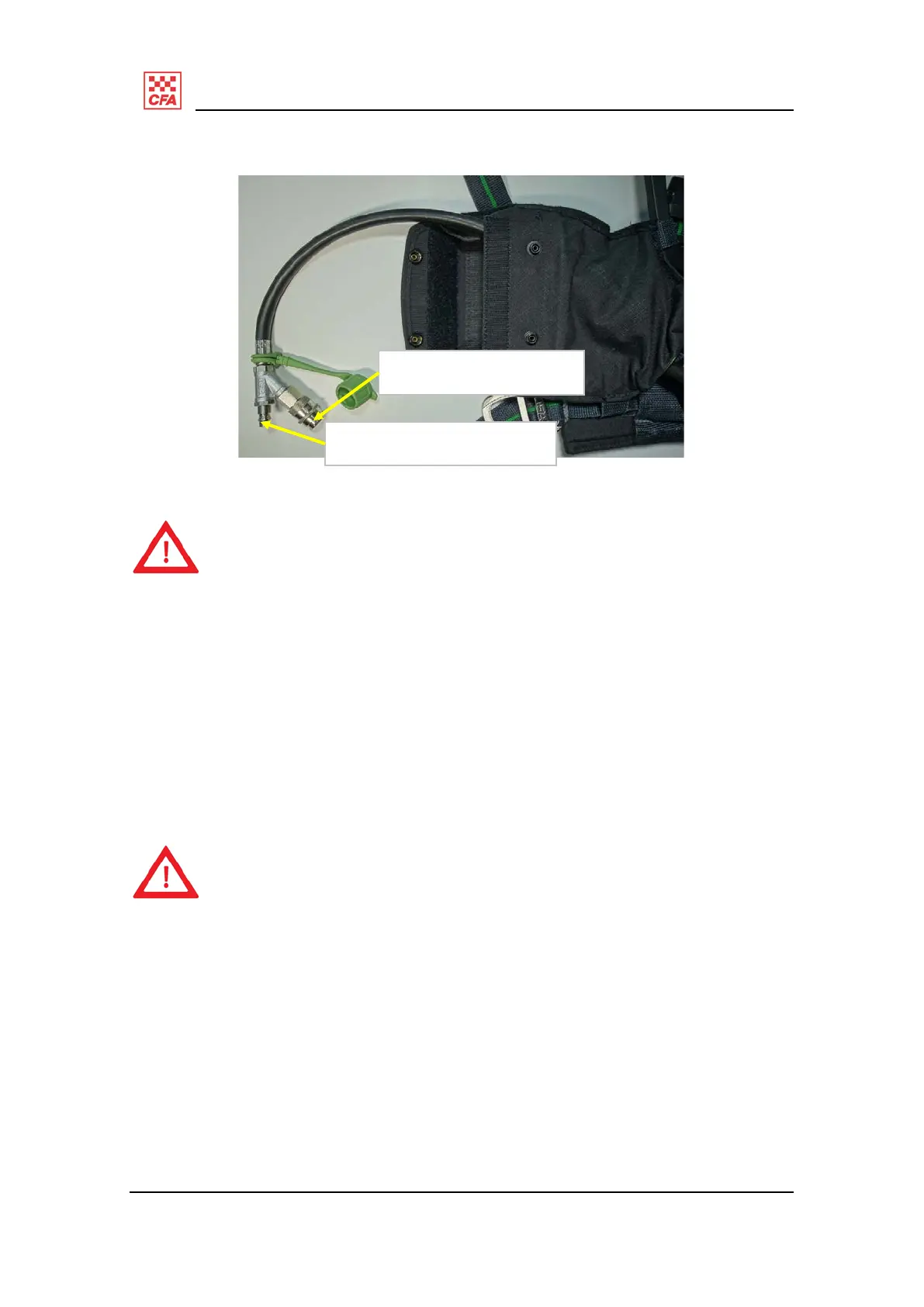
Figure 40: buddy breather
The preferred minimum for the provider of air is 150 bar. The provider
should take control of the buddy breathing procedure.
During buddy breathing, the air will be drawn down from the provider’s cylinder first,
until it reaches the receiver’s cylinder pressure. At the point where the two sets reach
the same pressure, the air will be consumed from both cylinders at an equal rate.
For example, if the provider has 200 bar, and the receiver has 50 bar, then during
buddy breathing, the two users will consume air from the provider’s 200 bar cylinder.
When the pressure on the provider’s cylinder drops below 50 bar, some air will then be
consumed from the receiver’s cylinder until a point where the two cylinders are
contributing equally to air consumption.
Although the provider and receiver’s cylinder pressures have been added
together, the time to empty will be reduced by approximately 50%. If buddy
breathing is initiated, operators
must exit immediately
. If unable to exit
immediately, call for help and remain calm.
Unless being utilised for decontamination purposes or during hazmat
operations the buddy breathing line is a last resort. Through constant
communications, ongoing DRA and situational awareness operators should
not place themselves in a position where the need to use the buddy
breathing line is required.
Male CEJN coupling
Female CEJN coupling


 To Next Page