
 Need help?
Do you have a question about the CFA MSA G1 and is the answer not in the manual?
Discusses the deployment of G1 BA sets and their usage in Victoria.
Provides a high-level overview comparing MSA G1 Classic and G1 Electronic BA models.
Lists supplementary manuals and explains manual icons for user guidance.
Defines terms related to compressed air breathing apparatus used in irrespirable atmospheres.
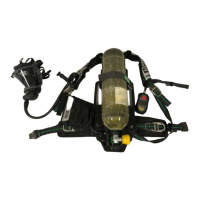
Details the specifications, features, and components of the MSA G1 Electronic BA.
Provides essential safety precautions for using the BA, including training and substance exposure.
Details minimum pressure requirements and BA operation in water conditions.
Explains the cylinder and valve assembly function, parts, and safe working practices.
Explains RFID chips, display, and passive chip functions for asset management.
Lists and describes key components like carrier frame, harness, and lumbar support.
Describes the pressure reducer, its features, and the low pressure warning whistles.
Details the battery, power module, checking status, and charging procedures.
Covers control module features, operation modes, and button functions.
Lists and explains various alarms, warnings, and their visual/audio indications.
Details demand valve, facemask features, HUD, buddy lights, and microphone.
Explains the buddy breather system for shared air and its operational procedures.
Covers operational expectations, PACT check, functional, and visual inspections.
Steps to inspect carrier frame, harness, battery, facemask, demand valve, and control module.
Step-by-step guide to performing functional tests, including battery and system checks.
Steps to check motion and manual alarm functions for operational readiness.
Steps for donning and doffing the flash hood, including safety notes.
Steps for donning the BA and facemask before entering hazardous areas.
Procedures to check the facemask seal and HUD pressure lights for proper fit.
Explains the objective and process of on-scene contaminant management.
Detailed steps for safely doffing the BA after decontamination.
Explains emergency shared air procedures and critical safety considerations.
Details authorised service, BA cleaning, and facemask disinfection.
Steps for disinfecting the facemask using BioGuard® and proper drying techniques.
Covers battery management, charging, performance, and storage guidelines.
 General
| O2 Range | 0-100% |
|---|---|
| Accuracy | +/- 1% |
| Sensor Type | Electrochemical |
| Luminous | No |
| Material | Plastic |
| Operating Temperature | 0 to 50°C |

 To Next Page