CFV Startup Guide
Part No. 750-288 5
1.4 Boiler Water-Side Connections
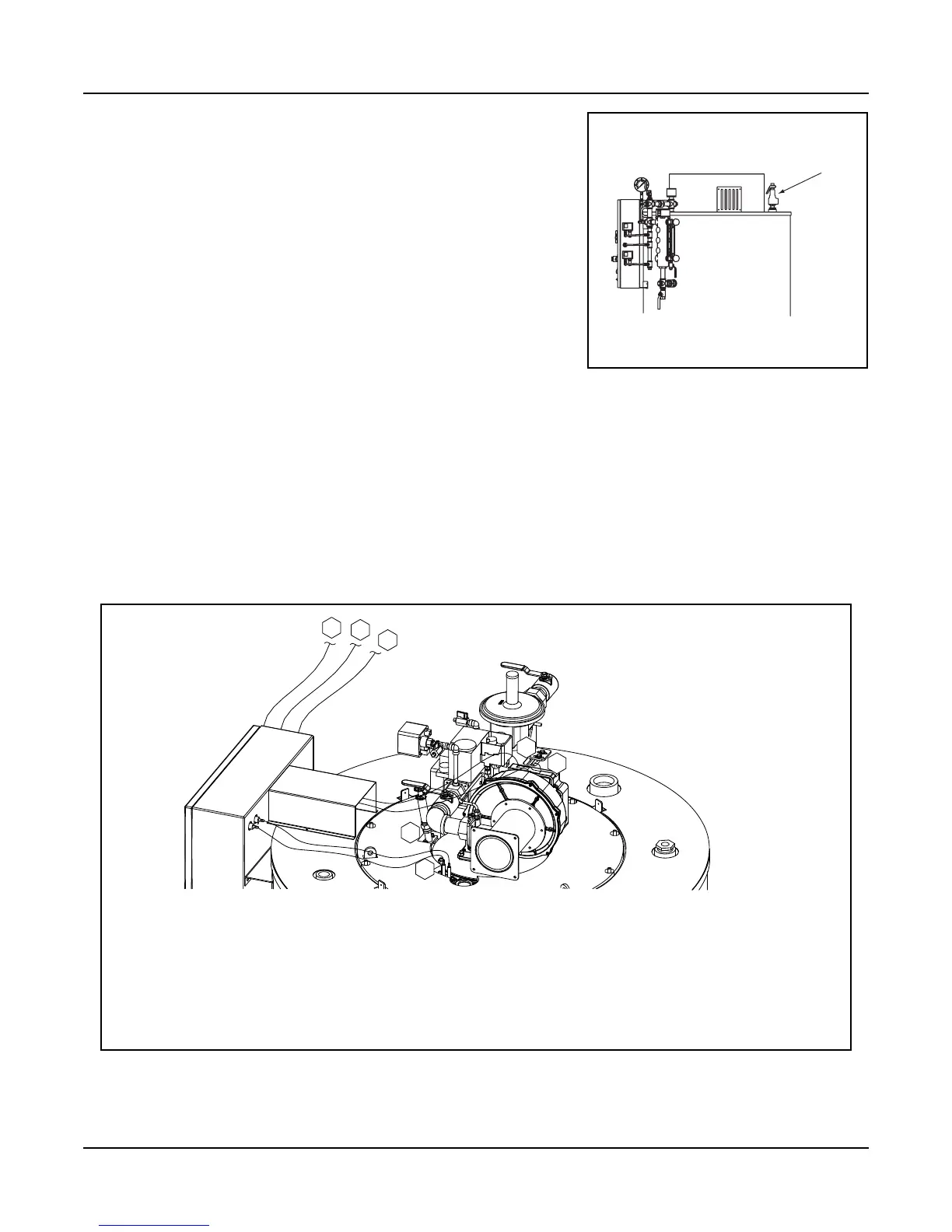
A pressure relief valve (safety valve; Figure 2), provided with the
boiler, must be installed in the mounting provided and piped to a safe
point of discharge. Use pipe sealing compound and a flat sided
wrench when securing the safety relief valve. Do not use a pipe
wrench and do not over tighten the relief valve. The safety valve must
be mounted in a vertical position so that discharge piping and code-
required drains can be properly piped to prevent buildup of back
pressure and accumulation of foreign material around the valve seat
area.
Connection to the main steam header is made at the nozzle projecting
upward from the boiler shell.
Feedwater is introduced through the piping assembly installed on the
side of the boiler vessel.
1.5 Electrical Connections
Refer to Figure 3 for CFV wiring and cable connections. See also wiring diagram on page 13.
A qualified electrician or service technician must make the electrical connections to the boiler; all local
electrical and building codes should be adhered to.
Refer to wiring diagram provided with the boiler or in the CFV manual. Ensure all required customer
connections are properly made. Main power (115 VAC single phase 60Hz) and any remote wiring should be
brought to the left side of the control panel and terminated at the appropriate terminals provided. Controls for
the boiler feed pump (or feedwater valve if applicable) should be wired to control panel terminals 6 and 7.
Figure 3 CFV wiring and cable connections
Safety
Valve
Figure 2 Pressure Relief Valve
5
6
7
1
2
3
4
1. Connect UV Scanner to threaded connection on dry oven
2. Connect spark cables to dual electrode and ignition transformer
3. Plug AC pow er harnes s plug into blower
4. Plug DC blower control harnes s plug into b lower
5. Connect incoming AC power per wiring diagram
6. Connect optional heat request inputs per wiring diagram
7. Connect pump controls per wiring diagram
Notice
The blower signal wiring must be isolated
from the blower power wiring and the
high voltage ignition cables.



 To Next Page