14
English
TERMINAL EVOLUTION
GENERAL INFORMATION AND DEFINITIONS
AIU
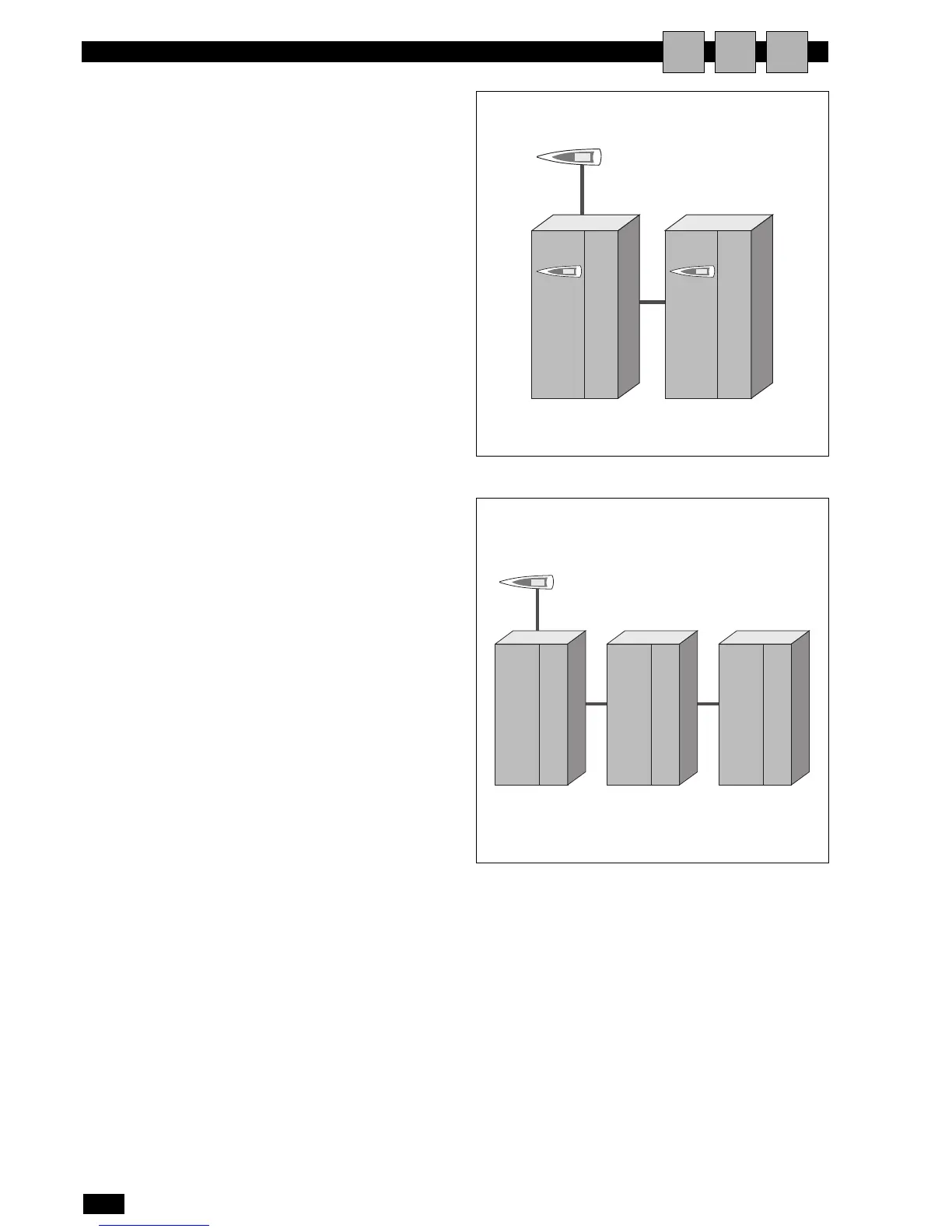
1 The local network connection is used to manage the operation
of a series of air-conditioners operating inside the same envi-
ronment, or a series of liquid chillers connected in parallel in
the same installation.
2 The max number of units that can be connected is 10.
3 The maximum extension of the network connections is 500
metres.
4 All the units connected in the network must have the same ver-
sion of the program installed in the flash memory on the board.
5 A terminal can be configured as "private" or "shared":
- a private terminal can display the operating status only of
the unit it is connected to via telephone cable;
- a shared terminal can display the operating status of all the
units connected in the network.
6 Each board can “talk” to a maximum of 3 terminals; in common
applications, generally no more than two are used: one fitted on
the unit and another optional remote terminal configured as
share terminal.
The priority on the remote share terminal is always the display of
the alarms, even if when the alarm is activated the terminal is dis-
playing the parameters from another unit.
7 To be able to communicate over a local network, the units must
be configured so as to be able to send the other units the
required information for correct operation.
In this regard, the first step involves assigning a progressive
number to the different units (1, 2, 3,…10) and then correctly
setting the addresses of the various terminals and LAN boards,
and making the electrical connections, step-by-step, as
described in the following paragraphs.


 To Next Page