Section
3:
USING YOUR
PRINTER
Introduction
Now
that
you've
learned how
to
insert the
ribbon
and
paper
into
your printer,
connect the
printer
to
your computer,
and how
to
test
your
printer
for
problems,
you're ready
for the next
step:
putting the
VIC
printer
to
work for
you.
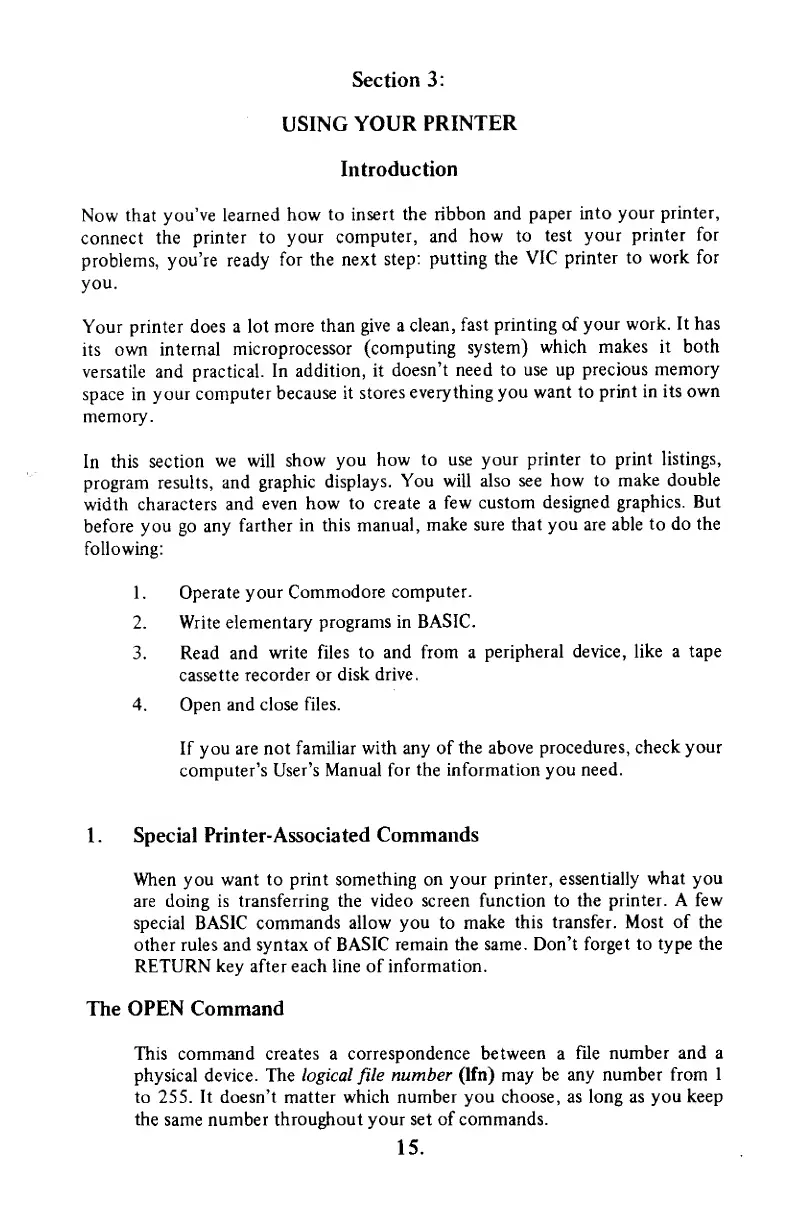
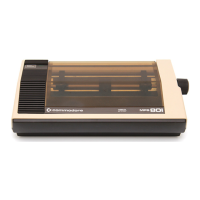
Your
printer does a lot
more than
give a clean,
fast
printing of
your
work. It has
its
own internal
microprocessor
(computing
system)
which
makes it both
versatile and practical.
In
addition, it
doesn't
need
to use up
precious
memory
space in
your
computer
because it
stores
everything
you want to
print
in its
own
memory.
In this
section
we will
show
you
how to
use
your printer to
print listings,
program
results,
and
graphic
displays.
You
will
also see
how to
make
double
width characters
and
even how to
create
a
few
custom designed
graphics.
But
before you go
any
farther
in this
manual,
make sure that
you
are able
to
do the
following:
1
.
Operate
your Commodore
computer.
2.
Write elementary
programs in
BASIC.
3. Read
and
write files
to and from a
peripheral device,
like a tape
cassette
recorder
or
disk drive.
4.
Open
and close
files.
If you are
not familiar with any of
the above
procedures, check your
computer's
User's
Manual
for the
information you
need.
1 . Special Printer-
Associated
Commands
When you want to
print something on
your
printer, essentially
what
you
are doing is
transferring
the
video screen function to the
printer.
A few
special BASIC commands allow
you
to
make
this transfer. Most of
the
other rules and syntax
of BASIC
remain the same. Don't
forget to type the
RETURN
key
after each line of
information.
The
OPEN Command
This command creates a correspondence
between
a
file
number and a
physical
device.
The
logical
file
number
(Ifn)
may
be any number from
1
to 255. It doesn't matter
which number you choose, as long as
you
keep
the
same
number
throughout your set of commands.
15.


 To Next Page