DISCRETE INTERFACE (DIF)
ACCESSORY
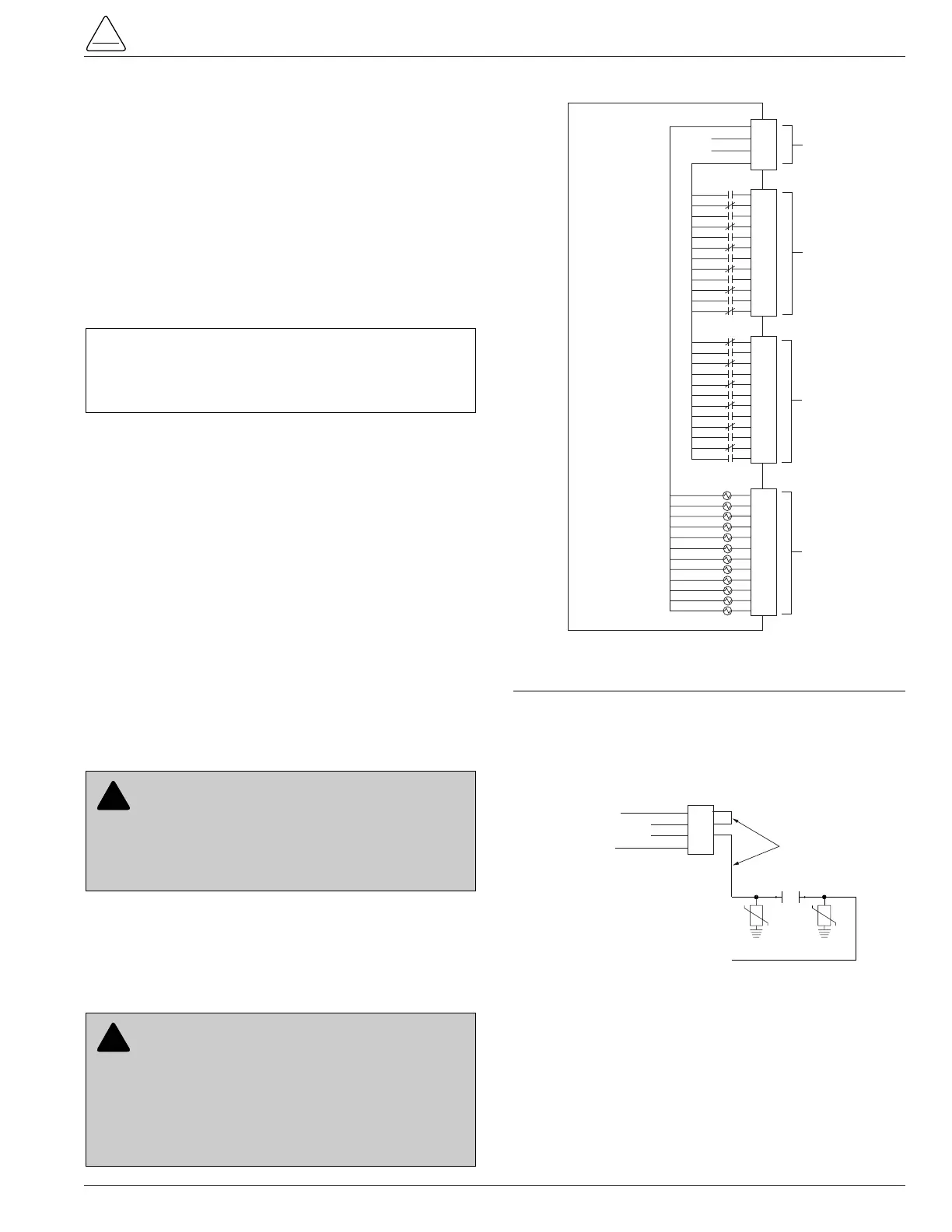
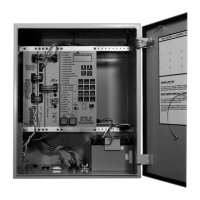
The Discrete Interface (DIF) module accessory (Figure
25) permits connection of contact-type input devices
(switches, relays) and discrete indicating devices (relays,
LEDs, lamps) to the Form 5/Triple-Single control to effect
local discrete input/output (I/O). The DIF module acces-
sory is used for supplementing normal local controls and
status indicators for discrete SCADA functions. All DIF
inputs and outputs have been factory-set and are shown
in Figure 27.
The DIF module contains 12 inputs and 12 outputs that
are customized for a discrete SCADA function. Each
Form 5/Triple-Single control can accommodate two DIF
modules.
Whetting voltage for the DIF inputs can be supplied by the
DIF module or by the customer as shown in Figure 26.
The input voltage range is 12 to 120 Vac or Vdc. The 12
outputs are Form C relay contacts. Six of the module out-
puts are latching and the other six are non-latching.
Note: Latching is defined as an output that retains its status
when control power is removed.
Non-latching is defined as an output that changes its
status when control power is removed.
Note: A remote function is not controlled by the SUPERVI-
SORY BLOCKED switch.
Customer Connection
Information
Figure 26 shows the customer-supplied wiring of whetting
voltage for DIF module inputs. Connection is made from
terminal P5 on the DIF module to the respective connec-
tions on P4 inputs 1 through 12.
Figure 27 shows customer connections to the DIF outputs
at P2 and P3.
Figure 26.
Customer connections for supplying whetting volt-
age to DIF inputs.
CAUTION: Equipment damage; misoperation.
External leads must be shielded and the shield
must be grounded at both ends. Terminate each lead
with a 320Vac, 160 Joules metal oxide varistor (MOV),
or equivalent, at the remote end. Attach MOVs
between the leads and ground. Failure to properly
shield and protect leads can result in equipment dam-
age and/or unintentional operation. G117.3
CAUTION: Equipment damage. Do not drill con-
nection holes into the top of the cabinet. Connec-
tion holes in the top of the cabinet will allow moisture to
seep into the control and damage the components or
cause control misoperation. Failure to comply will void
the control’s factory warranty.
T249.0
IMPORTANT: The DIF should not be used for over-
current protection. The control gives priority to TCC
timing and issuing a trip signal rather than changing the
status of a DIF output or responding to a DIF input.


 To Next Page