18
COMMON BENDS LAYOUT INFORMATION — continued
OFFSETS: WORKING PAST AN OBSTACLE
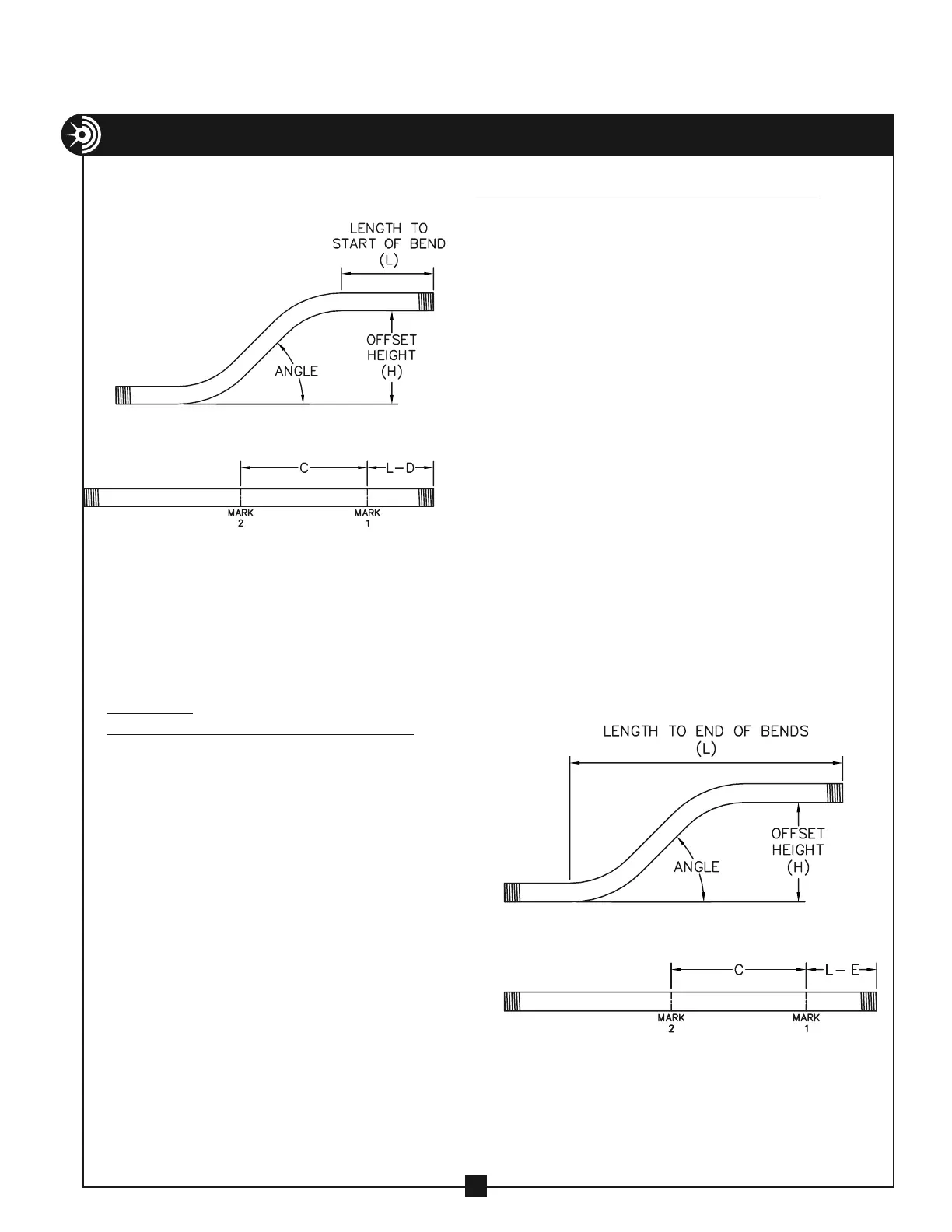
1. Determine the desired length (L), height (H)
and angle for the offset (See figure 18A).
2. Locate the chart (see pgs. 20 - 23) that
corresponds to the size and type conduit you
are going to bend.
3. In the upper left corner of the chart find the
“D” value for the size and type conduit you
are going to bend. Deduct this value from
the desired length (L) and make a mark this
distance from the end of the conduit. This is
your first bending mark (Mark 1).
4. Using the desired angle, locate the “C” value
that corresponds to the desired height (H).
Make a mark the distance “C” from Mark 1.
This is your second bending mark (Mark 2).
5. You may now proceed with the bend.
NOTE: For offsets of heights other than those
listed, refer to “Calculating “C” Values for
Offsets Past an Obstacle” on pg. 24.
OFFSETS:
WORKING TOWARDS AN OBSTACLE
1. Determine the length to the end of
bends (L), offset height (H) and angle
for the offset (See figure 18B).
2. Locate the chart (see pgs. 20 – 23)
that corresponds to the size and type
conduit you are going to bend.
3. Using the desired angle, locate the “E”
value that corresponds to the desired
height (H). Deduct this value from the
length (L) and make a mark this distance
from the end of the conduit. This is your
first bending mark (Mark 1).
4. Next, locate the “C” value that
corresponds to the desired height (H).
Make a mark the distance “C” from
Mark 1. This is your second bending
mark (Mark 2).
5. You may now proceed with the bend.
FIGURE 18A
FIGURE 18B



 To Next Page