EasyManua.ls Logo

dbx 166 - User Manual

dbx 166
17 pages
Print Icon
To Next Page IconTo Next Page
Loading...
dbx
Model 166
Professional
Dynamics
Processor
ATTENTION
IF YOU
BEGIN WITHOUT READING THIS
MANUAL, YOUR NEW 166 MAY SEEM TO BE NOT
WORKING PROPERLY.
NO AUDIO
If you're not getting any audio out
of
the 166,
check
the CATE knob. Is the Threshold off? If not, turn
it off
(full counterclockwise).
If the Threshold isn't off, the circuit
will attenuate
the signal 40
dB,
which wilt
stop
the audio from
passing. Note that signals BELOW the Cate threshold
are gated; signals ABOVE the compression threshold
are compressed. If ifs vice versa, nothing happens.
Refer to the manual.
NO
COMPRESSION
Did you plug into the Sidechain input? Take it out.
Patch in ONLY when
you
have
sidechain
applications
(again,
refer
to the manual). Also check to make sure
the Sidechain Monitor button isn't pushed in.

Other manuals for dbx 166

Question and Answer IconNeed help?

Do you have a question about the dbx 166 and is the answer not in the manual?

Summary

Attention and Troubleshooting

No Audio Output Troubleshooting

Troubleshooting guide for no audio output, checking the GATE knob and Threshold settings.

No Compression Troubleshooting

Troubleshooting guide for no compression, checking Sidechain input and Monitor button.

Inspection and Installation

Shipping Damage Inspection

Instructions for checking the unit and carton for shipping damage and notifying the dealer.

Safety Warnings and Precautions

Important safety warnings regarding fire and electric shock hazards, and user-serviceable parts.

Front Panel Controls

Gate Threshold and Release Rate

Explains Gate Threshold settings and Slow/Fast Release Rate switch for signal attenuation.

OverEasy Compressor Controls

Details the OverEasy compressor's Threshold, Ratio, and Gain Reduction LEDs.

PeakStop and Output Controls

Explains PeakStop for peak level control, Output Gain, Bypass, and Stereo Couple functions.

Typical Hookups and Connections

Audio Input Connections

Details balanced and unbalanced audio input connections using various phone plug and cable configurations.

Audio Output Connections

Explains audio output connections for balanced and unbalanced loads using different plug types.

Sidechain Input Connections

Details unbalanced sidechain input connections for balanced and unbalanced sources.

About Gating

Noise Reduction with Gating

Explains using the gate for noise reduction and tightening drum sounds by adjusting threshold and release rates.

Altering Sound Quality with Gating

Describes how gating can alter sonic character by controlling ambience and reverb tails.

About Compression

General Compression Principles

Explains compressor purpose, dynamic range reduction, and OverEasy circuit for natural compression.

Specific Compression Applications

Covers variations in mic levels, instrument levels, and raising signals out of a mix using compression.

Tape Saturation and Speaker Protection

Details using compression for tape saturation prevention and protecting speaker drivers in sound systems.

About Limiting and Soft Clipping

PeakStop Level Control

Explains PeakStop for controlling maximum peak levels, its function, and LED indication.

Sidechain Applications Overview

Introduces sidechain applications for frequency-sensitive compression and monitoring.

Advanced Sidechain Techniques

Explains sidechain use for broadcasting, filtering, anticipatory compression, keyed gating, and selective gating.

Stereo Dynamics Processing

Stereo Couple Functionality

Details the Stereo Couple switch for synchronized dual-channel compression and maintaining stereo imaging.

Block Diagram

Schematic Diagram

Warranty and Factory Service

Summary

Attention and Troubleshooting

No Audio Output Troubleshooting

Troubleshooting guide for no audio output, checking the GATE knob and Threshold settings.

No Compression Troubleshooting

Troubleshooting guide for no compression, checking Sidechain input and Monitor button.

Inspection and Installation

Shipping Damage Inspection

Instructions for checking the unit and carton for shipping damage and notifying the dealer.

Safety Warnings and Precautions

Important safety warnings regarding fire and electric shock hazards, and user-serviceable parts.

Front Panel Controls

Gate Threshold and Release Rate

Explains Gate Threshold settings and Slow/Fast Release Rate switch for signal attenuation.

OverEasy Compressor Controls

Details the OverEasy compressor's Threshold, Ratio, and Gain Reduction LEDs.

PeakStop and Output Controls

Explains PeakStop for peak level control, Output Gain, Bypass, and Stereo Couple functions.

Typical Hookups and Connections

Audio Input Connections

Details balanced and unbalanced audio input connections using various phone plug and cable configurations.

Audio Output Connections

Explains audio output connections for balanced and unbalanced loads using different plug types.

Sidechain Input Connections

Details unbalanced sidechain input connections for balanced and unbalanced sources.

About Gating

Noise Reduction with Gating

Explains using the gate for noise reduction and tightening drum sounds by adjusting threshold and release rates.

Altering Sound Quality with Gating

Describes how gating can alter sonic character by controlling ambience and reverb tails.

About Compression

General Compression Principles

Explains compressor purpose, dynamic range reduction, and OverEasy circuit for natural compression.

Specific Compression Applications

Covers variations in mic levels, instrument levels, and raising signals out of a mix using compression.

Tape Saturation and Speaker Protection

Details using compression for tape saturation prevention and protecting speaker drivers in sound systems.

About Limiting and Soft Clipping

PeakStop Level Control

Explains PeakStop for controlling maximum peak levels, its function, and LED indication.

Sidechain Applications Overview

Introduces sidechain applications for frequency-sensitive compression and monitoring.

Advanced Sidechain Techniques

Explains sidechain use for broadcasting, filtering, anticipatory compression, keyed gating, and selective gating.

Stereo Dynamics Processing

Stereo Couple Functionality

Details the Stereo Couple switch for synchronized dual-channel compression and maintaining stereo imaging.

Block Diagram

Schematic Diagram

Warranty and Factory Service

Overview

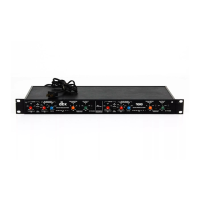
The dbx Model 166 is a professional dynamics processor designed to control and shape the dynamic range of audio signals. It features two independent channels, each capable of gating, compression, and limiting, with the option for stereo coupling.

Function Description:

The Model 166 serves as a versatile tool for audio engineers, providing comprehensive control over the dynamic characteristics of sound. Its primary functions include:

  • Gating: The gate acts as a below-threshold attenuator, removing unwanted background noise or shaping the attack and release of sounds. It features a Threshold knob to set the level below which the signal is attenuated by 40 dB, and a Release Rate switch (Fast/Slow) to control how quickly the signal is attenuated. The Fast setting (1000 dB/s) is ideal for tightening percussion, while the Slow setting (10 dB/s) is suitable for general-purpose gating of noise behind vocals and acoustic instruments. The gate's attack time is internally set to be very fast, ensuring that the complete transient at the beginning of a sound passes through.
  • Compression (OverEasy®): The compressor reduces the dynamic range of a program. The Threshold knob sets the point where the OverEasy circuit begins to compress the signal, and the Ratio knob controls the amount of compression once the signal is well above the threshold. The OverEasy circuit provides a musical and unobtrusive compression sound, gradually changing the ratio from 1:1 to the set ratio as the signal rises above the threshold. This prevents the "held-back" feeling often associated with other compressors. Compression can be used for gentle taming of overall dynamics, leveling instruments and vocals, or limiting peaks.
  • Limiting (PeakStop™): The PeakStop function acts as a sophisticated voltage-controlled clipper, setting a maximum peak-output level regardless of other controls. It rounds the corners of a peak rather than sharply cutting it off, minimizing audible distortion and producing a smooth, well-controlled clipping behavior. The PeakStop Level knob adjusts the activation level from 0 to +21 dBv. This feature is crucial for preventing tape saturation, protecting speakers from excessive levels, and avoiding broadcast overmodulation.
  • Stereo Coupling: The unit can operate as a dual-mono processor or be switched into stereo couple mode. In stereo mode, Channel 1's controls override Channel 2's (except for Sidechain Monitor and Bypass), and the detection circuitry senses the true RMS levels of the combined signal. This ensures stable imaging and identical gain changes across both channels, making it suitable for stereo mixes, drum overheads, or piano recordings.
  • Sidechain Functionality: Each channel includes a Sidechain input, providing an optional direct input to the RMS-detector circuitry. This allows for external signal processing (e.g., an equalizer) to alter the dynamic response of the 166, enabling frequency-sensitive compression or gating. The Sidechain Monitor switch allows for monitoring the sidechain signal during setup.

Important Technical Specifications:

  • Frequency Response: 20 Hz-20 kHz +0.5 dB
  • THD (Total Harmonic Distortion): 0.2% at maximum compression, 1 kHz, 0 dBv
  • Equivalent Input Noise: -85 dBv unweighted
  • Maximum Input: +24 dBv
  • Maximum Output: +21 dBv
  • Input Impedance: 25 k-ohms differential, 18.5 k-ohms unbalanced
  • Output Impedance: Low, single-ended, for driving 600 ohms or greater
  • Output Gain: -20 to +20 dB
  • Threshold Range:
    • Compressor: -40 to +20 dBv
    • Gate: +10 to -60 dBv
    • PeakStop: 0 to +21 dBv
  • Attack Times (Compressor, program-dependent): 15 ms for 10 dB, 5 ms for 20 dB, 3 ms for 30 dB
  • Attack Times (Gate): 2 ms for 28 dB (70% of return to unity gain)
  • Release Times (Compressor): 8 ms for 1 dB, 80 ms for 10 dB, 400 ms for 50 dB (125 dB/s rate)
  • Release Times (Gate): Slow: 100 ms for 1 dB; Fast: 100 ms for 100 dB
  • Maximum Compression: Greater than 60 dB
  • Power Requirements: 90-135 V (120V model) or 200-260 V (240V model), 50-60 Hz; 15 W
  • Dimensions: 1-3/4"h x 19"w x 8"d

Usage Features:

  • Front Panel Controls: Each channel features dedicated knobs for Gate Threshold, Release Rate (Fast/Slow), Compressor Threshold, Ratio, PeakStop Level, and Output Gain. LEDs indicate Gain Reduction and PeakStop activation.
  • Bypass Switch: A hardwire bypass switch connects input to output, even without AC power, allowing for easy comparison of processed and unprocessed signals.
  • Sidechain Monitor: A dedicated switch and LED allow for monitoring the sidechain signal, aiding in the setup of frequency-sensitive dynamics processing.
  • Rack Mountable: The chassis includes integral rack "ears" for mounting into a standard 19" (48.3 cm) equipment rack. No special cooling or ventilation is required.
  • Flexible Hookups: The rear panel features 3-circuit phone jacks for Audio In/Out and a 2-circuit phone jack for Sidechain In. The unit accommodates both balanced and unbalanced audio sources and loads, with detailed wiring diagrams provided in the manual.
  • Application Notes: The manual provides extensive guidance on various applications, including noise reduction, changing sound quality, variations in microphone and instrument levels, raising signals out of a mix, preventing tape saturation, speaker protection, anticipatory compression, keyed gating, and selective gating.

Maintenance Features:

  • No User-Serviceable Parts: To reduce the risk of electric shock, users are advised not to remove the cover or back. All servicing should be referred to qualified personnel.
  • Warranty and Factory Service: The product is covered by a limited warranty. For service, users are instructed to contact their dealer or distributor. If factory service is required, the unit should be repacked with a note describing the problem, contact information, and date of purchase, and sent freight prepaid to the dbx factory.
  • Shipping Carton: It is recommended to save the original carton and packing materials for potential future shipping needs.
  • Initial Inspection: Upon receipt, users should examine the unit and carton for any signs of shipping damage and notify their dealer immediately if damage is found.

dbx 166 Specifications

General IconGeneral
Branddbx
Model166
CategoryComputer Hardware
LanguageEnglish

Related product manuals