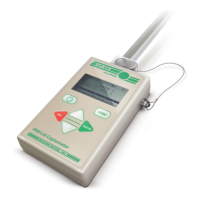
2 KD2 PRO OVERVIEW KD2 Pro
2.4 KD2 Pro Sensor Compatibility
Table 2: Sensor Use Guide
Sample Material KS-1 TR-1 SH-1 RK-1
Low viscosity Liquids
BEST
1
NO NO NO
(Water)
High Viscosity Liquids
BEST
2
OK
2
NO NO
(glycerol, oil)
Insulation and Insulating
BEST
3
NO NO NO
Materials
Moist Soil NO BEST OK OK
Dry Soil, Powders, and
NO BEST
4
OK OK
Granual Materials
Concrete and Rock NO BEST
5,7
OK
6
BEST
7
Other Solids NO BEST
5
OK OK
Volumetric Specific Heat NO NO BEST NO
Thermal Diffusivity NO NO BEST NO
1
In low viscosity liquids, set the read time to the minimum allowed one minute
and only operate in low power mode to avoid free convection.
2
In high viscosity liquids, only use the KS-1 or TR-1 in low power mode.
3
The KS-1 in default mode (low power, 1 min read).
4
In dry granular materials where contact resistance can be significant, extend
the read time to the maximum allowed ten minutes to produce the most accurate
results.
5
In solid materials where a pilot hole has been drilled and contact resistance
can be significant, use thermal grease and extend the read time to the maximum
allowed ten minutes to produce the most accurate results.
6
The SH-1 sensor takes accurate measurements in rock and cured concrete,
but it is very difficult to drill small diameter, parallel holes in these materials to
accommodate the SH-1 needles.
7
The TR-1 is generally more accurate than the RK-1 sensor and should be
used if possible. However, it is extremely difficult (or impossible) to drill a long,
thin hole into cured concrete and rock samples to accommodate the TR-1. The
TR-1 also comes with pilot pins for use in wet concrete or fluidized backfill.
14


 To Next Page