EN - 4
• Before attempting any cleaning procedures, turn the unit “Off.”
• To avoid electric shock, do not remove the concentrator cabinet. The cabinet should only be removed by a qualied DeVilbiss technician. Do not apply liquid directly to
the cabinet or utilize any petroleum-based solvents or cleaning agents.
• Use of harsh chemicals (including alcohol) is not recommended. If bactericidal cleaning is required, a non-alcohol based product should be used to avoid inadvertent
damage.
• Medical Electrical Equipment needs special precautions regarding EMC and needs to be installed and put into service according to the Electromagnetic Compatibility
[EMC] information provided in the accompanying documents.
• Portable and Mobile RF Communications Equipment can affect Medical Electrical Equipment.
• The equipment or system should not be used adjacent to or stacked with other equipment and that if adjacent or stacked use is necessary, the equipment or system
should be observed to verify normal operation in the conguration in which it will be used.
CAUTION:
A Caution indicates the possibility of damage to the device.
• It is very important to follow your oxygen prescription. Do not increase or decrease the ow of oxygen – consult your physician.
• To prevent product damage, do not attempt to operate the unit without the air lter or while the lter is still damp.
SAVE THESE INSTRUCTIONS.
INTRODUCTION
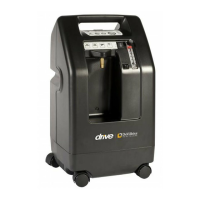
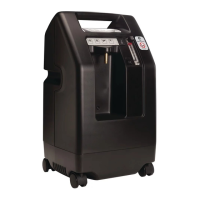
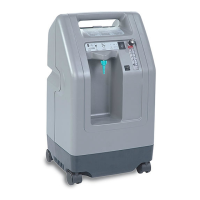
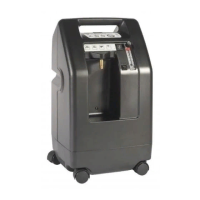
This instruction guide will acquaint you with the DeVilbiss oxygen concentrator. Make sure that you read and understand this guide before operating your unit. Important
safeguards are indicated throughout this guide; pay special attention to all safety information. Contact your DeVilbiss equipment provider should you have any questions.
Why Your Physician Prescribed Supplemental Oxygen
Today, many people suffer from heart, lung, and other respiratory diseases. Many of these people can benet from supplemental oxygen therapy. Your body requires a steady
supply of oxygen to function properly. Your physician prescribed supplemental oxygen for you because you are not getting enough oxygen from room air alone. Supplemental
oxygen will increase the amount of oxygen that your body receives.
Supplemental oxygen is not addictive. Your physician prescribed a specic oxygen ow to improve symptoms such as headaches, drowsiness, confusion, fatigue, or increased
irritability. If these symptoms persist after you begin your supplemental oxygen program, consult your physician.
The oxygen delivery setting has to be determined for each patient individually with the conguration of the equipment to be used, including accessories.
The proper placement and positioning of the prongs of the nasal cannula in the nose is critical to the amount of oxygen delivered to the respiratory system of the patient.
Your Delivery settings of the oxygen concentrator should be periodically reassessed for the effectiveness of therapy.
How Your DeVilbiss Oxygen Concentrator Works
Oxygen concentrators are the most reliable, efcient, and convenient source of supplemental oxygen available today. The oxygen concentrator is electrically operated. The unit
separates oxygen from room air which allows high-purity supplemental oxygen to be delivered to you through the oxygen outlet. Although the concentrator lters the oxygen in
a room, it will not affect the normal amount of oxygen in your room.
IMPORTANT PARTS OF YOUR CONCENTRATOR
Please take time to familiarize yourself with your DeVilbiss oxygen concentrator before operating.
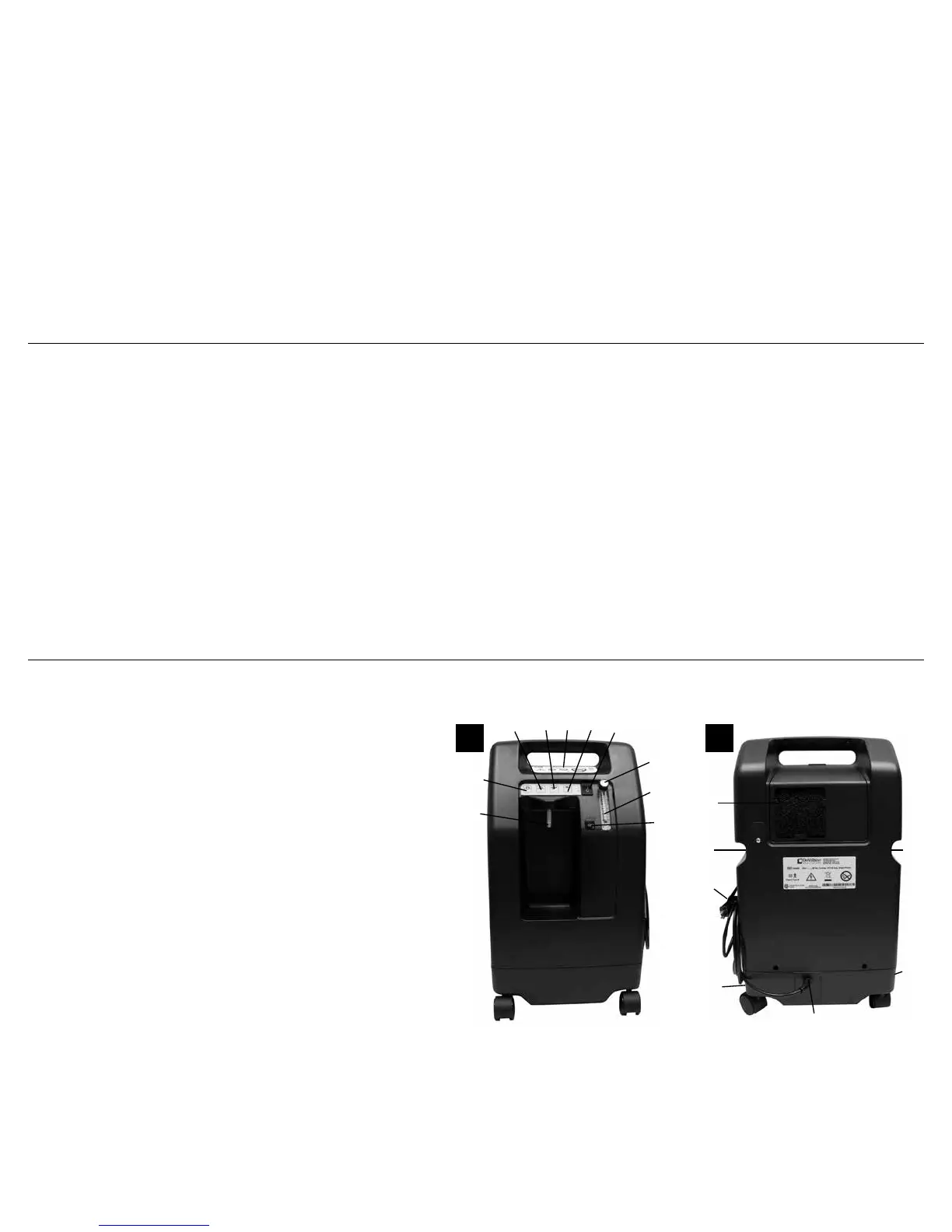
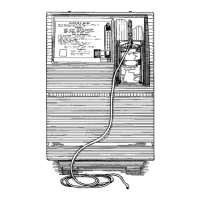
Front View (Figure A)
1. Operating instructions
2. Green Power light – illuminates when your concentrator is operating
3. Power Switch
| = ON
O = OFF
4. Flow meter knob
5. Flow meter
6. Circuit breaker – resets the unit after electrical overload shutdown
7. Oxygen outlet – oxygen is dispersed through this port
8. Normal Oxygen (green) light (see page 6)
9. Low Oxygen (yellow) light (see page 6)
10. Red Service Required light – when illuminated contact your DeVilbiss provider
Back View (Figure B)
11. Handgrip
12. Exhaust
WARNING – When device is used under extreme operating conditions,
the temperature near the exhaust vents on the bottom of the unit may
reach 63˚C. Keep body parts a minimum of 32” away from this area.
13. Power cord and/or IEC power connector.
14. Line cord strap
15. Air lter – prevents dirt, dust, and lint from entering your unit.
Accessories
Oxygen Outlet Connector - Plastic - 1/pack ...................................................................................................................................................................................................... CN100
Bubble Humidifier ........................................................................................................................................................................................................ Salter Labs 7600 or equivalent
There are many types of humidiers, oxygen tubing and cannulas/masks that can be used with this device. Certain humidiers and accessories may impair the device’s
performance. A mask or any nasal cannula can be used with continuous ow delivery and may be sized according to your prescription as recommended by your homecare
provider who should also give you advice on the proper usage, maintenance, and cleaning.
CN-525K3
1
2
3
4
5
6
7
8
9
10
A
11
12
13
12
14
11
15
B



 To Next Page