
 To Next Page
J
John CervantesSep 12, 2025
How to set Dometic Qht Control Unit if it is set to Cool Only?
- RRoy FarmerSep 12, 2025
If your Dometic Control Unit is set to Cool Only, change Programmable Function 19.

How to set Dometic Qht Control Unit if it is set to Cool Only?
If your Dometic Control Unit is set to Cool Only, change Programmable Function 19.
What to do if Dometic Qht water coil is iced in the Heating Mode?
If the water coil in your Dometic Control Unit is iced in Heating Mode because the seawater temperature is below 40°F (4.4°C), shut down the system to prevent damage to the condenser and allow the coil to defrost.
What does 'HI / PS' flashing mean on Dometic Qht Control Unit?
If 'HI / PS' (High Pressure) is flashing on your Dometic Control Unit, it indicates the head pressure is above 425 PSI for R-22 or R-417A systems, or above 575 PSI for R-410A systems.
What does 'LO / PS' flashing mean on Dometic Qht?
If 'LO / PS' (Low Pressure) is flashing on your Dometic Control Unit, it indicates the head pressure is below 30 PSI for R-22 or R-417A systems, or below 60 PSI for R-410A systems.
What to do if Dometic Control Unit has no cooling or heating?
If your Dometic Control Unit isn't cooling or heating, consider these steps: * Ensure the temperature set point is appropriately lower for cooling or higher for heating. * Clean the seawater strainer and check for obstructions at the speed scoop thru-hull inlet. * Confirm a steady flow from the overboard discharge and purge air from the line by removing the hose from the pump discharge. * Check for refrigerant oil leakage (call a service technician if found). * Make sure the system is set to Cool Mode or Heat Mode. * Remove any obstructions in the return air stream and clean the return air filter and grille. * Check for crushed or restricted ducting, ensuring it's straight, smooth, and taut. * If the seawater temperature is above 55°F (12.8°C), the system may cycle on high ...
Contains essential information for operating the control system; keep for future reference.
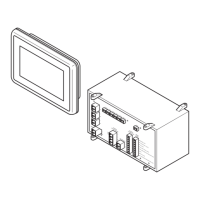
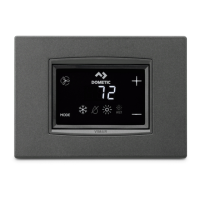
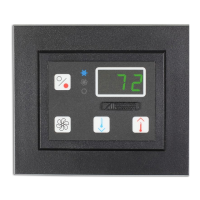
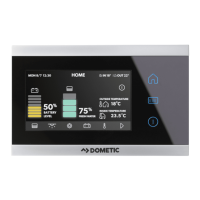
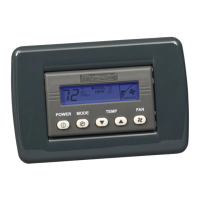
Describes the two different controls, Q3 and Qht, for operating the system.
Lists standard and optional features of the Q3 and Qht controls.
Explains the basic principle of air conditioning and heat transfer in marine systems.
Details how seawater temperature affects system efficiency and capacity.
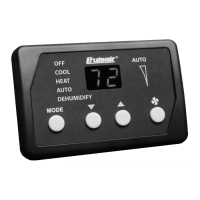
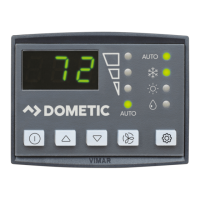
Details the layout and function of the Q3 control display panel and its indicators.
Provides critical notes for installers and end-users regarding programming and system setup.
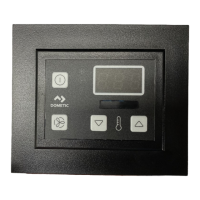
Instructions for physically mounting the Q3 and Qht display panels on a control surface.
Guidelines for properly installing ambient and seawater temperature sensors for accurate readings.
Explains the available operating modes like Cool, Heat, Auto, and Dehumidify.
How to view and adjust the desired room temperature set point using the control buttons.
Details manual and automatic fan speed settings, control, and operation.
Covers display dimming, sleep mode, and lockout display mode for user convenience.
Step-by-step guide to enter and navigate the programming mode for system customization.
Introduces customizing functions, restoring factory defaults, and function descriptions.
Detailed explanations of individual programmable functions and their settings.
Explains shutdown due to high discharge pressure and its behavior in Cool/Heat modes.
Details shutdown due to low suction pressure, its causes, and behavior in Cool/Heat modes.
Describes shutdown due to sustained low AC line voltage and the need for calibration.
Provides a table summarizing fault codes, their descriptions, and the resulting system action.
Outlines the essential steps for the initial start-up of the air conditioning system.
Common problems and solutions for general system operation issues not related to digital controls.
Guidance on checking and cleaning condensate drains and replacing or cleaning the return-air filter.
Covers maintenance for seawater connections, pump, and strainer to ensure proper flow.
Maintenance for refrigerant status, reversing valve operation, and cleaning the condenser coil.
Describes various methods for winterizing the air conditioning system to prevent freeze damage.
Details set point range, sensor accuracy, voltage, frequency, and power consumption of the system.
Provides physical dimensions for panels and standard cable lengths for sensors and displays.
Lists the various system inputs monitored by the control, such as temperature and pressure sensors.
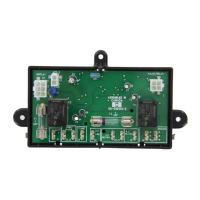
Illustrates the typical wiring connections for the U-Board system, including sensors and components.
Shows typical wiring connections for an older or obsolete version of the control board.
 General
| Brand | Dometic |
|---|---|
| Model | Qht |
| Category | Control Unit |
| Language | English |