2
1. Risk Factors
Neonates with the following risk factors should be screened for
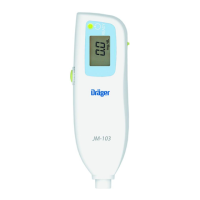
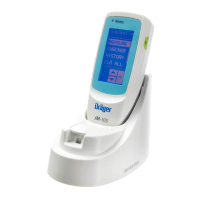
hyperbilirubinemia with the Jaundice Meter JM-105
*3
:
Jaundice within 1
st
24 hours (also send TSB to laboratory)
Blood group incompatibility/+DAT (also send TSB to laboratory)
Visible jaundice after 24 hours of age
≤ 38 weeks gestation
Bruising/vacuum extraction/cephalhematoma
Breastfeeding
Inadequate feeding/excessive weight loss
Sibling with jaundice
East Asian race
Ethnic group at risk for G6PD deficiency (African-American male,
Greek/Mediterranean, Italian, Middle Eastern)
When risk factors are used, the neonate with risk factors should be
screened with the Dräger Jaundice Meter JM-105 prior to discharge, or
earlier if jaundice is noted.
2. Universal Screening
Screen all neonates with the Jaundice Meter JM-105 prior to discharge.
Note: neonates with jaundice in the first 24 hours of life should be screened
immediately and also have a serum bilirubin sent to the laboratory.
Testing Procedure
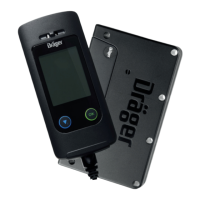
Prepare the Jaundice Meter JM 105 for Use – Perform the Daily
Operational Checkout Procedure
1. Remove the Jaundice Meter JM-105 from the docking station.
2. Press the power switch on.
3. Select CHECKER and touch OK to save selection.
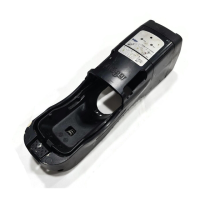
4. Open the checker lid on the charging unit.
5. When the green READY light illuminates, place the tip of the Jaundice
Meter perpendicular on the reading checker circle. Press down until
you hear a click.
6. The display screen shows the “L” (long), “S” (short), and Delta values.
The meter must read within the reference values posted under the
checker lid. If so, the unit is ready to use. If not, clean the tip and
repeat. If values are still out of range, do not use the unit (contact
the Dräger service department).


 To Next Page

