EasyManua.ls Logo

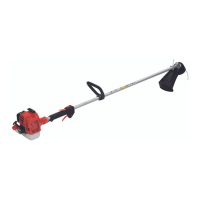
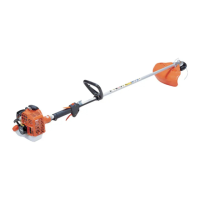
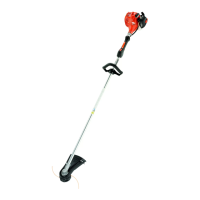
Echo SRM-225 - User Manual

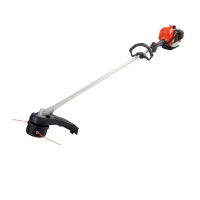
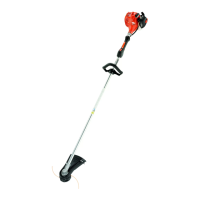
Echo SRM-225
52 pages
Print Icon
To Next Page IconTo Next Page
Loading...
X7722279402
© 2/2016 ECHO Inc.
Operators Manual
Specifications, descriptions and illustrative material in this literature are as
accurate as known at the time of publication, but are subject to change
without notice. Illustrations may include optional equipment and
accessories, and may not include all standard equipment.
x7722271404 / x772000164
SRM-225
GRASS TRIMMER /
BRUSH CUTTER
Burn Hazard
The muffler or catalytic muffler and surrounding cover may
become extremely hot.
Always keep clear of exhaust and muffler area, otherwise
serious personal injury may occur.
The engine exhaust from this product contains chemicals known to the
State of California to cause cancer, birth defects or other reproductive
harm.

Other manuals for Echo SRM-225

Questions and Answers

  • K
    Kenneth PerezAug 17, 2025
    What to do if my Echo Trimmer engine cranks but won't start?
    • M
      Michelle LewisAug 17, 2025
      If your Echo Trimmer engine cranks but struggles to start or doesn't start at all, several factors could be at play. There might be no fuel reaching the carburetor, in which case you should clean or replace it. A clogged fuel strainer, fuel line, or carburetor can also be the culprit, requiring cleaning or replacement. If the muffler is wet with fuel, open the choke, clean or replace the air filter, and adjust the carburetor. Also, check the spark plug: if the spark gap is incorrect, adjust it to .65mm (0.026in.); if it's covered with carbon or fouled with fuel, clean or replace it; and if the plug is defective, replace it.
  • S
    Sydney McdonaldAug 21, 2025
    Why is my Echo SRM-225 Trimmer engine hard to start?
    • L
      leahweaverAug 21, 2025
      If your Echo Trimmer engine cranks but struggles or fails to start, several factors could be at play. A clogged fuel strainer or fuel line, or issues with the carburetor could be the reason. Try cleaning or replacing the fuel strainer. If there's no spark, ensure the switch is ON. An incorrect spark gap, carbon buildup, fuel fouling, or a defective plug can also prevent starting. Adjust the spark gap to 0.65mm (0.026 in.), and clean or replace the spark plug if necessary. Also, a fuel mixture that's too rich can cause starting problems. Open the choke, clean or replace the air filter, and adjust the carburetor.
  • R
    rodriguezanneAug 25, 2025
    Why does my Echo Trimmer engine cranks but starts hard or doesn’t start?
    • A
      Amy MackAug 25, 2025
      If your Echo Trimmer engine cranks but struggles to start or doesn't start at all, several issues could be the cause. The fuel strainer or fuel line might be clogged, requiring cleaning or replacement. The fuel mixture could be too rich; in this case, open the choke, clean or replace the air filter, or have the carburetor adjusted by your Echo dealer. Also check the spark plug: adjust the gap to .65mm (0.026 in.) if it's incorrect, or clean/replace it if it's covered with carbon or fouled with fuel. If there is no spark, turn the switch to ON.
  • Z
    zjohnsonAug 28, 2025
    What to do if Echo SRM-225 engine runs, but dies or does not accelerate properly?
    • B
      Brett SpencerAug 28, 2025
      If your Echo Trimmer engine runs but dies or doesn't accelerate properly, consider these potential causes and solutions: * **Air Filter**: A dirty air filter can cause problems. Clean or replace it. * **Fuel Filter**: A dirty fuel filter can restrict fuel flow. Replace it. * **Fuel Vent**: A plugged fuel vent can disrupt the fuel supply. Clean or replace it. * **Spark Plug**: A dirty or worn spark plug can affect performance. Clean and adjust, or replace it. * **Carburetor**: Improper carburetor adjustment can lead to issues. Adjust it as needed. * **Cooling System**: A dirty or plugged cooling system can cause overheating and performance issues. Clean it. * **Spark Arrestor Screen**: A plugged spark arrestor screen can restrict exhaust flow. Replace it.
  • H
    hrussellAug 31, 2025
    Why does my Echo Trimmer engine run but then die or not accelerate?
    • M
      Matthew MathisAug 31, 2025
      If your Echo Trimmer engine runs but dies or doesn't accelerate properly, the air filter may be dirty and require cleaning or replacement. Alternatively, the fuel filter could be dirty and needs replacement. A plugged fuel vent should be cleaned or replaced. The spark plug may be dirty or worn, needing cleaning, adjustment, or replacement. Improper carburetor adjustment can cause this issue, so adjustment is needed. Additionally, check if the cooling system is dirty or plugged and clean it. Finally, a plugged spark arrestor screen should be replaced.
  • M
    Michael OsborneSep 3, 2025
    What to do if my Echo SRM-225 engine cranks but starts hard or doesn't start?
    • T
      Todd TannerSep 3, 2025
      If your Echo Trimmer's engine cranks but struggles to start or fails to start, there could be several reasons: * The spark gap might be incorrect. Adjust it to 0.65mm (0.026 in.). * The spark plug might be covered with carbon, fouled with fuel, or defective. In these cases, clean, replace, or simply replace the plug.
  • K
    kimberlyvaldezSep 6, 2025
    What to do if my Echo SRM-225 Trimmer engine runs, but dies or does not accelerate properly?
    • K
      Karen IbarraSep 7, 2025
      If your Echo Trimmer engine runs but dies or does not accelerate properly, several factors could be responsible. A dirty air filter, fuel filter, or a plugged fuel vent can cause these issues; try cleaning or replacing them. A dirty or worn spark plug should be cleaned and adjusted, or replaced. Also, improper carburetor adjustment, a dirty or plugged cooling system, or a plugged spark arrestor screen can be the cause. In these cases, adjust the carburetor, clean the cooling system, or replace the spark arrestor screen, respectively.
  • K
    Kelly HudsonSep 10, 2025
    What to do if my Echo SRM-225 Trimmer engine does not crank?
    • J
      Joshua HurstSep 10, 2025
      If your Echo Trimmer engine does not crank, it may indicate an internal engine problem. In this case, it's best to seek assistance from your Echo dealer for diagnosis and repair.
  • K
    Karen ThompsonNov 13, 2025
    What to do if my Echo SRM-225 Trimmer engine cranks but doesn’t start?
    • W
      William HendricksNov 13, 2025
      If your Echo Trimmer engine cranks but struggles or fails to start, several factors could be at play. Here's what you can check: * **Fuel Issues**: A clogged fuel strainer or fuel line, or a carburetor problem could be the culprit. Consider cleaning or replacing these parts, or consult your Echo dealer. * **Rich Fuel Mixture**: If the fuel mixture is too rich, open the choke, clean or replace the air filter, or adjust the carburetor. If unsure, seek assistance from your Echo dealer. * **Spark Problems**: Ensure the switch is in the 'ON' position. For no spark issues, consult your Echo dealer. * **Spark Plug Condition**: Inspect the spark plug. If the spark gap is incorrect, adjust it to .65mm (0.026 in.). Clean or replace the plug if it's covered with carbon or fouled with fuel. I...

Summary

Introduction to ECHO Products

Operators Manual Information

Contains specifications and information for safety, operation, maintenance, storage, and assembly specific to this product.

Safety Manual Information

Explains possible hazards and measures to take for safe operation.

Servicing and Parts Information

Parts and Serial Number Identification

Genuine ECHO parts are available from authorized dealers. Have Model and Serial Numbers ready when ordering.

Authorized Service Dealer

Product servicing during warranty must be performed by an Authorized ECHO Service Dealer. Contact for nearest dealer.

General Safety Guidelines

Consumer Product Support Contact

Contact Consumer Product Support for assistance with application, operation, or maintenance. Know model and serial number.

Product Registration Benefits

Register online for trouble-free warranty coverage and direct contact for updates or recalls.

Manuals and Parts Catalogs

Available from ECHO dealer or online. Check website for updated information. Safety videos also available.

Safety Symbols and Key Words

Explanation of safety alert symbols (DANGER, WARNING) and key words indicating hazard levels.

Safety Symbols and Precautions

Caution and Notice Symbols

Explains CAUTION symbol for minor/moderate injury and NOTICE for unit protection.

International Safety Symbols

Identifies common symbols used on the product and their meanings, including warnings and adjustments.

Operational Safety Symbols and Warnings

Operational Safety Symbols

Details symbols for avoiding kickout, fuel handling, choke control, and keeping clear of blades.

Fuel and Oil Mixture Warning

Warning about using E10 fuel and the importance of correct ethanol percentage for engine health.

Personal Protection and Safety Gear

Operator Condition and PPE

Operator condition, eye, hand, hearing, breathing protection, and proper clothing are essential for safety.

Proper Clothing Guidelines

Wear snug-fitting, durable clothing, long pants, long sleeves, and sturdy shoes. Avoid loose items.

Clothing Restrictions and Health Hazards

Clothing Restrictions

Do not wear shorts, ties, scarves, jewelry, or open-toed shoes. Keep clothing buttoned and tucked.

Pacemaker and EMF Warning

Machine generates EMF. Consult physician if you have a pacemaker before operating.

Cold and Vibration Exposure Risks

Prolonged exposure to cold/vibration can cause injury like Raynaud's Phenomenon. Follow precautions.

Cold, Vibration, and RSI Precautions

Cold and Vibration Precautions

Keep body warm, maintain circulation, limit hours, and consult physician for symptoms of cold/vibration exposure.

Repetitive Stress Injury (RSI) Risks

Overuse can cause soreness, swelling, numbness, or Carpal Tunnel Syndrome (CTS). Vibration may contribute.

RSI;CTS Prevention Steps

Avoid awkward wrist positions, take breaks, reduce force, strengthen muscles, and seek medical help for symptoms.

Critical Operating Safety Warnings

Electrical and Exhaust Hazards

DANGER: Overhead wires and engine exhaust are hazardous. Operate only in well-ventilated areas.

Work Area and Stance Safety

Clear work area, maintain firm grip and solid stance to prevent accidents and falls.

Avoiding Hot Surfaces

Keep exhaust area clear of flammable debris. Avoid contact during and after operation.

Equipment and System Safety

Equipment Safety Guidelines

Use only ECHO attachments. Check unit for loose parts, damaged shields, or loose cutting attachments.

Moving Parts Hazard Warning

WARNING: Moving parts can amputate fingers. Stop engine, disconnect spark plug before servicing.

Fuel System Leak Warning

WARNING: Periodically check fuel system for leaks. Do not use if leaks are found. Have repaired by dealer.

Emission Control Information

Emission Control Systems Overview

Information on engine modification (EM) and catalytic converters (TWC) for emissions control.

CARB and EPA Emissions Information

Details on emission compliance periods and regulations for US EPA and California.

Emission Control Label Location

Label located on engine providing emission family and compliance period details.

Unit Description and Decals

Safety Decal Information

Locate and understand safety decals. Order replacements if illegible. See parts ordering for details.

Component Identification

Shaft Label Information

Details safety warnings and instructions on the shaft label, including language options and prohibitions.

Hot Surface Label

Indicates hot surfaces on the unit, requiring caution to avoid burns.

Component Identification: Power Head to Recoil Starter

Detailed description of components like Power Head, Throttle Handle, Stop Switch, Support Handle, Drive Shaft, and Recoil Starter.

Component Identification (Continued)

Component Identification: Muffler to Purge Bulb

Detailed description of components like Muffler, Fuel Tank, Fuel Tank Cap, Choke, Air Cleaner, and Purge Bulb.

Package Contents

Package Contents Check

List of items included in the package: Power Head/Drive Shaft, manuals, warranty, safety glasses, and oil sample.

Assembly Instructions

Debris Shield Installation

Instructions for installing the debris shield with cutoff knife for nylon line operation only. Warning against using without cutoff knife for blades.

Nylon Line Head Installation

Parts required and caution about sharp cutoff knife and hot gearcase during nylon line head installation.

Assembly Procedures

Nylon Line Head Attachment

Detailed steps for attaching the nylon line head, including locking tool usage and notice about debris shield.

Advancing Trimmer Line

Instructions on how to advance trimmer line by tapping the head against the ground.

Basic Operation Procedures

Head and Handle Adjustments

Steps for removing nylon line head and positioning support handle for comfortable operation.

Critical Operation Warnings

Warnings about moving parts and hazardous engine exhaust position.

Operation with Blades

Fire Hazard Warning

WARNING: Sparks may start fires in dry vegetation. Unit has spark arrestor. Contact local fire authorities.

Blade Operation Requirements

WARNING: Blade use requires specific Brush Cutter configuration (shield, handle, harness). Incorrect setup can cause injury.

Parts Required for Blade Types

Table listing required parts (handle, shield, harness, plates, nuts, pins) for different blade types.

Blades on Curved Shaft Trimmers

WARNING: DO NOT INSTALL BLADES ON GT (CURVED SHAFT) MODELS. Check arbor diameter and use new cotter pin.

Blade Selection and Usage

Harness and Barrier Bar Usage

Harness for heavy cutters. Barrier Bar restricts movement but is not a handle.

Blade Selection Guide

WARNING: Match blade to material. Blades must be sharp. Dull blades increase kick-out risk.

Specific Blade Types and Applications

Details on Plastic/Nylon, 8-Tooth, 80-Tooth, and 22-Tooth blades and their intended uses.

Fuel and Oil Requirements

Shoulder;Waist Harness Use

Recommended for all trimmer/brush cutter use to reduce operator fatigue and improve safety during blade operation.

Fuel Type Warning

WARNING: Do not use diesel or alternative fuels (E15, E85, methanol). May cause damage, poor performance, or failure.

Fuel and Oil Specifications

Use 89 Octane unleaded gasoline and ISO-L-EGD/J.A.S.O. FD certified oil. Incorrect oil voids warranty.

Fuel Handling and Mixing

Oil Mix Ratio Clarification

Echo premium Power Blend X™ oil may be mixed at 50:1 for all Echo engines regardless of older manual ratios.

Fuel Handling Danger

DANGER: Fuel is very flammable. Use approved containers, no smoking/flames near fuel, loosen caps slowly.

Fuel Mixing Instructions (50:1)

Step-by-step guide for mixing gasoline and 2-stroke oil at a 50:1 ratio, with US and Metric measurements.

Starting Procedures and Storage

Fuel Storage and Handling

Do not store with fuel in tank. Return unused fuel to approved container. Store fuel in approved container.

Stored Fuel Notice

Stored fuel ages. Do not mix more fuel than needed for 30/90 days. Shake fuel container before use.

Starting Cold Engine Procedure

WARNING: Keep movable parts clear. Move stop switch to RUN. Adjust choke, pump purge bulb, use recoil starter.

Cold and Warm Engine Starting

Cold Start Operation Details

Steps for choke (COLD START/RUN), purge bulb, and recoil starter operation for cold starts.

Starting Warm Engine Procedure

Same as Cold Start but do not close choke. Warning: attachment should not move at idle.

Warm Engine Start and Idle Adjustment

Warm Start Procedure Steps

Steps for warm start: move stop switch to RUN, pump purge bulb, use recoil starter.

Idle Attachment Movement Warning

If attachment moves at idle after adjustment, readjust carburetor or see dealer.

Maintenance and Safety

Stopping the Engine

Release throttle to idle, then move stop switch to STOP position. Warning if switch fails.

Maintenance Safety Precautions

WARNING: Moving parts can cause severe injury. Wear gloves. Allow unit to cool before servicing.

Maintenance Skill Levels

Defines Level 1 (Easy) and Level 2 (Moderate difficulty) for maintenance tasks.

Maintenance Intervals and Procedures

Maintenance Intervals Schedule

Chart detailing maintenance tasks, procedures, and required skill levels for daily, every refuel, 3-month, and yearly checks.

Maintenance Interval and Procedure Notes

Intervals are maximums; actual use determines frequency. Notes on grease application and fuel tanks.

Air Filter and Fuel Filter Maintenance

Air Filter Maintenance

Level 1 task. Steps to close choke, remove cover, clean/replace filter, and install cover.

Fuel Filter Maintenance

Level 1 task. DANGER: Fuel is flammable. Steps to remove loose dirt, pull filter, and install new filter.

Spark Plug and Cooling System

Spark Plug Maintenance

Level 2 task. Use specific plug type. Steps to remove, clean/replace, adjust gap, and tighten.

Cooling System Maintenance

Level 2 task. Ensure cooling fins are clear for proper airflow and heat dissipation. No specific parts required if careful.

Cooling System Cleaning

Cleaning Cooling System Passages

Steps to remove engine cover, use brush to clean cylinder fins, and remove ignition wires from clip.

Cleaning Fins Warning

NOTICE: Do NOT use a metal scraper to remove dirt from cylinder fins. Avoid scratching.

Exhaust System Maintenance

Spark Arrestor Screen Maintenance

Level 2 task. Steps to remove engine cover, piston at TDC, remove screen, clean, and replace if damaged.

Exhaust Port Cleaning

Level 2 task. Clean deposits from exhaust port using appropriate materials.

Exhaust Port and Carburetor Adjustment

Exhaust Port Cleaning Procedure

Steps to remove muffler/heat shield, clean port with wood/plastic tool, inspect heat shield, and reassemble.

Carburetor Adjustment

Level 2 task. Engine break-in required before adjustment. High altitude operation may require adjustment.

Engine Break-In Procedure

New engines require two tanks of fuel break-in before carburetor adjustments. This stabilizes performance.

Carburetor Adjustment and Lubrication

Altitude Adjustment Notice

NOTICE: If adjusted for high altitude, re-adjust for lower altitude to prevent severe engine damage.

Idle Speed Adjustment

Check and reset idle speed using idle speed screw if necessary. Warning: attachment must not move at idle.

Lubrication Requirements

Level 1 task. Requires Lithium Based Grease. Check and add grease as necessary, but do not over-fill.

Gear Housing and Drive Shaft Maintenance

Gear Housing Maintenance

Clean debris, check and add grease to gear case. Do not over-fill.

Drive Shaft Lubrication

Steps to loosen screws, remove shield, pull flexible cable, wipe clean, re-coat with grease, and reassemble.

Nylon Head Disassembly Instructions

Note that disassembly is not normally needed, but provides instructions if required.

Nylon Line Replacement

Nylon Line Replacement Procedure

For more information scan QR code. Caution: sharp knife, hot gearcase. Steps to cut, align, and insert line.

Loading Nylon Line Spool

Steps to wind line onto spool by turning knob clockwise until about 13 cm remains exposed.

Blade Sharpening and Wear Indicators

Speed-Feed Head Wear Indicators

NOTICE: If wear indicators are smooth or holes appear, replace cover or entire head.

Sharpening Metal Blades

Three blade styles. 8-tooth sharpens during normal maintenance. Clearing/80-tooth require professional service.

Blade Inspection Before Sharpening

Inspect blades for cracks, missing teeth, or bending. Replace if any damage is found.

Blade Sharpening Balance

Remove equal material from each tooth for balance. Unbalanced blades cause unsafe handling and failure.

Metal Blade Sharpening Details

Sharpening Metal Blade Teeth

File each tooth at 30-degree angle. Do not file gullet; radius must remain. Avoid overheating teeth.

Electric Grinder Sharpening Notice

NOTICE: Use care not to overheat teeth. Do not place blade in cooling water; this changes temper and causes failure.

Checking Tooth Radius After Sharpening

Check tooth radius for sharp corners. Use round file to renew radius.

Troubleshooting Engine Problems

Engine Cranks But Wont Start

Chart listing problems (no fuel, wet muffler, no spark), causes, and remedies for starting issues.

Troubleshooting Operation and Storage

Engine Runs But Dies Troubleshooting

Chart listing problems (dies, won't accelerate), causes, and remedies for air filter, fuel filter, carburetor, etc.

Fuel Vapor Danger

DANGER: Fuel vapors are flammable and may cause fire/explosion. Never test spark near plug hole.

Storage Warnings

WARNING: Hot muffler/cover. Keep exhaust area clear of debris during transport or storage.

Long Term Storage Procedure

Do not store for over 30 days without protective maintenance. Store unit in a dry, dust-free place.

Long Term Storage Steps

Storage Enclosure Danger

DANGER: Do not store in enclosure where fuel fumes may accumulate or reach an open flame or spark.

Long Term Storage Procedure Steps

Steps include: set switch to OFF, clean unit, perform lubrication, tighten screws, drain fuel tank, add oil to cylinder.

Product Specifications

SRM-225 Detailed Specifications

Detailed specifications for SRM-225 model: dimensions, weight, engine, bore, stroke, displacement, exhaust, carburetor, ignition, etc.

Fuel and Oil Specifications

Specifies 89 Octane gasoline, max 10% Ethanol/15% MTBE, and ISO-L-EGD/J.A.S.O. FD certified oil.

Engine Speed Specifications

Clutch Engagement Speed

Clutch engagement speed is 3,850 RPM.

Wide Open Throttle Speed (WOT)

Wide Open Throttle speed is 8,700 RPM.

Notes Section

User Notes Area

Blank page for user notes.

Product Registration

Product Registration Process

Register online for updates and warranty. Mail form if no internet access.

Product Registration Card

Product Registration Card Details

Form for registering product online or via mail. Collects purchaser, purchase, and usage information.

Additional Notes

User Notes Area

Blank page for user notes.

Echo SRM-225 Specifications

General IconGeneral
Engine Displacement21.2 cc
Cutting Swath17 inches
Engine Type2-stroke
CarburetorDiaphragm
Shaft TypeStraight
Fuel Capacity14.9 fl. oz
Fuel Tank Capacity14.9 fl. oz
Warranty5 year consumer / 2 year commercial

Related product manuals