Introduction
And Important Information
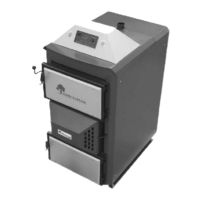
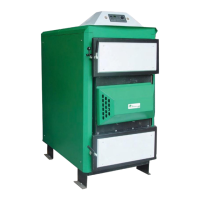
Thank you for purchasing an Orlan EKO Wood Gasification boiler.
This boiler is designed to operate in the 91% to 95% overall system efficiency range when properly
installed and operated and burning sufficiently dry wood fuel.
The boiler has been independently tested and has been certified to conform to ISO 9001, TUV, CE.
Testing and certification for (North American certifications) UL 391, ETL and CSA are in progress.
As the owner you should familiarize yourself with the installation, operating and maintenance informa-
tion included in this manual. Be sure to save it for future reference especially since it contains your
warranty information.
Warning !
There are a number of these Warning Alerts throughout this manual. Be sure that you
read, understand and follow each of them.
Warning !
All systems should be designed and installed by a professional contractor and installer
experienced and qualified in hydronic (hot water) heating systems. Local and national
codes for solid fuel boilers must be followed.
EKO Line boilers are versatile, efficient and environmentally friendly:
• home heating and domestic water heating; can work together with other heating systems.
• high efficiency: less wood needed.
• clean burning: no visible smoke when fully operating; environmentally friendly.
• safer: clean burning results in little or no creosote buildup with minimal risk of a chimney fire.
Wood Gasification
Downdraft wood gasification boilers work by what is known as the “pyrolytic wood distillation” pro-
cess. Dry wood is burned in the (top) primary combustion chamber, where heat from the flame breaks
the wood structure down into charcoal and eventually, into combustible gas. This gas passes through
the ceramic nozzle (or nozzles, depending on the model) at the bottom of the primary combustion
chamber, where it is mixed with superheated air and burned cleanly at high temperatures (up to
2,000 degrees F) in the refractory-lined bottom chamber. This clean-burning flame produces little or
no smoke. This hot gas then exits the boiler through the heat exchanger tubes and into the chimney.
Gas which was 2,000 degrees in the secondary chamber is typically only 300 to 400 degrees when
it reaches the chimney, meaning that 1,600 to 1,700 degrees is being transferred into the hot water
jacket through the heat exchanger tubes.
A clean-burning flame which sheds most of its heat on its way through the heat exchanger is the defi-
nition of a very efficient boiler.


 To Next Page