EasyManua.ls Logo

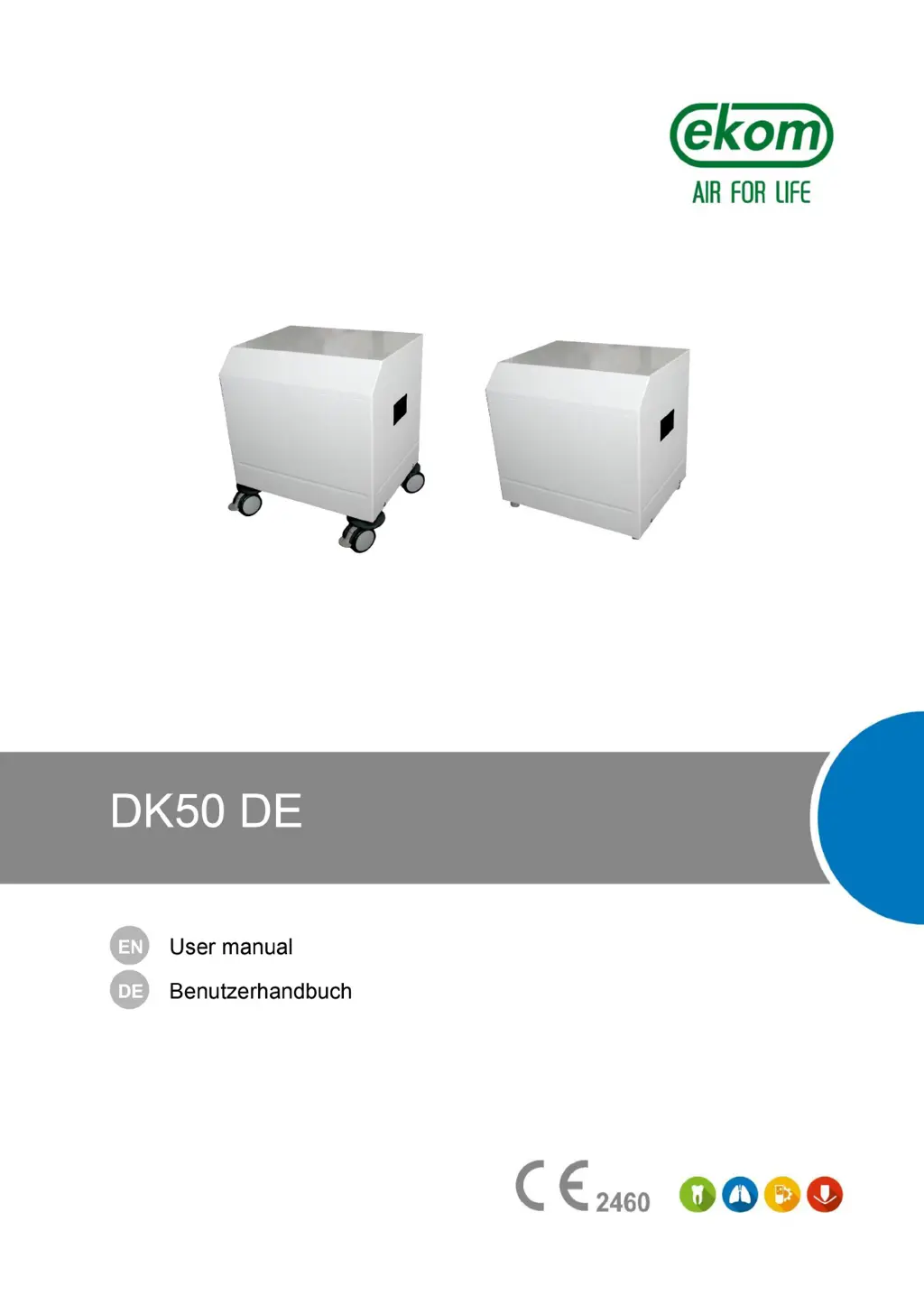
EKOM DK50 DE - User Manual

EKOM DK50 DE
56 pages
Print Icon
To Next Page IconTo Next Page
Loading...

Table of Contents

Other manuals for EKOM DK50 DE

Questions and Answers

  • J
    Joseph VangSep 2, 2025
    What to do if my EKOM DK50 DE has low output pressure?
    • A
      Andres MorenoSep 2, 2025
      If your EKOM Air Compressor experiences low output pressure, inspect the pneumatic distribution system for any leakage and seal any loose connections. Ensure that you are not exceeding the maximum flow specified in the technical data. Other potential causes include worn out piston rings, a dirty air suction filter, or dirty filter elements. Replace the worn piston rings, the dirty air suction filter, or the dirty filter elements to resolve the issue.
  • J
    Jesse PorterAug 31, 2025
    Why my EKOM DK50 DE does not start?
    • C
      Charles MendozaAug 31, 2025
      If your EKOM Air Compressor is not starting, it could be due to several reasons. Firstly, the compressor is designed to start in STANDBY mode when the pressure decreases. If that's not the case, check if the main breaker in the distribution system is switched off. Other potential issues include a defective fuse, a loose wire terminal, or a defective power cord, all of which may require replacement or tightening. In more serious cases, the motor winding might be interrupted, the thermal protection damaged, the capacitor defective or the piston jammed, which would require replacing the motor, capacitor, or damaged parts, respectively.
  • B
    bergjamesAug 29, 2025
    What to do if EKOM Medical Equipment is leaking water?
    • R
      Rebecca McgeeAug 30, 2025
      If water is leaking from the outlet of your EKOM Medical Equipment, ensure the hose from the equipment is not too long or lying on the ground; shorten it if necessary. You may need to clean or replace the float system. Also, ensure that the working or output pressure settings are correctly adjusted to the stipulated pressure and that you do not exceed the maximum flow, as detailed in the Technical Data.
  • M
    Mrs. Tamara BurtonAug 28, 2025
    Why is my EKOM Medical Equipment compressor so noisy?
    • J
      James TrevinoAug 28, 2025
      If your EKOM Medical Equipment compressor is producing unusual noises like knocking or metal sounds, the piston bearing, piston rod, or motor bearing may be damaged and require replacement. Also, the hanger might be damaged and need replacement.
  • M
    Michael ReynoldsAug 26, 2025
    How to improve low performance of EKOM Medical Equipment compressor?
    • A
      Angela CollierAug 27, 2025
      If your EKOM Medical Equipment compressor's performance is low, start by adjusting to the stipulated pressure if the working or output pressure settings are incorrect. Check the compressed air distribution system for air leaks and seal any loose joints. Ensure you do not exceed the maximum flow as detailed in the Technical Data. You may need to replace worn piston rings or a contaminated element.
  • L
    Laura MorrisAug 25, 2025
    What to do if thermal motor protection has tripped on EKOM Medical Equipment?
    • M
      Marilyn KimAug 25, 2025
      If your EKOM Medical Equipment compressor's motor has stopped and the thermal motor protection has tripped, start by checking if the ventilation openings are covered and uncover them. If the cooling fans aren't working, replace the defective fan. Ensure suitable environmental conditions for the equipment. If issues continue, replace any damaged parts.
  • C
    Charles MayAug 22, 2025
    Why is the output pressure low on my EKOM Medical Equipment compressor?
    • A
      Andrea DiazAug 22, 2025
      If you notice low output pressure in your EKOM Medical Equipment compressor, first, ensure that the working or output pressure settings are correctly adjusted. Check the compressed air distribution system for leaks and seal any loose joints. Avoid exceeding the maximum flow indicated in the Technical Data. If the problem persists, the piston assembly or element might need replacement.

Summary

General Information and Safety

Intended Use of Medical Air Compressor

Defines the medical air compressor's specific application.

Contraindications and Side-Effects

Information on any known negative effects or usage restrictions.

Operators Responsibility for Patient Safety

Stresses the operator's role in ensuring safe operation and patient well-being.

Product Markings Explained

Explanation of product markings, such as the CE mark.

General Safety Warnings and Precautions

General warnings about using original parts, accessories, and manufacturer liability.

General Safety and Operational Guidelines

General Safety Warnings

Essential safety measures to prevent injury and equipment damage.

Electrical System Safety Warnings

Critical warnings concerning electrical connections and power supply safety.

Understanding Warning Notices and Symbols

Warning Notices and Symbols Identification

Identifies and explains important warning symbols used in the manual.

Usage, Storage, and Transport

Equipment Usage Guidelines

Guidelines for the proper installation and operating environment.

Storage and Transport Procedures

Instructions for safely storing and transporting the compressor.

Equipment Description

Compressor Components and Operation

Details the compressor's parts, filtration system, and operational modes.

Technical Data and Specifications

Technical Specifications Overview

Covers output flow, voltage, filtration, dimensions, and weight.

Environmental and Operational Data

Includes climatic conditions, IP rating, and noise level.

FAD Efficiency Correction

FAD Efficiency Correction for Elevation

Explains how altitude affects FAD efficiency with a correction table.

Operation and Setup

Installation and First Operation

Initial setup, including removing stabilizers and first use procedures.

Removal of Transport Stabilizers

Step-by-step guide to removing transport stabilization screws.

Connecting and Operating the Compressor

Wheel Installation Guide

Instructions for attaching the compressor's wheels.

Compressed Air Connection

Guidance on connecting the compressed air supply to the unit.

Electrical Connection Procedures

Procedures for safely connecting the compressor to the mains power.

Initial Compressor Operation

First Operation Procedures

Steps for initial startup and checking connections.

Compressor Operation Modes

Explains STANDBY and active modes, especially with external air supply.

Operation Details and Accessories

Optional Accessories Information

Details on accessories like trolleys and humidifier holders.

Switching the Compressor On

Step-by-step instructions to power on the compressor.

Compressor Running and Maintenance

Running the Compressor

Describes automatic operation, idle run, and condensed water drainage.

Cleaning and Replacing Filters

Maintenance guide for cleaning and replacing suction filters.

Cleaning the Compressor Unit

Instructions for cleaning the exterior of the compressor.

Maintenance Procedures

Repairs and Service Procedures

Guidelines for authorized repairs, modifications, and spare parts.

Cover Removal for Maintenance

Steps to remove the compressor's covers for access to internal components.

Maintenance Schedule Overview

Outlines periodic maintenance tasks, pages, intervals, and responsibilities.

Safety Valve Maintenance

Safety Valve Check Procedure

How to perform a safety valve check and warnings against misuse.

Equipment Inspection and Filter Replacement

Joint Tightness and Equipment Inspection

Steps for checking for leaks and visually inspecting the compressor.

Replacing Filter Elements Safely

Procedure for replacing filter elements, including depressurizing the system.

Pressure Regulation and Filter Replacement

Setting the Output Air Pressure

Instructions on adjusting the output pressure using the regulator.

Cleaning the Pressure Regulator

Detailed steps for disassembling and cleaning the pressure regulator.

Replacing the Suction Filter

Guide to replacing the suction filter (item 18).

Shipping, Shutdown, and Disposal

Stabilizing Compressor for Shipping

Steps to secure the compressor for transport to prevent movement.

Shutdown Procedure

Instructions for safely powering down and depressurizing the unit.

Equipment Disposal Guidelines

Recommendations for environmentally responsible disposal of the equipment.

Troubleshooting Guide

Troubleshooting Common Problems

A guide to identifying and resolving issues with the compressor.

Spare Parts Information

List of Available Spare Parts

Catalog of spare parts with corresponding item numbers for ordering.

Electric and Pneumatic Diagrams

Wiring Diagram

Electrical schematic showing component connections and layout.

Pneumatic Diagram

Pneumatic Diagram

Pneumatic schematic illustrating the air flow and system components.

Electromagnetic Compatibility Declaration

Electromagnetic Emissions Guidance

Information on RF emissions, compliance, and environmental guidance.

Electromagnetic Immunity

Electromagnetic Immunity Guidance

Details on immunity tests and recommended environments for mains power.

RF Immunity and Separation

RF Immunity and Separation Distances

Guidance on RF immunity, proximity fields, and recommended separation distances.

EKOM DK50 DE Specifications

General IconGeneral
Number of outputs1
Air flow50 l/min
Power0.55 kW
Max Pressure8 bar
Voltage230 V
Weight26 kg
TypeOil-free compressor

Related product manuals