Contents
Printed circuit board . . . . . . . . . . . . . . . . . . . . . . . . . . . . . . . . . . . . . . . 32
Connecting accessory systems . . . . . . . . . . . . . . . . . . . . . . . . . . . . . . 32
Connection to network/Central Panel . . . . . . . . . . . . . . . . . . . . . . . . . . 33
Programming. . . . . . . . . . . . . . . . . . . . . . . . . . . . . . . . . . . . . . . . . . . . . 34
Replacement of PCB . . . . . . . . . . . . . . . . . . . . . . . . . . . . . . . . . . . . . . 35
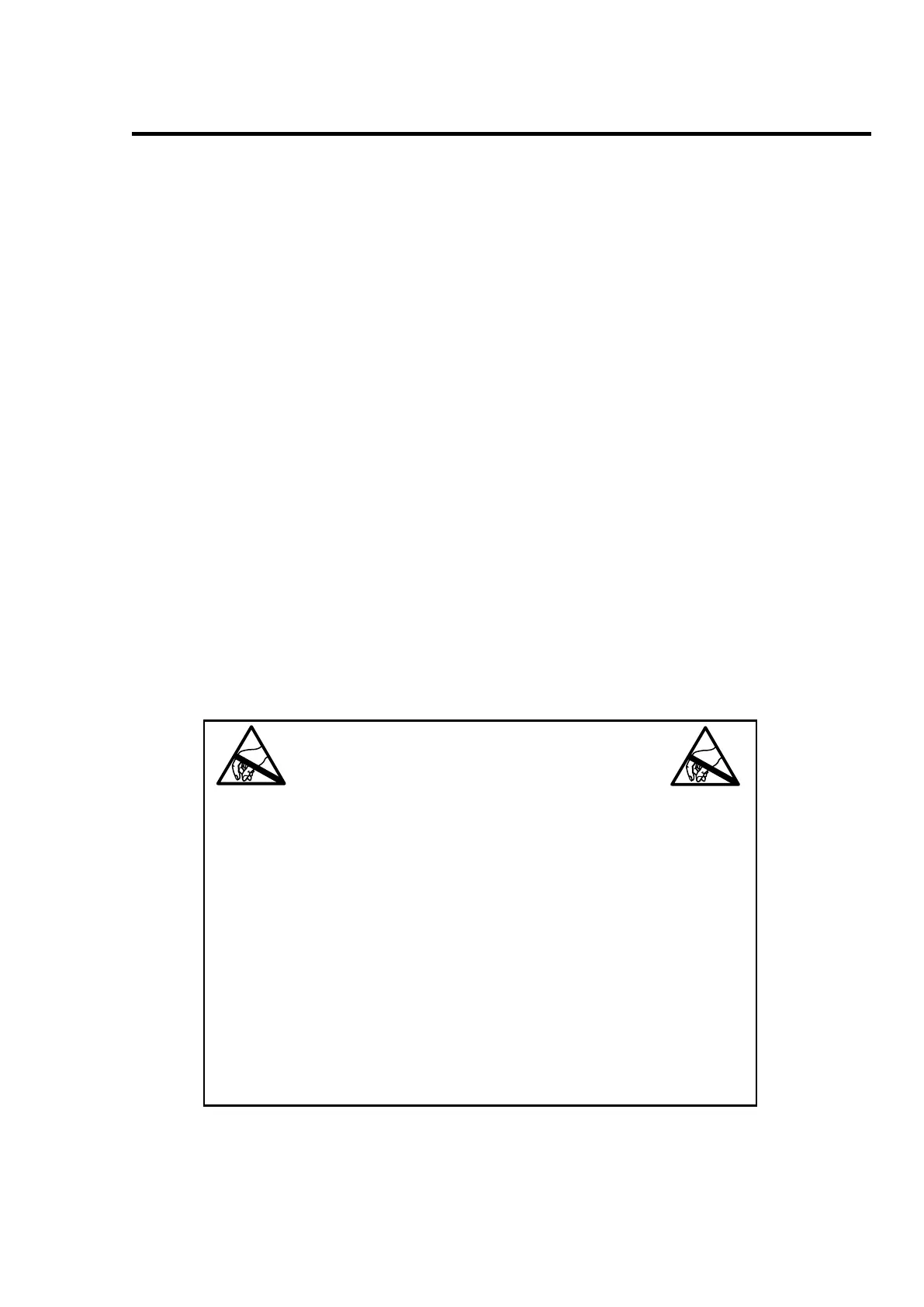
Circuit boards MUST be protected
from static electricity!
Remember!
• Always use an earthed wrist strap.
• Without the antistatic wrapping, the board is unprotected.
• Keep all items that can cause static discharge (such as plastic bags,
fabric, and the like) away from the circuit board.
• Items like plastic, foam plastic, nylon, or cellophane wrapping are all big
generators of static electricity.
• Static electricity can not be felt, heard or seen till the voltage reaches
2500V.
• Board components can be damaged by static electricity under 100V.
29
Controls
Service
manual



 To Next Page