EasyManua.ls Logo

Emerson 3051SMV - User Manual

Emerson 3051SMV
112 pages
Print Icon
To Next Page IconTo Next Page
Loading...
Reference Manual
00809-0100-4853, Rev AB
January 2017
Rosemount
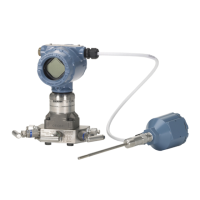
3051SMV MultiVariable
Transmitter
with FOUNDATION
Fieldbus Protocol

Table of Contents

Questions and Answers

  • S
    Scott FreemanJul 31, 2025
    What to do if my Emerson Transmitter has impulse piping issues?
    • S
      Sara MilesJul 31, 2025
      If you're experiencing impulse piping issues with your Emerson Transmitter, consider the following checks: * Ensure the pressure connection is correct. * Look for any leaks or blockages in the piping. * Confirm that all blocking valves are fully open. * Check for entrapped gas in liquid lines or liquid in gas lines. * Verify the density of the fluid in the impulse lines hasn't changed. * Inspect the transmitter process flange for sediment. * Make sure the process fluid hasn't frozen within the process flange.
  • A
    Adam BergAug 4, 2025
    Why is my Emerson Transmitter PV reading high?
    • S
      Stacy BrownAug 4, 2025
      A high PV reading on your Emerson Transmitter might be due to several factors. You should check for any restrictions at the primary element, examine the installation and overall condition of the primary element, and note any changes in the process fluid properties that could be affecting the output.
  • D
    Danielle AndersonAug 8, 2025
    Why is my Emerson Transmitter PV reading erratic?
    • B
      Brian GayAug 9, 2025
      An erratic PV reading on your Emerson Transmitter may be caused by a few things. It's recommended to check for any restrictions at the primary element, inspect the installation and condition of the primary element, and consider any changes in process fluid properties that might be influencing the output.
  • D
    David MorrisonAug 13, 2025
    What to do if my Emerson 3051SMV Transmitter has low or no PV reading?
    • S
      Stephanie ChambersAug 13, 2025
      If your Emerson Transmitter shows a low or no PV reading, begin by checking for any restrictions at the primary element. Also, inspect the installation and condition of the primary element. Finally, note any changes in process fluid properties that may affect output.
  • D
    danielmedinaAug 16, 2025
    What should the power supply voltage be for an Emerson 3051SMV?
    • K
      karen45Aug 17, 2025
      The output voltage of the power supply at the Emerson Transmitter should be 9 to 30 V dc (9 to 17.5 V dc for FISCO).
  • S
    Steven EvansAug 21, 2025
    How to check for sensor module issues in Emerson 3051SMV Transmitter?
    • N
      Nicholas CookAug 22, 2025
      To check for sensor module issues in your Emerson Transmitter: * Look for obvious defects, such as a punctured isolating diaphragm or fill fluid loss. * Check for proper fill fluid characteristics.
  • J
    Javier Jones Jr.Aug 26, 2025
    What to check if there are process temperature RTD input issues with Emerson 3051SMV?
    • Y
      yweeksAug 26, 2025
      If you're encountering process temperature RTD input issues with your Emerson Transmitter, verify the PT Mode (Normal, Fixed, Back-up), check the correct Callendar-Van Dusen coefficients, verify all wire terminations, ensure the sensor is a Pt 100 RTD, and consider replacing the Pt 100 sensor.

Summary

Section 1 Introduction

Using this manual

Explains the manual's structure and content.

Product overview

Provides a general overview of the Rosemount 3051SMV transmitter.

Product recycling;disposal

Information on environmentally responsible disposal.

Section 2 Configuration

Section overview

Introduces the topics covered in the configuration section.

Safety messages

Lists safety precautions for configuration operations.

Flow configuration

Details on configuring flow measurement parameters.

Engineering Assistant 5.5.1 ver. 2

Details the software for flow configuration.

Installing Engineering Assistant 5.5.1 ver. 2 Stand-Alone

Steps to install the configuration software.

Launching Engineering Assistant 5.5.1 ver. 2 and connecting to the transmitter

How to start the software and connect to the device.

Creating a flow configuration

Step-by-step guide for setting up flow configuration.

Sending a flow configuration to the transmitter

Procedure for downloading configuration to the transmitter.

Mass flow test calculation

How to perform a mass flow test calculation.

Variable configuration

Configuring transmitter variables like units and mass flow.

Units configuration

How to configure units for transmitter variables.

Mass flow

Configuration items for mass flow.

Differential pressure

Configuration items for differential pressure.

Static pressure

Configuration items for static pressure.

Process temperature

Configuration items for process temperature.

Variable simulation

How to simulate variables for testing.

Device configuration

Configuring device display and write lock settings.

Display configuration

How to configure the LCD display settings.

Write lock

How to enable hardware and software write lock.

Device capabilities

Information on device capabilities and network features.

General block information

Information on process control function blocks.

Link active scheduler

How the transmitter acts as a backup Link Active Scheduler.

Capabilities

Details on virtual communication relationships and link objects.

Node address

Information on the transmitter's temporary and permanent address.

Block instantiation

How function block instantiation works.

Section 3 Installation

Section overview

Introduces installation considerations for the transmitter.

Safety messages

Lists safety precautions for installation operations.

Considerations

General factors affecting measurement performance and installation.

General

General factors affecting measurement performance.

Mechanical

Mechanical installation considerations, including steam service and side mounting.

Environmental

Best practices for environmental conditions during mounting.

Steps required for quick installation

Step-by-step guide for installing the transmitter.

Mount the transmitter

Instructions for mounting the transmitter for liquid, gas, and steam flow.

Tagging

Procedures for identifying devices with tags.

Consider housing rotation

How to rotate the transmitter housing for better access.

Rotate the LCD display

How to rotate the optional LCD display.

Set the switches

How to set the simulate and security switches.

Wire, ground, and power

Guidelines for wiring, grounding, and power connections.

Signal wiring and shield grounding

Procedures for signal wiring and shield grounding.

Power supply

Requirements for the transmitter power supply.

Power conditioner

Role of a power conditioner in a fieldbus segment.

Grounding

Procedures for grounding the transmitter case.

Signal termination

Installation of terminators on fieldbus segments.

Install optional process temperature input (Pt 100 RTD sensor)

Instructions for connecting an optional Pt 100 RTD sensor.

Rosemount 305 and 304 Manifolds

Information on Rosemount manifolds and their installation.

Rosemount 305 Integral Manifold installation procedure

Steps to install the Rosemount 305 Integral Manifold.

Rosemount 304 Traditional Manifold installation procedure

Steps to install the Rosemount 304 Traditional Manifold.

Manifold operation

Procedures for manifold operation and zero trim.

Section 4 Operation and Maintenance

Section overview

Introduces topics on operating and maintaining the transmitter.

Safety messages

Lists safety precautions for operation and maintenance.

Calibration

Procedures for sensor calibration and trimming.

Calibration overview

Overview of sensor calibration tasks.

Sensor trim overview

Explanation of sensor trimming procedures.

Determining necessary sensor trims

How to determine which sensor trims are needed.

Types of pressure trim

Details on zero trim and full trim for pressure sensors.

Restore factory calibration

How to restore the transmitter to its original factory calibration.

Differential pressure sensor calibration

Procedure for zero trim or full DP sensor trim.

Static pressure sensor calibration

Procedure for zero trim or full SP sensor calibration.

Process temperature sensor calibration

Procedure for sensor trim of the process temperature sensor.

Field upgrades and replacements

Procedures for upgrading and replacing transmitter components.

Disassembly considerations

Precautions and steps before disassembling the transmitter.

Housing assembly including electronics board

Information on housing assembly and device labels.

Terminal block

Details on the terminal block and its replacement.

LCD display

Procedure for installing the optional LCD display kit.

Flange and drain vent

Procedures for removing and installing flanges and drain vents.

Section 5 Troubleshooting

Section overview

Summary of troubleshooting suggestions for common problems.

Safety messages

Lists safety precautions for troubleshooting operations.

Measurement troubleshooting

Symptoms and corrective actions for unexpected process variable readings.

Fill fluid

Performance limitations related to internal fill fluid.

Communication troubleshooting

Guide for troubleshooting communication issues on the segment.

Alarms and conditions

Diagnosing status messages from alerts.

Service support

Information on contacting Emerson for service and returns.

Appendix A Specifications and Reference Data

Specifications

Detailed specifications for performance, function, and physical attributes.

Performance specifications

Details on reference accuracy and conformance to specifications.

Functional specifications

Details on range, sensor limits, and stability.

Physical specifications

Details on electrical connections, materials, and housing.

Dimensional drawings

Diagrams showing transmitter dimensions and mounting configurations.

Ordering information

Guide to ordering different models and options.

Spare parts list

List of available spare parts and their part numbers.

Appendix B Product Certifications

European Directive Information

Information on EU Declaration of Conformity.

Ordinary Location Certification

Details on standard transmitter examination and testing.

Installing Equipment in North America

Guidance on NEC and CEC compliance for installation.

Installation drawings

Reference to installation drawings.

Emerson 3051SMV Specifications

General IconGeneral
Model3051SMV
CategoryTransmitter
Accuracy±0.075% of span
Output Signal4-20 mA
Stability0.1% of span per year
Process Connection1/2" NPT, 1/4" NPT, or flanged
Process Temperature Limits-40 to 85 °C
Temperature Range-40 to 85 °C
Power Supply10.5 to 42 VDC
Electrical Connection1/2–14 NPT
Enclosure RatingIP66
Communication ProtocolHART
TypeSmart Multivariable Transmitter
Measurement TypeDifferential Pressure

Related product manuals