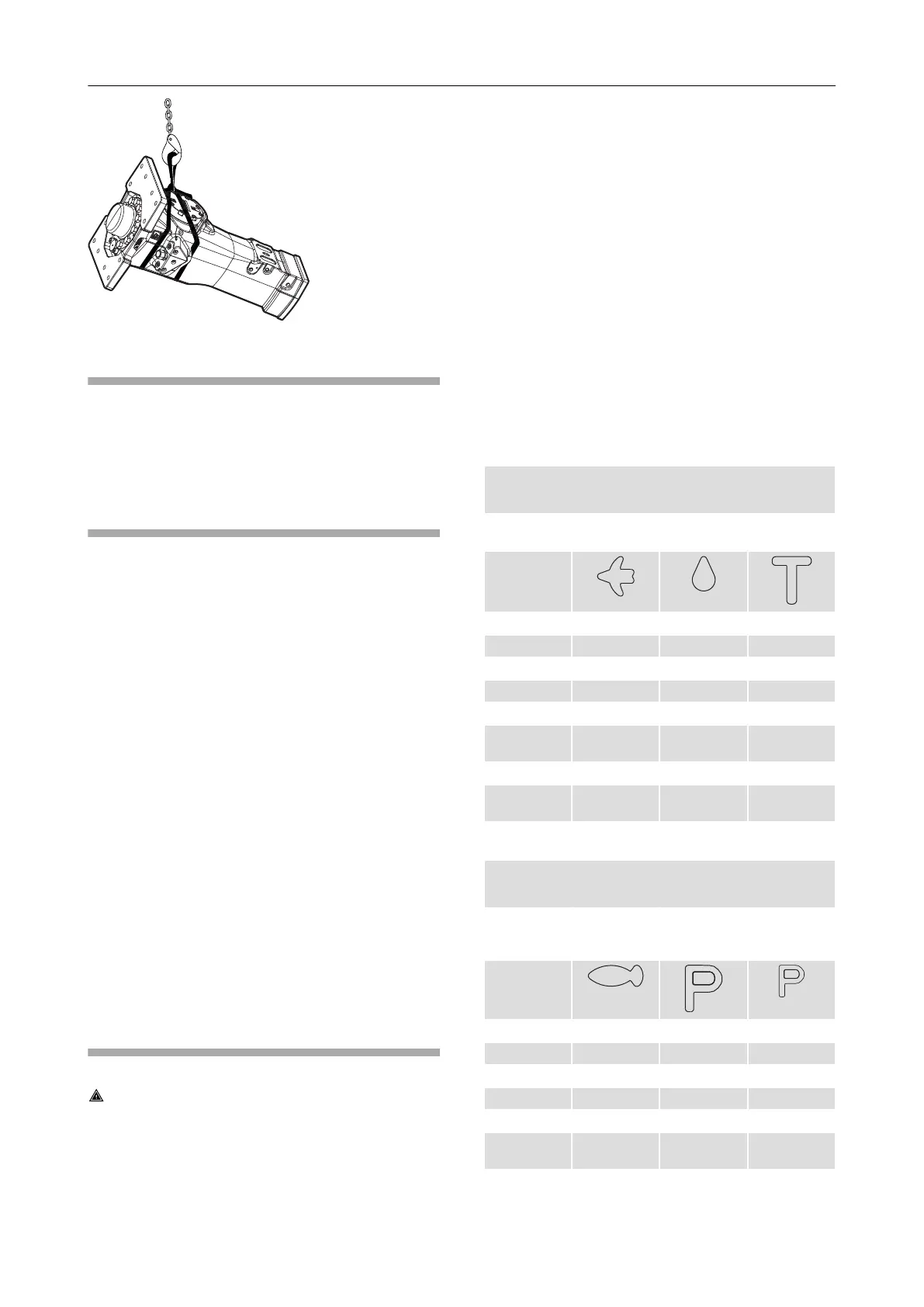
Transport using a forklift
When using a forklift. Place the hydraulic breaker
at a pallet. Use wedges and strapping to secure it.
Slowly lift and transport the hydraulic breaker to its
intended destination.
Transport using a lorry
Put the hydraulic breaker on an anti-slip mat at the
lorry. Secure the machine to the loading surface
with straps.
Observe all the applicable national and regional
regulations on securing loads.
Installation
Before installing the hydraulic breaker on the
carrier or operating it, read the operation manual
and safety instructions provided by the carrier
manufacturer. Follow all instructions.
The carrier must have the appropriate hydraulic
system for operation of the breaker.
If the carrier is too large for the hydraulic breaker it
may lead to broken working tools and increased
wear. See "Technical data" for choosing suitable
carrier.
The safety equipment in the hydraulic system must
be checked for quality (CE mark, etc.), suitability
and functionability by a professional or authorised
supervisor before use.
Hoses and connections
WARNING Whipping hydraulic hose
Hydraulic hoses under pressure can whip
uncontrollably if screws loosen or are loosened. A
whipping hydraulic hose can cause severe injuries.
►
Depressurize the hydraulic system before
loosening the connection of a hydraulic hose.
►
Tighten the nuts on the connections of the
hydraulic hoses to the required torque.
Type of nipple: ORFS standard nipple. The nipple
dimensions can be found in the Spare parts list.
The quality of the hydraulic hoses should be 2SC
(according to EN 857) or better when connecting
the breaker to the carrier. If quick couplings are to
be used, we recommend using the 'Flat Face'
quick coupling. This type is sturdy and easy to
clean. The quick coupling pressure class must
agree with the carrier's working pressure.
Always clean the quick couplings before mounting
or dismounting. Always plug hoses and hose
nipples with tight and clean end caps when
dismounting.
Hose connections
Right (As seen from operator’s seat)
Air flushing Central
lubrication
Tank, return
line
Symbol
SB 52 G
1
⁄4 in. G
1
⁄4 in. G
3
⁄8 in.
SB 102 G
1
⁄4 in. G
1
⁄4 in. G
1
⁄2 in.
SB 152 G
1
⁄4 in. G
1
⁄4 in. G
1
⁄2 in.
SB 202 G
1
⁄4 in. G
1
⁄4 in. G
1
⁄2 in.
SB 302 G
1
⁄4 in. G
1
⁄4 in. G
3
⁄4 in.
SB 302
Tunnel
G
1
⁄4 in. G
1
⁄4 in. G
3
⁄4 in.
SB 452 G
1
⁄4 in. G
1
⁄4 in. G
3
⁄4 in.
SB 452
Tunnel
G
1
⁄4 in. G
1
⁄4 in. G
3
⁄4 in.
SB 552 G
1
⁄4 in. G
1
⁄4 in. G 1 in.
Hose connections
Left (As seen from operator's seat)
Water Pressure to
breaker
Pressure for
ContiLube II
micro
Symbol
SB 52 - G
3
⁄8 in. G
1
⁄4 in.
SB 102 - G
1
⁄2 in. G
1
⁄4 in.
SB 152 G
1
⁄4 in. G
1
⁄2 in. G
1
⁄4 in.
SB 202 G
1
⁄4 in. G
1
⁄2 in. G
1
⁄4 in.
SB 302 G
1
⁄4 in. G
3
⁄4 in. G
1
⁄4 in.
SB 302
Tunnel
G
1
⁄4 in. G
3
⁄4 in. G
1
⁄4 in.
SB 452 G
1
⁄4 in. G
3
⁄4 in. G
1
⁄4 in.
Safety and operating instructions SB 52, 102, 152, 202, 302, 302Tunnel, 452, 452Tunnel,
552
12 © Construction Tools PC AB | 9800 0648 01 | 2018-01-01
Original instructions


 To Next Page