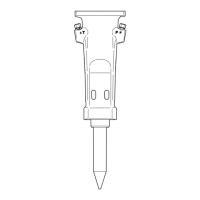
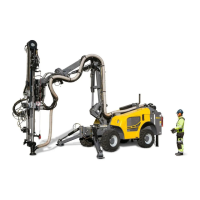
Testing
Testing of the hydraulic installation must only be
carried out by professional technicians. The
technicians must be authorised to approve a
hydraulic installation in accordance with national
directives.
Personal protective equipment
Always use approved protective equipment.
Operators and all other persons in the working
area must wear protective equipment, including at
a minimum:
•
Protective helmet
•
Hearing protection
•
Impact resistant eye protection with side
protection
•
Respiratory protection when appropriate
•
Protective gloves
•
Proper protective boots
•
Appropriate work overall or similar clothing (not
loose-fitting) that covers your arms and legs.
Drugs, alcohol or medication
WARNING Drugs, alcohol or medication
Drugs, alcohol or medication may impair your
judgment and powers of concentration. Poor
reactions and incorrect assessments can lead to
severe accidents or death.
►
Never use the machine when you are tired or
under the influence of drugs, alcohol or
medication.
►
No person who is under the influence of drugs,
alcohol or medication may operate the
machine.
Carrier, precautions
Before using or transporting the carrier with the
hydraulic breaker attached, carefully read the
carrier manufacturer's safety regulations and
operating instructions.
Make sure that the carrier is equipped with
adequate protective features, including a protective
screen in front of the operator.
The hydraulic breaker must only be mounted on a
carrier with sufficient load capacity.
Carriers without sufficient load capacity will not
provide the required degree of stability and could
even fall over during hydraulic breaker use,
causing injury and damage.
Installation, precautions
Hydraulic system
DANGER Compressed gas, explosion
hazard
The integrated piston accumulator is pressurized
even when the hydraulic system is shut off. To
dismount the accumulator without first releasing
the nitrogen gas can cause serious personal injury
or death.
►
Fill the integrated piston accumulator with
nitrogen (N
2
) only.
►
Only authorised personnel are qualified to work
with the accumulator.
WARNING Hydraulic oil at high pressure
Thin jets of hydraulic oil under high pressure can
penetrate the skin and cause permanent injury.
►
Immediately consult a doctor if hydraulic oil has
penetrated the skin.
►
Never use your fingers to check for hydraulic
fluid leaks.
►
Keep your face away from any possible leaks.
WARNING Hydraulic oil
Spilled hydraulic oil can cause burns, accidents
due to slippery conditions and will also harm the
environment.
►
Take care of all spilled oil and handle it
according to your safety and environmental
regulations.
►
Never dismount the hydraulic machine when
the hydraulic oil is hot.
►
Never run any hydraulic lines for attachment of
the hydraulic machine through the drivers cab.
CAUTION Skin eczema
Hydraulic oil can cause eczema if it comes in
contact with the skin.
►
Avoid getting hydraulic oil on your hands.
►
Always use protective gloves when working
with hydraulic oil.
►
Wash hands after contact with hydraulic oil.
Assembly or disassembly
WARNING Moving parts
Risk for leaking oil and personal injury, such as
crushed hands and fingers.
Safety and operating instructions SB 52, 102, 152, 202, 302, 302Tunnel, 452, 452Tunnel,
552
6 © Construction Tools PC AB | 9800 0648 01 | 2018-01-01
Original instructions


 To Next Page