18
Compartment (if applicable) Type of food
Fridge door shelf • Foods with natural preservatives, such as jams, juice,
drinks, condiments
• Do not store perishable foods
Salad bin • Fruits, herbs and vegetables should be placed
separately in the salad bin
• Do not store bananas, onions, potatoes, garlic in the
refrigerator
Fridge glass shelf - middle Dairy products, eggs
Fridge glass shelf - top Foods that do not need cooking, such as ready-to-eat
foods, deli meats, leftovers
Freezer drawer / shelf • Foods for long-term storage
• Bottom drawer/shelf for raw meat, poultry, sh
• Middle drawer/shelf for frozen vegetables, chips
• Top drawer/shelf for ice cream, frozen fruit, frozen
baked goods
Fresh Box
The temperature in the fresh box can be controlled by sliding the fresh box temperature control
to the left or right. To store fruits and vegetables, slide the temperature control to the left. To
store meat and sh, slide the temperature control to the right (temperature can be lower than
0ºC).
Salad Bin (Humidity Control)
The salad bin cover shelf has a slide control to control the humidity inside the salad bin. To
maintain a higher humidity, slide the control to the left to store fruits and vegetables longer and
keep fresh longer. To maintain a lower humidity, slide the control to the right.
Preparations for Freezing
• Use quality food and handle it as little as possible. Freeze food in small quantities as it freezes
faster, takes less time to defrost and enables you to control the quantity you need better.
• Leave cooked food to cool completely. Chill food before freezing if possible.
• Consider how you will want to cook the food before freezing it.
• Don’t freeze food in metal containers if you may want to microwave it straight from the
freezer.
• Use special freezer bags, freezer lm, polythene bags, plastic containers, and aluminium foil
(heavy duty grade only). If in doubt, double wrap your food. Don’t use aluminium foil for
acidic foods, e.g. citrus fruits. Don’t use thin cling lm, glass, or used food containers without
cleaning.
• Exclude as much air from the container as possible. You could buy a special vacuum pump
which sucks excessive air out of the packaging.
• Leave a small amount of air space when freezing liquids to allow expansion.
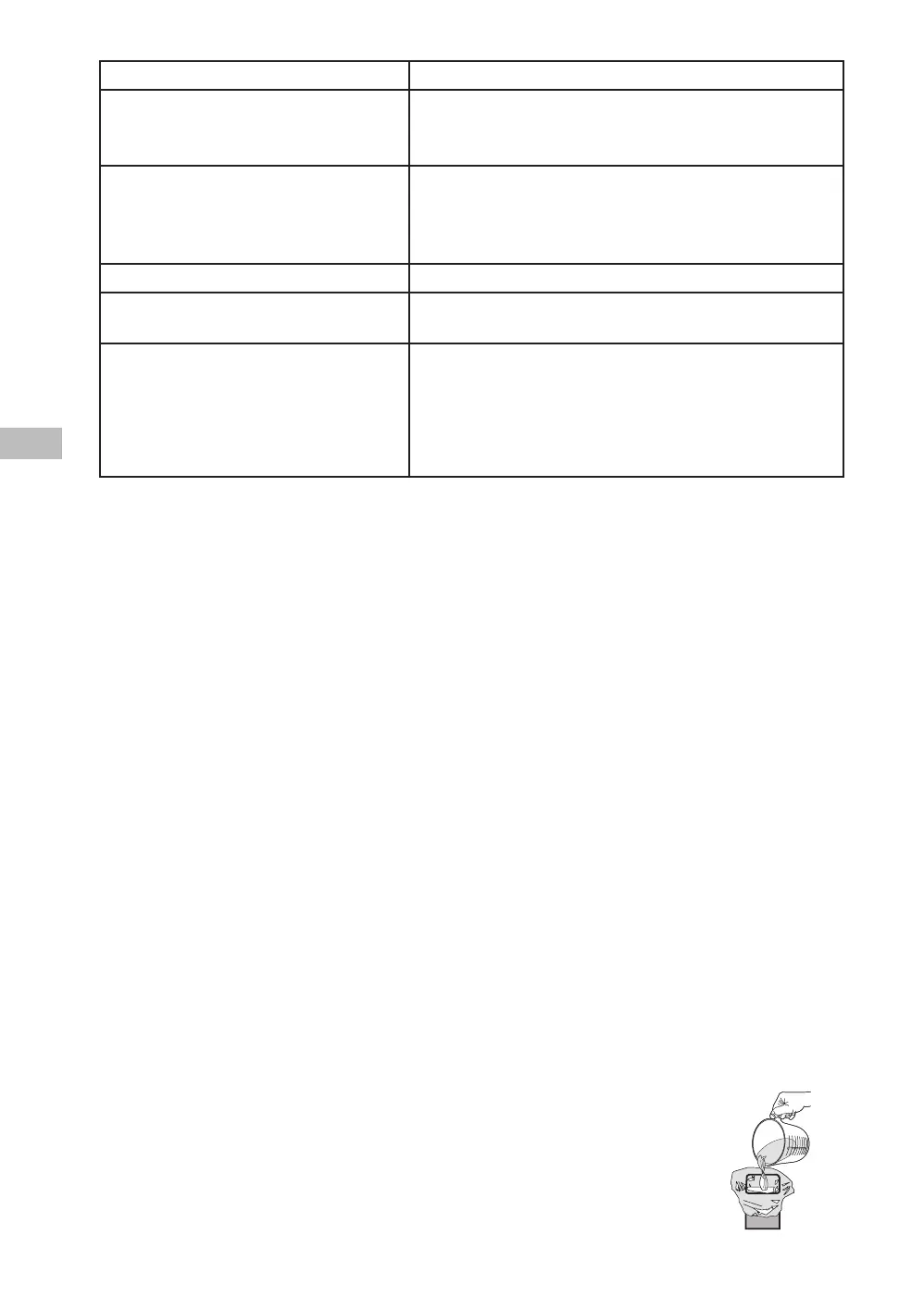
• You can use the space in the freezer most eciently if you freeze liquids (or
solids with liquids, e.g. stew) in square blocks. This is known as “Preforming”.
Pour the liquid into a polythene bag which is inside a square sided
container. Freeze it, and then remove it from the container and seal the bag.
EBF185DI_W23D_IB_5L_Final230817.indb 18EBF185DI_W23D_IB_5L_Final230817.indb 18 17/8/2023 3:32 PM17/8/2023 3:32 PM



 To Next Page