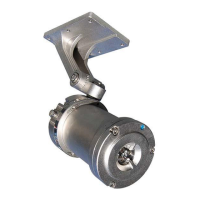
IPES IR3 Flame Detector
Operating Manual
Moisture Damage Protection
• It is the responsibility of the installer to take proper precautions during installation to protect the
electrical connections and components from moisture.
• Anti‐seize lubricant is provided for easy assembly and corrosion protection of the joints between the
enclosure/cover and enclosure/base. After disassembly, wipe these surfaces clean with a soft cotton
or wool cloth and then re‐apply a thin layer of lubricant prior to assembly.
• If installing wiring cable in conduit, do not use conduit for wiring to other equipment.
• Care should be taken to not install the detector where heavy condensate, rain, or fog can cover the
lens and reduce the sensitivity of the detector.
General Wiring Requirements
Cabling Guidelines
If installing connection cables in an explosion proof conduit, do not use the same conduit to carry wiring for
any other purpose or equipment.
Minimum 14 AWG (2.08 mm2) shielded cable conductors are required for optimal performance. The gauge of the
wire used determines the maximum distance between the 24VDC power sources.
When using Modbus, power and signal must be separate shielded twisted pair conductors
24VDC Requirements
The IPES‐IR3 detector has a maximum power draw of 3VA/Watt in an active alarm state with all relays and optics
heater active. (Fault, Alarm1) Select a power supply with adequate capability for the calculated load. Ensure that
the 24VDC (+/‐8VDC) power positive and common connections are from the same source
Warning: System ground must be provided at the point of
origination for 24VDC. Failure to do this may result in loss of range
and/or signal integrity.
Avoid low frequency, high voltage, and non‐signaling conductors to
prevent potential EMI problems.
Caution: All cable/conduit entries must be sealed with an
appropriate and certified sealing plug and cable gland. The use of
industrial grade, armored field cable is recommended.


 To Next Page