32
When to Put Your Child
in a Booster Seat
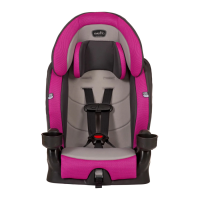
Booster seats raise the child up and help to position the
vehicle lap and shoulder belt correctly. When the child
is properly restrained in a booster seat, their risk of
injury in all types of crashes is reduced, as the lap and
shoulder belt provides excellent restraint of both the
upper and lower torsos.
It is important for the child to sit properly within the
vehicle seat belts. When the vehicle seat belt is buckled,
the lap belt should be low on the hips, just touching the
thighs, and the shoulder belt should lie across the middle of
the shoulder. If the child leans out or moves the belt behind
the back or places it under the arm, it will not provide the
intended restraint.
There are a number of things to consider when deciding
whether the child is ready to sit in a booster seat, including:
the weight and height rating on their current child seat,
the child’s own weight and height, their maturity, and the
seating positions available in your vehicle.
How is a booster seat used?
Using a booster seat is very similar to buckling yourself
into the vehicle:
• Read the instruction manuals for both the booster seat
and the vehicle before you start.
• Put the booster in the back seat in a location with
a lap and shoulder belt. Never use a booster
with only a lap belt, as this could cause serious injuries.
• After the child is in the booster, pull the lap and shoulder
belt across him/her and buckle it.
• Check that the shoulder belt lies across the middle of
the shoulder and that the lap belt is low on the hips, just
touching the thighs.
How can you tell if your child is ready to
transition to a booster seat?
You should consider using a booster seat if the following
conditions apply:
• The child is mature enough to sit in the booster seat and
not put the belts under their arm or behind their back.
• The child is approaching the weight or height limit of the
child restraint they are currently using. (Even children
who have not outgrown their toddler seat can benefit
from the use of a booster seat, if it is used properly.)
• If you have a vehicle that does not have a tether
anchorage but has lap/shoulder belts available in the
back seat, a booster seat may provide better protection
than an internal harness seat without the tether.







 To Next Page