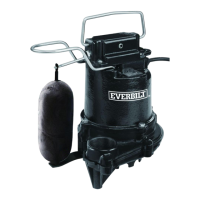
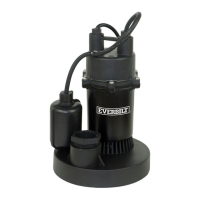
The Everbilt Submersible Sump Pump is a robust and reliable device designed for residential sump applications, primarily for pumping water. This use and care guide provides comprehensive information to ensure safe and efficient operation, from initial installation to troubleshooting and maintenance.
Function Description
The primary function of the Everbilt Submersible Sump Pump is to remove unwanted water from a sump pit in a residential setting. It is specifically engineered to handle water and is not suitable for pumping flammable or explosive liquids such as oil, gasoline, kerosene, or ethanol, nor should it be used in the presence of their vapors. Such misuse can lead to severe hazards, including explosions, fires, property damage, serious personal injury, or even death. The pump is also not designed for use as a waterfall or fountain pump, or for applications involving salt water or brine; using it in these scenarios will void the warranty. Furthermore, it should not be used where water recirculates or as a swimming pool drainer.
The pump operates on a 115V, 60 Hz single-phase electrical supply and requires a minimum 15 amp individual branch circuit. It is equipped with an approved 3-conductor cord and a 3-prong grounded plug, which is crucial for electrical safety. The ground pin must never be removed, and the plug must be inserted directly into a properly installed and grounded 3-prong, grounding-type receptacle. Using a 2-prong wall outlet is prohibited, and such outlets must be replaced with a properly grounded 3-prong GFCI receptacle in accordance with the National Electrical Code and local codes. All wiring should be performed by a qualified electrician to ensure compliance and safety.
The pump features a motor equipped with an automatic reset thermal protector. This protector is a vital safety mechanism that trips and cuts off power if the motor's temperature rises unduly, preventing damage to the motor. Once the motor cools down to an acceptable temperature, the switch automatically resets, and the motor restarts. If the protector trips repeatedly, it indicates a potential issue, and the pump should be removed and inspected. Common causes for repeated tripping include low voltage, the use of long extension cords, a clogged impeller, very low head or lift, or a plugged or frozen discharge pipe.
Usage Features
Before operation, it is essential to ensure the pump is properly installed in the sump pit. The sump pit must meet specific minimum diameter and depth requirements depending on the switch type (tethered float or vertical switch) to allow for maximum clearance of the switch operating mechanism. The sump pit should be constructed of tile, concrete, steel, or plastic, and local codes for approved materials and installation must be checked. The pump should never be installed on clay, earth, or sand surfaces, and the sump pit's inlet screen must be kept clear of small stones and gravel to prevent clogging.
Discharge plumbing involves using rigid plastic pipe, with threads wrapped in PTFE pipe thread sealant tape. The pipe should be screwed into the pump hand-tight plus 1-1/2 turns. It is critical to secure the discharge line before starting the pump, as an unsecured line can whip, causing personal injury and property damage. To minimize motor noise and vibrations, a short length of rubber hose (1-7/8 in. I.D., such as a radiator hose) can be connected into the discharge line near the pump using suitable clamps. An in-line check valve or an in-pump check valve must be installed to prevent water from flowing backward through the pump when it shuts off. If the check valve lacks an air bleed hole, a 1/8 in. (3.2 mm) hole should be drilled in the discharge pipe just above where it screws into the pump discharge, ensuring the hole is below the waterline to prevent air locks.
The pump's discharge line, if exposed to outside subfreezing temperatures, must be installed so that any remaining water drains to the outfall by gravity. Failure to do so can lead to water freezing in the discharge, potentially damaging the pump.
A crucial operational check involves filling the sump with water and observing the pump's operation through one complete cycle. This step helps confirm proper operation and prevent premature failure or flooding.
The pump's shaft seal relies on water for lubrication, meaning the pump should never be operated unless it is submerged in water. Running it dry can damage the seal. The motor housing is designed to operate at high temperatures and should not be touched during operation or disassembled, as it contains no repairable internal parts and disassembly can lead to leaks or dangerous electrical wiring issues.
Maintenance Features
Regular maintenance is key to the longevity and efficient performance of the Everbilt Submersible Sump Pump. Before any servicing, it is imperative to ALWAYS disconnect the power to the pump to prevent electric shock, burns, or death. The pump or its motor should never be handled with wet hands, while standing on a wet or damp surface, or in water before disconnecting power.
Periodically, the pump and system components should be inspected to ensure the suction screen is free of mud, sand, and debris. After disconnecting power, the pump suction screen should be cleaned, and any debris removed.
To clean a pump clogged with debris, first unplug it from electrical power. Then, unscrew the stainless screws and remove the volute. If necessary, a flathead screwdriver can be used to hold the shaft while turning the impeller counterclockwise to release it. Once the impeller is released, debris can be removed from around the shaft and the impeller. After cleaning, the pump should be reassembled.
The pump should always be lifted by its handle, never by the power cord, as this can damage the cord and create a safety hazard. After extended periods of use, allow the pump to cool down before handling to avoid skin burns.
The preset tether length of the switch should not be changed. The pump will not remove all water; if operating manually and no water comes out of the discharge hose, the unit should be shut off immediately, as the water level is likely very low, and the unit has lost prime.
Protect the electrical cord from sharp objects, hot surfaces, oil, and chemicals, and avoid kinking it. Damaged or worn cords should not be used. Extension cords are generally not recommended as they may not deliver sufficient voltage to the pump motor and pose a life-threatening safety hazard if insulation is damaged or connections fall into water. If the receptacle is not within reach of the pump's power cord, a qualified licensed electrician should install a new receptacle.
Failure to comply with the instructions and designed operation of this unit may void the warranty. Attempting to use a damaged pump can result in property damage, serious personal injury, or death. The manufacturer warrants the product to be free from defects in materials and workmanship for one year from the date of purchase, provided it has been used in normal service and has not been damaged through misuse, abuse, accident, modifications, alterations, neglect, or mishandling. The original receipt of purchase is required for warranty eligibility.


 To Next Page
 General