4646
Helm Control Systems
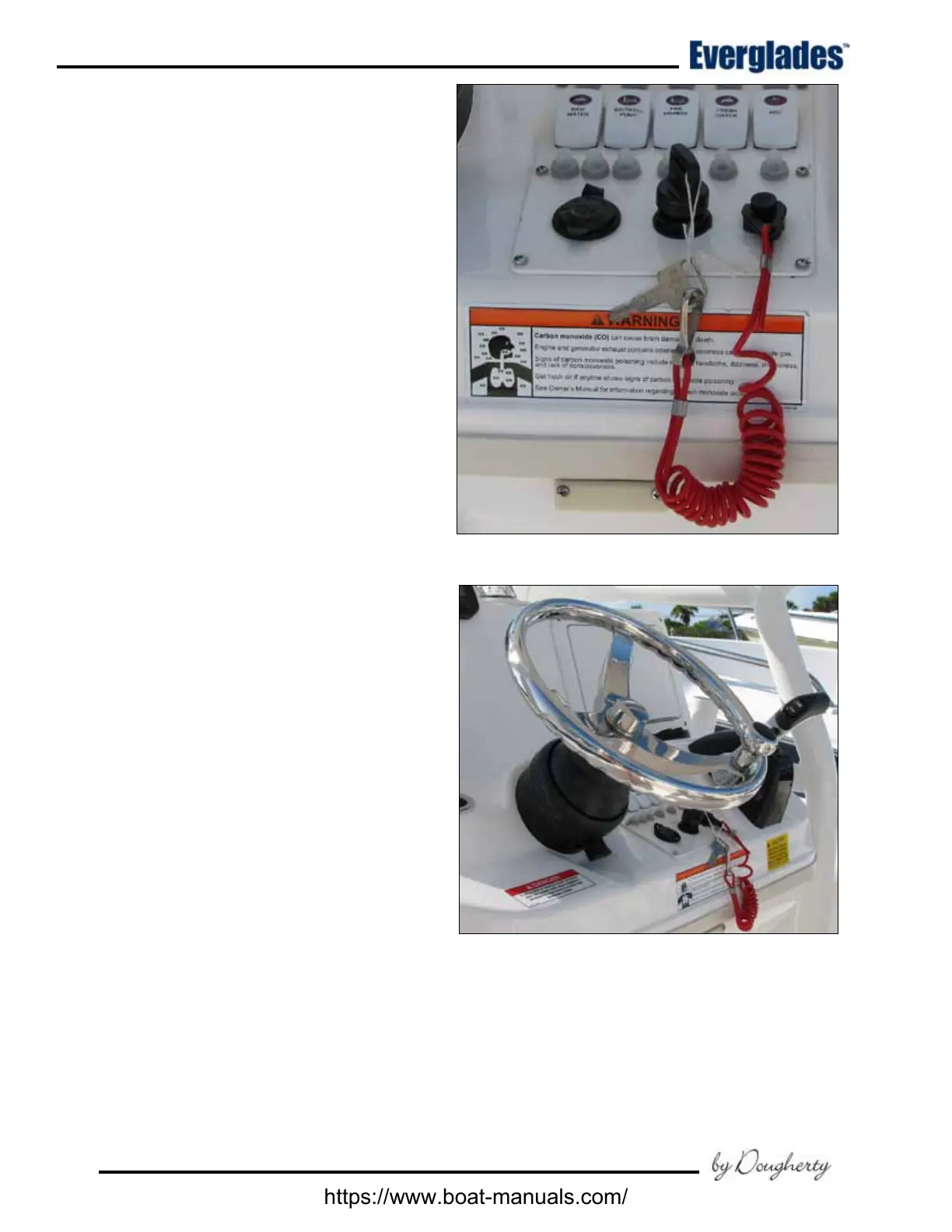
4.5 Engine Stop Switch
Your boat is equipped with an engine stop switch
and lanyard. When the lanyard is pulled it will
engage the switch and shut off the engine. We
strongly recommend that the lanyard be attached
to the driver whenever the engine is running. If
an engine will not start, it could be because the
lanyard is not properly inserted into the engine
stop switch. Always make sure the lanyard is
properly attached to the engine stop switch before
attempting to start the engine.
Refer to the engine owner’s manual for more in-
formation on the engine stop switch.
4.6 Hydraulic Jack Plate (Optional)
Your boat could be equipped with an optional hy-
draulic jack plate engine mounting system that
allows the operator to raise and lower the engine
with a switch at the helm. The engine can be
moved up for shallow water operation and moved
down for normal operation.
Most Jack plates provide lift beyond the operation
range of an outboard. If the engine is set too high,
it can cause handling difculties or raise the intake
for the cooling system above the waterline and
cause the engine to overheat and/or damage to
the water pump. You should know the maximum
safe height for your engine and never operate the
boat with the engine set too high.
On some models, the hydraulic steering cylinder
and the boat transom can be damaged if the en-
gine is tilted to the full up position with the Jack
Plate is set too low. Typically, the Jack Plate should
be raised to level 2 before tilting the engine to the
full up position. The minimum safe setting is de-
pendant on the engine and other features unique
to your boat. You should be aware of the proper
setting for the Jack Plate on your boat and monitor
the engine when it is tilted to prevent damage.
4.7 Steering System
Hydraulic Steering System
The steering system is hydraulic and made of two
main components: the helm assembly and the
hydraulic cylinder. The helm unit acts as both a
uid reservoir and pump. Turning of the helm or
steering wheel pumps the uid in the hydraulic
hoses and activates the hydraulic cylinder causing
the motor to turn. A slight clicking sound may
223 Center Console Engine Stop Switch
Typical Tilt Helm
be heard as the wheel is turned. This sound is
the opening and closing of valves in the helm unit
and is normal.
The steering wheel can be tilted to ve different
positions by activating the tilt lock lever located
on the bottom side of the helm station. When the
https://www.boat-manuals.com/



 To Next Page