76
Exterior Equipment
CAUTION
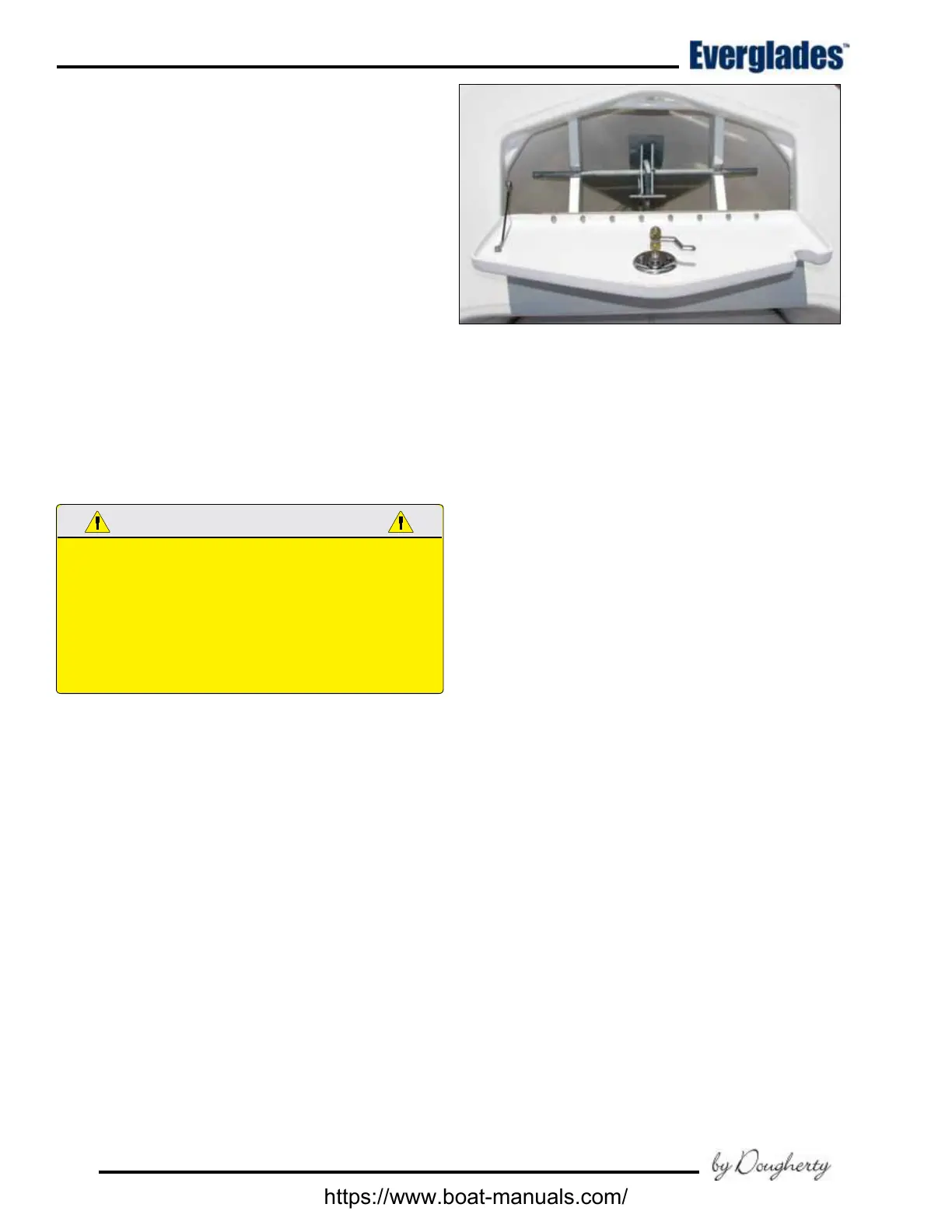
The anchor line is always stored in the locker. If
the anchor is stored in the anchor locker, it must
be properly secured to prevent it from bouncing
in the locker and causing damage to the hull or
anchor locker. The anchor locker has a molded
cradle designed to secure a uke style anchor.
The anchor locker is designed for one uke style
anchor that is properly secured in the cradle. Do
not store additional anchors or any heavy object
in the anchor locker. Heavy objects like weights
for oating markers will bounce and damage the
hull or rope locker if they are stored in the an-
chor locker. Always store and secure additional
anchors and weights in a storage compartment in
the cockpit, as far aft as possible.
The anchor locker is drained by a thru-hull tting
in the hull side near the bottom of the locker. It
is very important to check the drain frequently to
make sure it is clean and free owing.
THE ANCHOR MUST BE POSITIONED SO IT DOES NOT REST
DIRECTLY AGAINST THE SIDES OF THE LOCKER AND BE
PROPERLY SECURED AT ALL TIMES WHEN IT IS STORED IN
THE ANCHOR LOCKER. A LOOSE ANCHOR IN THE ANCHOR
LOCKER WILL BOUNCE AND CAN DAMAGE THE BOAT.
DAMAGE RESULTING FROM THE ANCHOR BOUNCING IN THE
ANCHOR LOCKER IS NOT COVERED BY THE EVERGLADES
WARRANTY.
Periodically remove the anchor line from the
locker, rinse it with fresh water and allow it to dry
in the sun. Cleaning the anchor line regularly will
reduce odors in the anchor locker and increase
the life of the line.
The line should also be inspected for abrasions or
signs of deterioration. Replace the line if it shows
any sign of damage or deterioration. If your
boat is equipped with the optional windlass, it is
important to replace the anchor line with a new
line of the type recommended or supplied by the
windlass manufacturer.
11.2 Hull
Engine Mounting System
Your Everglades is equipped with an engine
mounting system that is integrated into the hull
and stringer system that is designed to distribute
the stresses of engine weight and thrust through-
out the entire hull.
The engine hoses and cables or the transom gel
coat can be damaged by tilting the engine to the
full up position with the engine turned to the
wrong position. You should monitor the engine
as it tilts to determine best full tilt engine position
for your boat.
Hydraulic Jack Plate (Optional)
Your boat could be equipped with an optional hy-
draulic jack plate engine mounting system that
allows the operator to raise and lower the engine
with a switch at the helm. The engine can be
moved up for shallow water operation and moved
down for normal operation.
With some engine installations, the hydraulic
steering cylinder and boat transom can be dam-
aged if the engine is tilted to the full up position
with the Jack Plate set too low. Typically, the Jack
Plate should be raised to level 2.5 before tilting
the engine to the full up position.
Please refer to the Hydraulic Jack Plate section of
the Helm Control Systems chapter for additional
information on jack plate precautions and opera-
tion.
Anchor Properly Secured in Locker
https://www.boat-manuals.com/



 To Next Page