118
209173 RCD-2
Index A
9.2 OPERATION OF THE LPG SYSTEM
- Valves for supply lines and cylinder valves must be closed when appliances are not in use, before changing a cylinder and immediately in case of emergency.
- Appliance valves must be closed before opening the cylinder valve.
- Ventilation is necessary when appliances that consume oxygen from inside the boat are used.
- If the stove is not suspended by gimbals, it should not be used when wide roll angles or continuous listing are likely.
- Please refer to the manufacturer's notes for the use and maintenance of the LPG cooker.
9.3 VERIFICATION OF THE LPG SYSTEM
The LP system should be tested for leakage before each use in any of the following ways:
- If the LPG circuit is equipped with a pressure gauge:
Before each use, close the appliance valve, open the LPG cylinder valve, allow the pressure gauge to stabilize, close the LPG cylinder valve and observe the
pressure indicated by the pressure gauge near the LPG cylinder for 3 minutes. The pressure indicated by the manometer should be constant if there is no leak in
the system.
The pressure indicated by the manometer should be constant if there is no leak in the system. If bubbles are observed in the detector liquid, there is a leak.
NOTE: The pressure gauge only indicates vapour pressure, which is a constant at a given temperature. It gives no indication of the amount of LPG
remaining in the cylinder..
- Carry out a manual search by applying a foaming solution, soapy water or a detergent (with the burner taps closed and the installation and gas bottle taps left open). Foaming
solutions for detecting leaks in gas installations conforming to EN 14291 are adequate for these requirements.
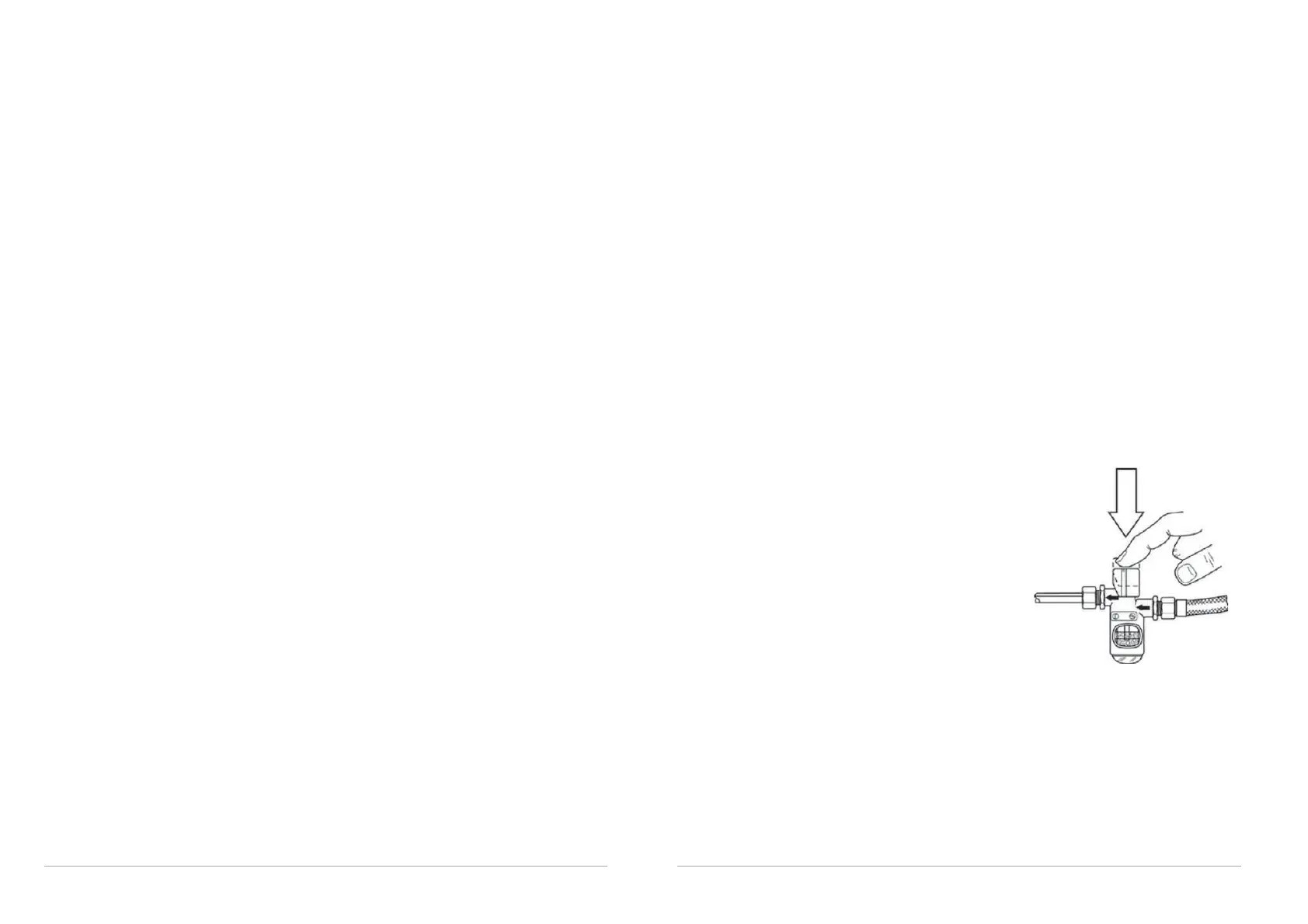
- If the LPG circuit is equipped with a bubble leak detector, use it as follows:
Regularly observe the bubble leak detector.
OR
Once the installation is pressurised and stabilised, press the detector push button. The installation is not leaking if bubbles do not
appear in the detector liquid. If bubbles are observed in the detector liquid, there is a leak.
Liquefied Petroleum Gas (LPG) System



 To Next Page