EasyManua.ls Logo

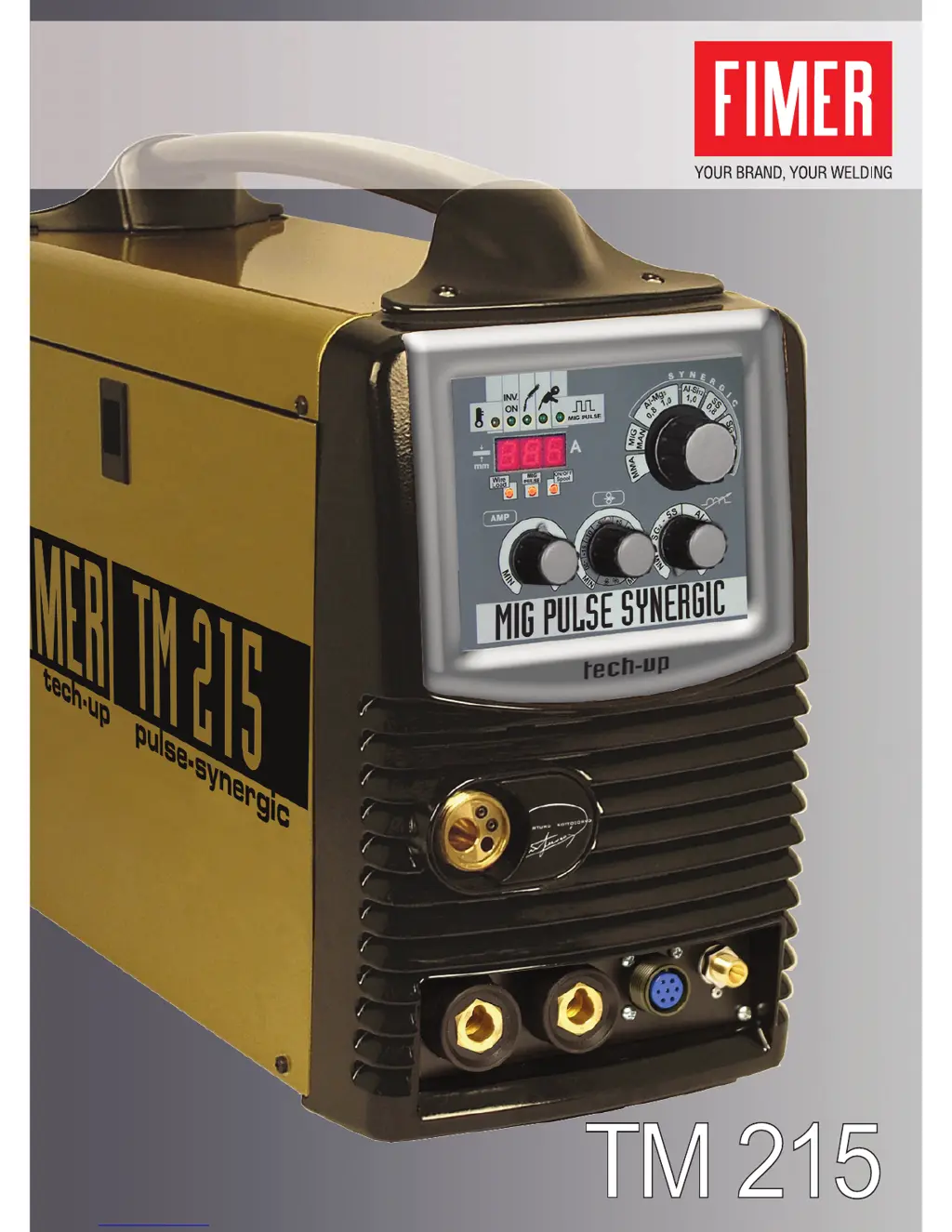
Fimer TM 215 - User Manual

Fimer TM 215
28 pages
Print Icon
To Next Page IconTo Next Page
Loading...
Instructions manual
TM 215

Questions and Answers

  • L
    Lauren JohnsonAug 16, 2025
    What to do if Fimer Welding System cuts out after prolonged use?
    • M
      Madison PaulAug 16, 2025
      If your Fimer Welding System cuts out after extended use, it may have overheated, activating the thermal protection. Allow the unit to cool down for at least 1 to 20 minutes.
  • D
    Douglas PayneAug 19, 2025
    Why does Fimer Welding System produce porous welds?
    • D
      Daniel GordonAug 19, 2025
      Porous welds in your Fimer Welding System can result from several issues: * A build-up in the gas nozzle, causing a lack of shielding gas. Clean the build-up. * Incorrect torch angle. Maintain a 5-10 mm air gap and a 60° torch angle. * Gas shortage. Increase the gas flow. * Damp workpieces. Dry them with a hot-air gun. * Welding arc too long. Shorten the arc.
  • P
    pmillerAug 21, 2025
    What to do if Fimer TM 215 has arc cut-out?
    • L
      Laura HillAug 21, 2025
      Arc cut-out in your Fimer Welding System can be caused by: * A loose earth clamp grip. Tighten the clamp grip. * A short circuit between the contact nozzle and gas hose. Clean or replace the contact nozzle and wire-feed nozzle.
  • J
    Jim SalinasAug 25, 2025
    Why does Fimer TM 215 have excessive splashes?
    • S
      Stephen GoldenAug 26, 2025
      Excessive splashes in your Fimer Welding System can occur due to: * Current being too high. Decrease the current value. * A non-optimized inductance value. Increase the inductance value. * The torch being too inclined. Straighten the torch.
  • D
    Derrick ClarkAug 28, 2025
    What causes hot cracks in Fimer TM 215?
    • L
      Laura LewisAug 28, 2025
      Hot cracks in your Fimer Welding System welds can be caused by: * Damp workpieces. Clean the workpieces. * Welding with very high heat supply. Decrease the welding current. * Impure welding wire. Change the welding wire.
  • U
    umooreAug 30, 2025
    Why is there insufficient melting with Fimer TM 215?
    • W
      williamcarrilloAug 31, 2025
      Insufficient melting with your Fimer Welding System can occur due to: * Abrupt movements of the torch. Move the torch smoothly. * A non-optimized inductance value. Change the inductance value. * Oxidized workpieces. Clean the workpieces.
  • J
    Jody GardnerSep 3, 2025
    Why is there insufficient penetration with Fimer TM 215 Welding System?
    • S
      Sean SmithSep 3, 2025
      Insufficient penetration with your Fimer Welding System may be due to: * Current being too low. Increase the current. * Inconstant wire feeding. See the above paragraph.
  • C
    christina87Sep 5, 2025
    Why does Fimer Welding System have jerky wire-feed?
    • D
      Donna StuartSep 5, 2025
      A jerky or intermittent wire-feed in your Fimer Welding System can be caused by: * A faulty gas nozzle. Replace the nozzle. * A scorched gas nozzle. Replace the nozzle. * Dirt in the wire-feeder roller groove. Clean the groove. * A worn wire-feeder roller groove. Replace the groove.
  • M
    Michael IngramSep 8, 2025
    What causes lateral indentations in Fimer TM 215 Welding System?
    • S
      stephanie54Sep 9, 2025
      Lateral indentations when using your Fimer Welding System are often due to excessive welding speed. Decrease the welding speed.
  • B
    brandy23Sep 12, 2025
    What causes breakages in Fimer TM 215?
    • B
      brianjensenSep 12, 2025
      Breakages during welding with your Fimer Welding System can be caused by an unsuitable wire. Change the type of wire.

Summary

SAFETY WARNINGS

General Safety Information

Essential safety guidelines for unit operation and manual handling.

Hazard Symbols and Meanings

Explanation of various warning symbols and their associated hazards.

WELDING OPERATION SAFETY INSTRUCTIONS

Personnel Protection and Workplace Safety

Covers protective gear, clothing, masks, ventilation, and fire prevention.

Electrical and Environmental Safety

Addresses high voltage, cable safety, confined spaces, and environmental hazards.

Specific Safety Precautions

Electric Shock Hazards and Prevention

Details on preventing electric shock, including cable and plug safety.

Maintenance and Repair Safety

Guidelines for safe maintenance, repairs, and spare parts usage.

DESCRIPTION OF WELDER

WELDING METHODS

MIG;MAG Welding

Covers manual, synergic short-arc, and synergic pulsed MIG/MAG welding techniques.

MMA Welding

Details on Manual Metal Arc (MMA) welding procedures and features.

CONNECTION TO POWER SUPPLY

OUTPUT CONNECTIONS

MIG Welding Connections (Standard Torch)

Instructions for connecting MIG welding torch with standard configuration.

MIG Welding Connections (Spool Torch)

Instructions for connecting MIG welding torch with spool gun configuration.

MMA Welding Connections

Procedure for connecting MMA welding cables and clamp.

GAS CYLINDER AND GAS PRESSURE REGULATOR CONNECTIONS

WELDING METHODS

Manual MIG Welding

Procedure for manual MIG welding, including current, wire speed, and inductance settings.

Synergic MIG Welding

Guidance for synergic MIG welding, parameter selection for different materials and thicknesses.

MMA Welding

Steps for MMA welding, current selection, and electrode handling.

WIRE LINER REPLACEMENT

TROUBLE SHOOTING

BLOCK DIAGRAM

Fimer TM 215 Specifications

General IconGeneral
Power Supply Frequency50/60 Hz
Efficiency85%
Input Voltage400 V
Power Supply Voltage400 V
Protection ClassIP23

Related product manuals