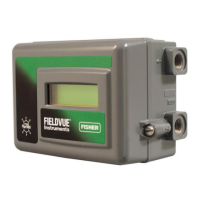
Type 399A-161-112
6
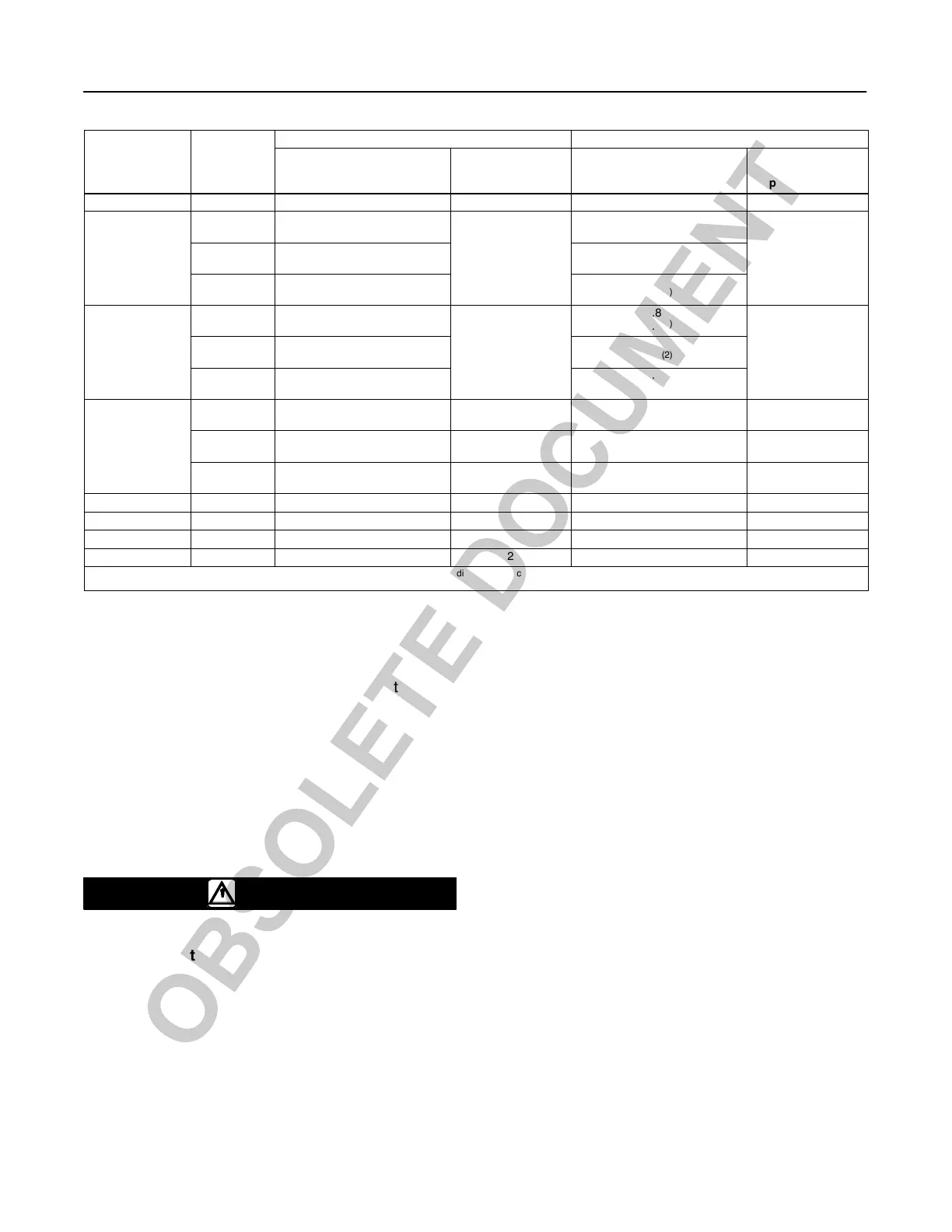
Table 5. Diaphragm Pressure Differentials
(1)
U.S. UNITS, PSIG METRIC UNITS, BAR
BODY SIZE,
INCHES
CAPACITY
CAGE
Minimum Differential Pressure
Required to Achieve Percent
of Main Valve Opening
Crack Pressure
Required to Start
Diaphragm Opening
Minimum Differential Pressure
Required to Achieve Percent
of Main Valve Opening
Crack Pressure
Required to Start
Diaphragm Opening
1 100 42 15 2.9 1.0
30
70
50
(2)
4.8
3.4
(2)
1-1/4 x 1
60
65
55
(2)
15
4.5
3.8
(2)
1.0
100
55
50
(2)
3.8
3.4
(2)
30
70
50
(2)
4.8
3.4
(2)
1-1/2 x 1
60
65
55
(2)
15
4.5
3.8
(2)
1.0
100
65
60
(2)
4.5
4.1
(2)
30
110
60
(2)
15
5
7.6
4.1
(2)
1.0
0.34
2 x 1
60
70
60
(2)
15
5
4.8
4.1
(2)
1.0
0.34
100
80
60
(2)
15
5
5.5
4.1
(2)
1.0
0.34
2 or 4 x 2 100 20 7 1.4 0.48
3 100 20 3 1.4 0.20
4, 6 x 4 or 8 x 4 100 18 4 1.2 0.27
6, 8 x 6 or 12 x 6 100 10 2 0.68 0.14
1. For additional information on percent travels at lower differential, and the corresponding capacity, consult your Fisher sales office or sales representative.
2. Minimum differential with motion indicator removed.
1. Only personnel qualified through training and
experience should install, operate, and maintain a
regulator. Before installation, make sure that there is
no damage to, or debris in, the regulator. Also make
sure that all tubing and piping are clean and unob-
structed.
2. A Type 399A regulator may be installed in any
orientation, as long as flow through the regulator
matches the direction of the arrow on the main valve
body.
CAUTION
When installing a Type 399A trim package
in an existing E Series body, damage can
result if flow is not in the correct direction.
Make sure that, after the Type 399A trim is
installed, body flow is up through the
cage port and out through the cage slots.
Change the existing flow arrow if neces-
sary.
Type 399A trim package for customer as-
sembly in an existing E Series body has
not been pressure tested at the factory.
After assembly, check for shutoff and
leakage to atmosphere.
Be sure to follow the pressure rating of
whichever has the lower-rated material
—the bonnet or the body. For example, if
an iron bonnet is used with a steel body,
the pressure rating of the iron body and
bonnet must be followed because they
have a lower pressure rating than does
the steel body.


 To Next Page