6
ALTERNATIVE SITE TESTING
IMPORTANT:
There are limitations with AST (Alternative Site
Testing). The alternative site testing of the system
can be used in only during steady-state blood
glucose conditions. Please consult the doctor
before you perform AST on the patient.
Measurements from alternative site testing
should never be used to calibrate a continuous
glucose monitoring systems (CGMs) or entered
into insulin dose calculators for insulin dosing
recommendations.
What is AST?
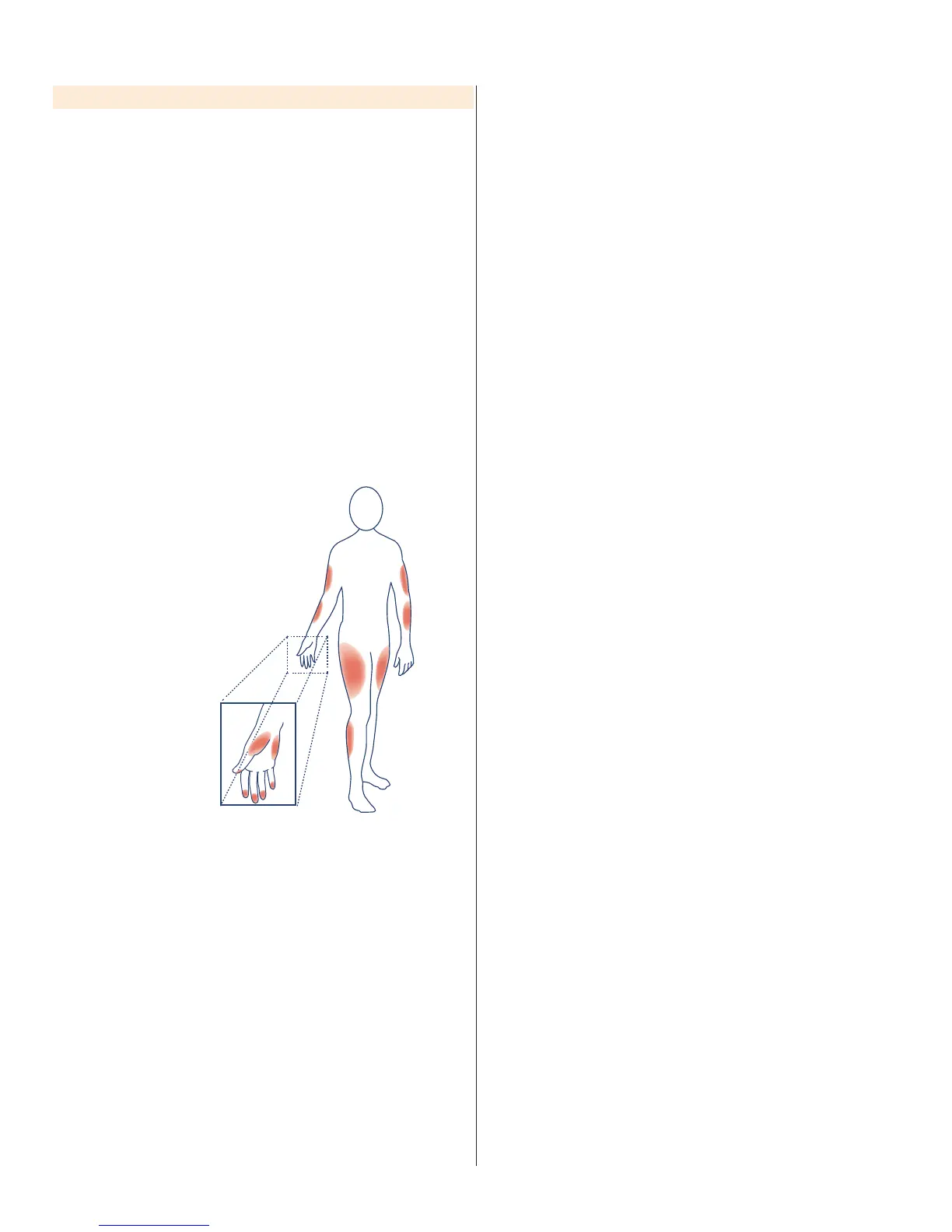
Alternative site testing (AST) means that people
use parts of the body other than fi ngertips to check
their blood glucose levels. This system provides
you to test on the palm, the forearm, the upper
arm, and with the equivalent results to fi ngertip
testing.
What’s the advantage?
Fingertips feel pain more readily because they are
full of nerve endings (receptors).
At other body sites, since nerve endings were not
so condensed, patients will not feel as much pain
as at the fi ngertip.
When to use AST?
Food, medication, illness, stress and exercise
can affect blood glucose levels. Capillary blood
at fi ngertip refl ects these changes faster than
capillary blood at other sites. Therefore when
testing blood glucose during or immediately after
meal, physical exercise, or any other event, take
blood sample from fi nger only. We strongly
recommend that you perform AST ONLY at the
following times:
• In a pre-meal or fasting state (more than 2
hours since the last meal).
• Two hours or more after aking insulin.
• Two hours or more after exercise.
Do NOT use AST if:
• Your patient has frequent low blood glucose.
• The AST results do not match the way the
patient feels.
• You are testing for hyperglycemia.
• You are testing for hypoglycemia.
• The patient’s routine glucose results are often
fl uctuating.


 To Next Page