40 Glossary | 41
11. Glossary
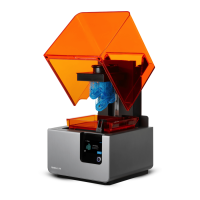
Amber Cover The cover is injection molded from high impact strength polycarbon-
ate. It is tinted amber to block exposure to the laser and to protect the
resin from curing due to ambient UV light.
Bite Valve This flexible seal regulates resin dispensing. Resin flows out when the
cartridge dispense arm squeezes the valve open.
Build Platform The aluminum base provides a surface for prints to attach to. Over
time, the build platform will develop scratches from part removal,
which can assist with print adherence.
Build Platform Carriage The carriage is the metal arm that the build platform slides onto.
Cam Handle This lever is part of the locking mechanism that secures the build
platform. Raise the cam handle before inserting the build platform,
and lower the cam handle to lock the platform into place.
Cam Lock Set Screws These three screws are used for adjusting the tension in the cam
lock. Contact Support before adjusting these screws, as improper
adjustment can lead to damage to the machine.
Cam Lock Spring The spring mechanism inside the build platform carriage allows the
cam handle to move up and down. It also mechanically locks and
unlocks the build platform.
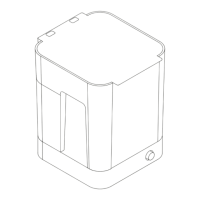
Cartridge This container holds the resin before dispensing into the resin tank.
Shake the cartridge periodically to keep resin well mixed.
Cartridge Dispense Arm This plastic hook presses against the bite valve to dispense resin out
of the cartridge into the resin tank.
Cartridge ID Chip An Electrically Erasable Programmable Read-Only Memory (EEPROM)
chip is attached to the cartridge skirt and is programmed with the
resin type. This chip communicates to the printer via spring fingers on
the cartridge floor.
Cartridge Spring Fingers Two electrical contacts comprise the spring fingers located on
the cartridge floor. The physical contact establishes an electrical
connection with the cartridge ID chip to detect the cartridge.
Display Assembly The display assembly contains the touchscreen, the button, and the
display circuit board. A ribbon cable connects the display assembly to
the motherboard.
Elastic Layer A coating of elastic material on the bottom of the tank enables a
smooth peeling process. Over time this material will cloud from
printing. Replace the tank when clouding aects print quality.
Ethernet Port The Form 2 can connect to a network via Ethernet. The port is
connected to the motherboard and can be accessed from the back of
the machine.
Galvanometers
(a.k.a. Galvos)
The galvanometers are small, fast, and precise motors that guide the
laser. One controls the movement of the laser in the Y axis, and the
other controls the X axis.
Galvo Mirrors These small mirrors are axed to the galvanometer rotors to guide
the laser toward the large mirror.
Insertion Foot The insertion foot is located on the bottom of the wiper and holds the
wiper to the wiper mount.
Interlock Magnets The interlock sensor detects these magnets to determine when the
cover is closed. This safety mechanism triggers the “cover open” mes-
sage on the touchscreen and disables the laser when the cover is open.
Large Mirror After reflecting o the galvo mirrors, the laser is redirected up through
the optical window and resin tank to cure the resin.
Laser The laser is the source of curing energy in the Form 2. It has a 405nm
violet diode and a maximum output of 250 mW. The Form 2 is a
Class1 laser product.
Latch Magnets The latch magnets secure the amber cover in place.
Lead Screw The lead screw is a threaded rod that controls the vertical motion of
the build platform carriage.
Leveling Feet Each corner of the printer is supported by a rubber foot that is
threaded into the bottom of the machine. When prompted by the
touchscreen, use the leveling tool to raise or lower each foot to
ensure that the printer is acceptably level.
LevelSense Board The black panel behind the resin tank measures and regulates the
refill rate of the resin in the tank. Any contamination can aect its
accuracy and may lead to problems printing. Clean the LevelSense
board with a small amount of clean IPA if contaminated.
Motherboard The motherboard is the main circuitry through which all systems in the
printer communicate.
Motor Drivers Located on the motherboard, these three small chips control the
three stepper motors in the machine (build platform, wiper, and tank
carrier). Each driver connects to its motor via the cable socket directly
in front of the chip.
Optical Window Located underneath the resin tank, the optical window is a glass plate
with an anti-reflective coating. It protects the sensitive mirrors inside
the printer from dust and other contamination. Maintain a clean optical
window to prevent print failures.
Power Supply The Form 2 utilizes a 100–240 V power supply. The internal power
supply converts line power to +24 V DC.
Push Button The button starts and pauses prints when prompted by the
touchscreen. Hold the button to wake and sleep the printer.
Resin Tank The polycarbonate resin tank is the primary container for holding resin
after it is dispensed from the cartridge. Resin is cured onto the build
platform when the laser passes through the tank’s acrylic plastic window.
Only use approved chemicals and processes to clean the resin tank.
Resin Tank ID Chip The resin tank’s ID chip uses Electrically Erasable Programmable
Read-Only Memory (EEPROM). The tank spring fingers read the chip
to detect the unique tank ID and current resin type.
Ribbon Cable This cable connects the touchscreen to the motherboard.
Shell This metal covering protects the printer’s internal components. It is
made from two pieces.


 To Next Page