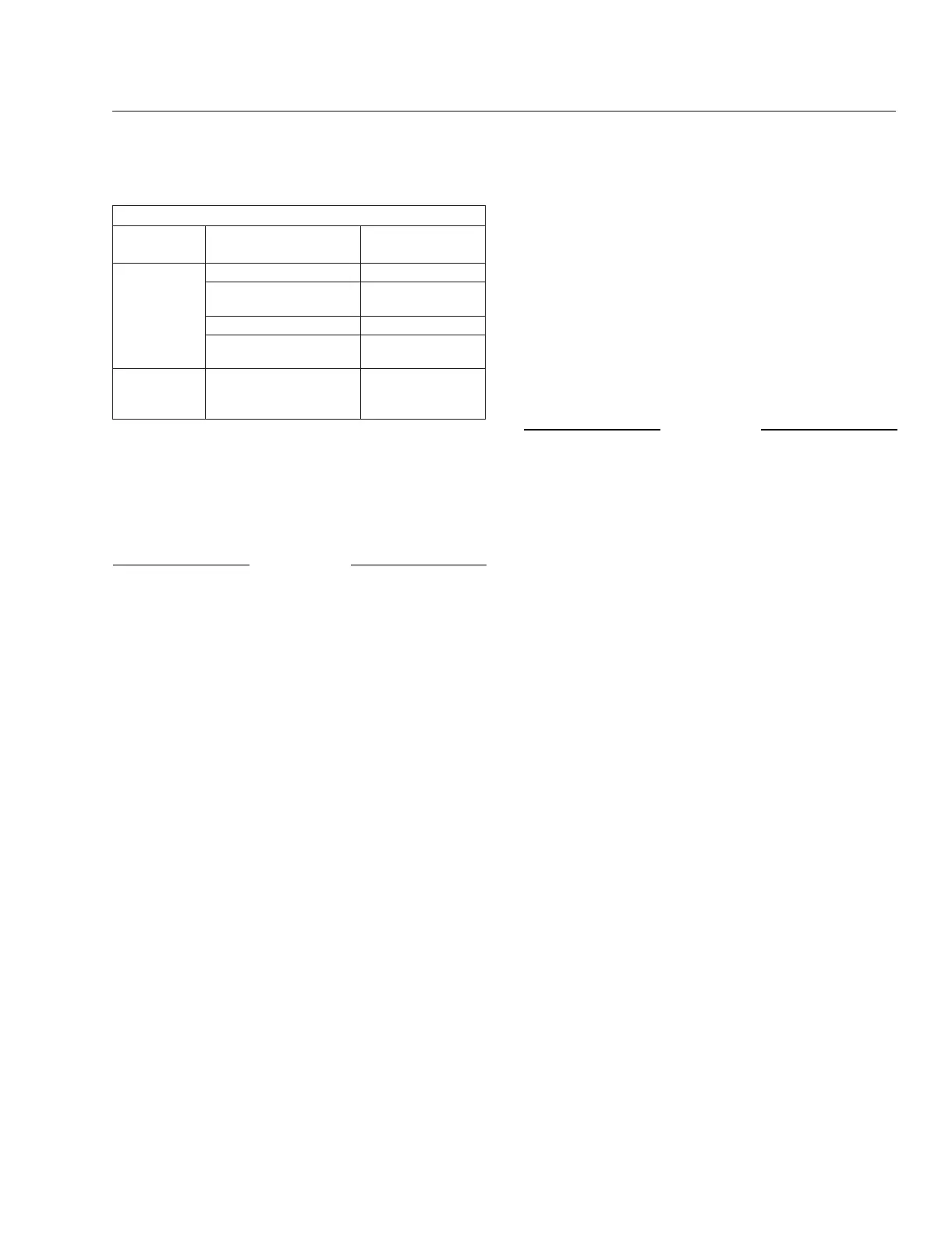
Approved Coolants
Engine Type Coolant Manufacturer
Coolant
Designation
*
Diesel
Old World Industries Fleet Charge®
Shell
Shell HD/N
Antifreeze
Texaco JC04 Antifreeze
Van Waters and
Rogers Ltd. (Canada)
Diesel Antifreeze
No. 6038
Propane Chevron
Chevron Delo
Antifreeze No.
275110
†
*
Freightliner-approved antifreeze must meet one of the following condi-
tions: A. Ethylene glycol solution that meets GM 6038–M Engineering
Standards. B. Ethylene glycol solution that has less than 0.1% anhydrous
sodium metasilicate and meets either GM 1825–M or GM 1899–M Engi-
neering Standards.
†
Chevron Delo coolant is approved for use in LPG engines only.
Table 15.1, Approved Coolants
NOTICE
Coolant must be filled to the full line of the surge
tank. Low coolant could result in engine over-
heating, which could cause engine damage.
4.
Inspect the radiator and charge air cooler.
4.1
Inspect the radiator and charge air cooler
for clogged fins. Use compressed air or
water directed from the fan side of the
core to backflush any material restricting
airflow.
4.2
Inspect the radiator and charge air cooler
for damage and accumulated debris.
Straighten bent or damaged fins to permit
airflow across all areas of the cores.
NOTE: When traveling through areas of high
insect concentration, it may be necessary to
clean the exterior of the radiator or the
charge air cooler core as often as every 200
miles (320 km).
4.3
Also inspect and clean the condenser. If
clogged, the condenser can restrict airflow
through the radiator.
4.4
Check the radiator for leaks. If leaks are
found, have the radiator repaired or re-
placed. See Group 20 of the S2 Chassis
Workshop Manual for instructions, or take
the vehicle to an authorized Freightliner
dealer.
5.
Inspect the engine and chassis wiring.
Check for loose wiring, chafed insulation, and
damaged or loose hold-down clamps. Tighten
loose wires or hold-down clamps; replace dam-
aged wiring or clamps.
6.
Inspect the air intake system for leaks or dam-
age.
NOTICE
Failure to maintain a sealed air intake system
could allow entry of dirt and contaminants into
the engine. This could adversely affect engine
performance and result in engine damage.
6.1
Check the intake-air restriction indicator.
6.2
Replace the primary filter element in the
air cleaner if the yellow signal stays
locked at 20 inH
2
O for Mercedes-Benz
engines and 25 inH
2
O for Cummins ISB
engines. See Group 09 of the S2 Chassis
Workshop Manual for filter element re-
placement instructions, or take the vehicle
to an authorized Freightliner dealer. See
Fig. 15.2.
NOTE: After replacing the filter element,
reset the restriction indicator by pressing the
rubber reset button.
6.3
Inspect the secondary or safety filter ele-
ment in the air cleaner when replacing the
primary element, and replace it when
clogged or dirty. This element should be
replaced with every third primary element
replacement.
6.4
Check the engine air intake piping from
the air cleaner to the engine intake. In-
spect the piping for loose connections,
cracks, torn or collapsed hoses, punc-
tures, and other damage. Tighten loose
connections, and have damaged compo-
nents replaced. Make sure the piping sys-
tem is airtight so that all intake air passes
through the air cleaner.
Pre- and Post-Trip Inspections and Maintenance
15.2


 To Next Page