Safety Precautions
DANGER
When working on the vehicle, shut down the en-
gine, set the parking brake, and chock the tires.
Before working under the vehicle, always place
jack stands under the frame rails to ensure the
vehicle can not drop. Failure to follow these
steps could result in serious personal injury or
death.
Daily Pretrip Inspection and
Maintenance Procedures
Whenever equipment requires adjustment, replace-
ment, and/or repair, see the S2 Chassis Workshop
Manual for procedures and specifications. Specific
references to the manual will be found where appro-
priate.
1.
Drain the brake system air reservoirs (reservoirs
without automatic drain valves only).
Water and oil normally enter the air reservoir in
the form of vapor because of the heat generated
during compression. After the water and oil con-
dense, drain the resulting emulsion as follows:
1.1
Open the wet tank valve. The drain cock
or pull chain drain is located on the for-
ward end of the supply air reservoir, which
is connected directly to the air compres-
sor. Block the valve open.
WARNING
When draining the air reservoir, do not look into
the air jets or direct them toward anyone. Dirt or
sludge particles may be in the airstream and
could cause injury.
1.2
Exhaust the remaining air and moisture
from the system by opening the drain
cocks on the bottoms of the remaining air
reservoirs. Block the valves open.
1.3
Water and oil emulsion often form pockets
that will not drain while compressed air is
in the reservoirs. Because of these pock-
ets, leave the valves blocked open during
the first part of the pretrip inspection.
1.4
If the drained water is cloudy or oily, it
may indicate a problem with the compres-
sor. If oil is allowed to contaminate the air
dryer, it will not remove the water from the
air brake system, which could adversely
affect braking.
2.
Check the fluid level in the windshield washer
reservoir.
Add washer fluid as needed. Unscrew the cap to
add fluid.
WARNING
Washer fluids may be flammable and poisonous.
Do not expose washer fluid to an open flame or
any burning material, such as a cigarette. Always
comply with the washer fluid manufacturer’s rec-
ommended safety precautions.
3.
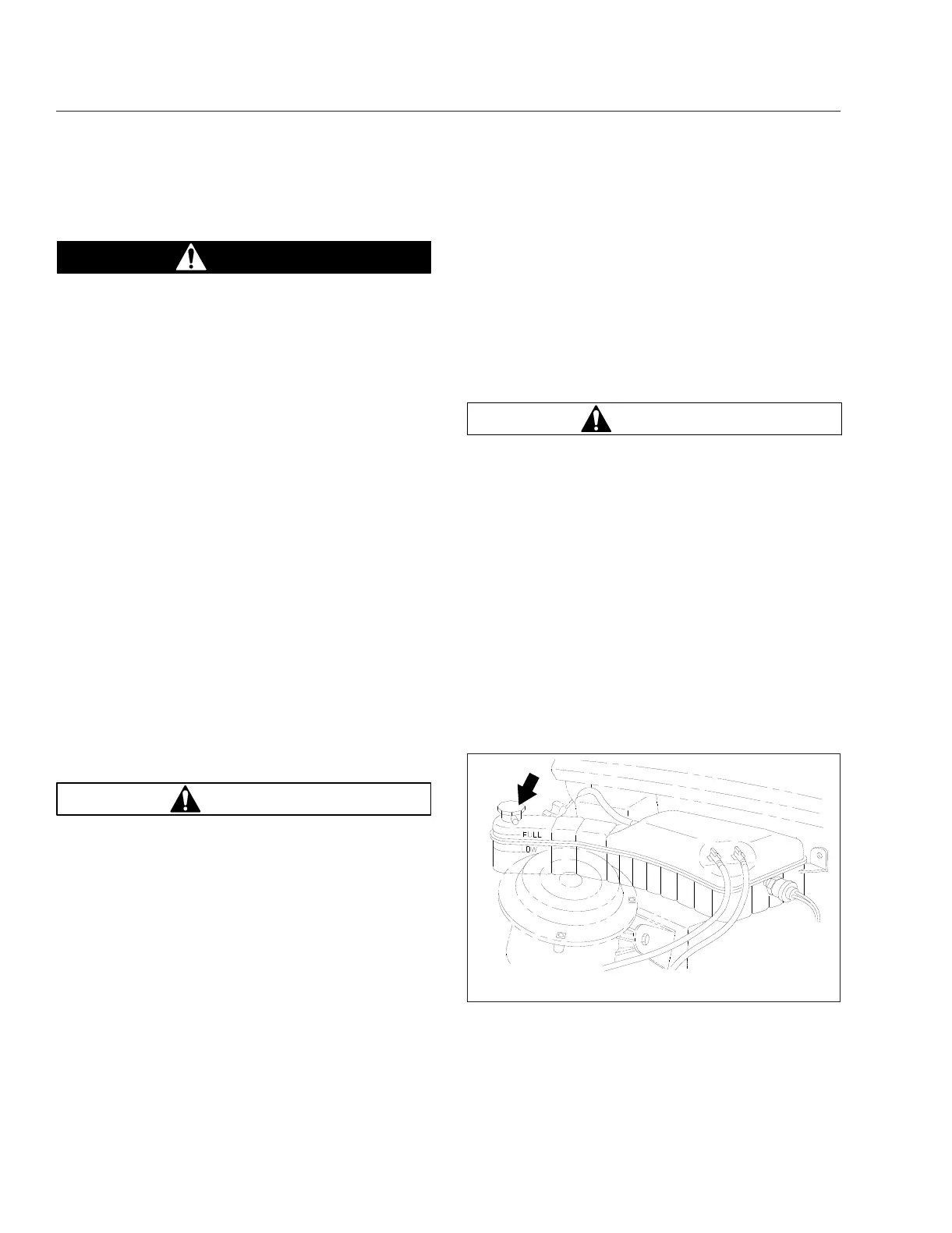
Check the coolant level in the surge tank.
See
Fig. 15.1. If the coolant is low, add a 50/50
mixture of water and the type of antifreeze cur-
rently installed in the vehicle. For a list of ap-
proved coolants for both diesel and liquid pro-
pane gas (LPG) engines, see
Table 15.1. Fill the
surge tank with coolant to the MAX line when the
tank is cool. If the surge tank was empty, start
the engine after refilling and check the level
again when the engine is at operating
temperature.
11/02/2001
f820382
Add coolant here (arrow).
Fig. 15.1, Coolant Level Checking
Pre- and Post-Trip Inspections and Maintenance
15.1







 To Next Page