EasyManua.ls Logo

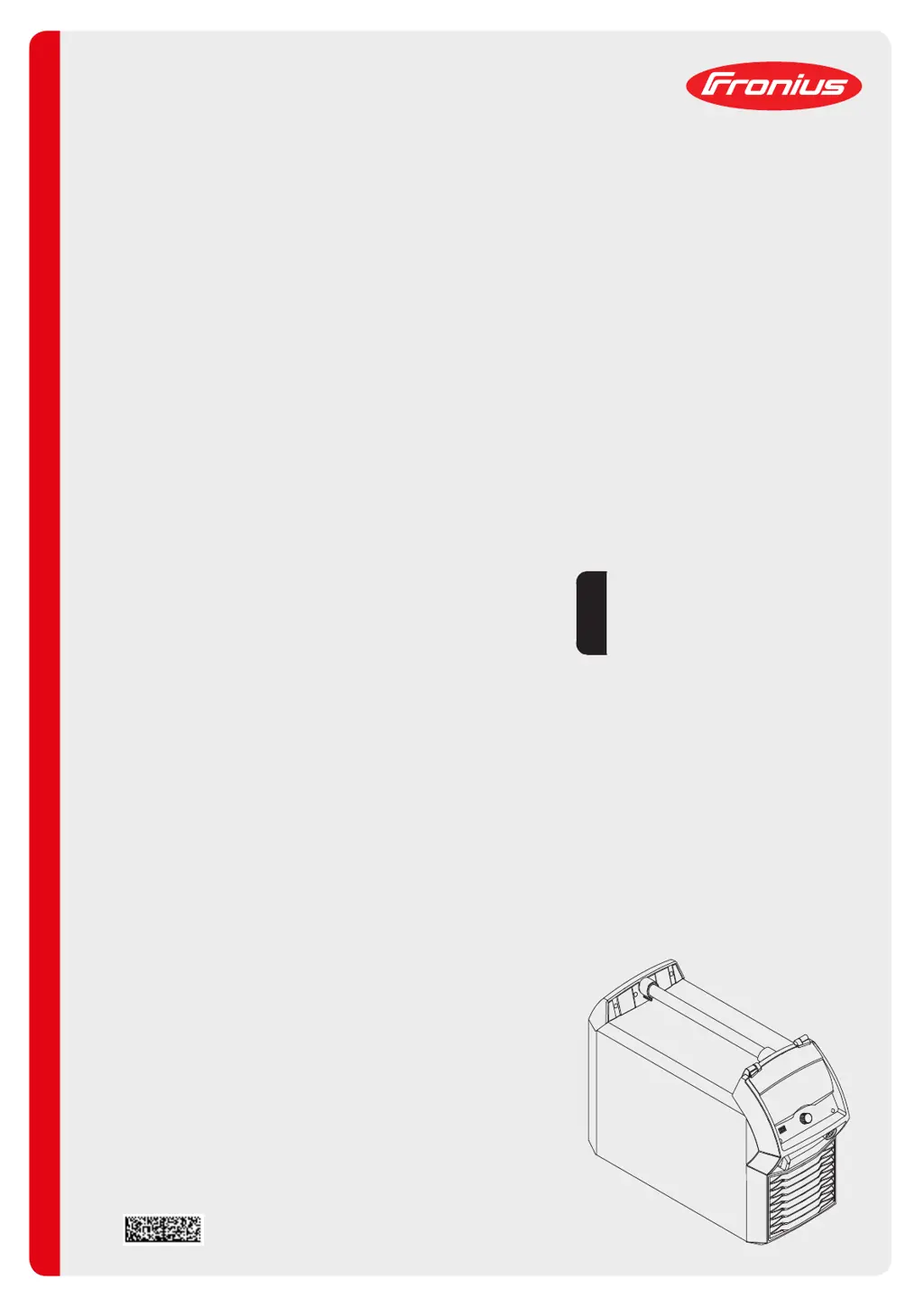
Fronius TPS 400i - User Manual

Fronius TPS 400i
228 pages
Print Icon
To Next Page IconTo Next Page
Loading...
/ Perfect Charging / Perfect Welding / Solar Energy
42,0426,0114,EN 025-11012018
TPS 320i / 400i / 500i / 600i
TPS 400i LSC ADV
Operating Instructions
MIG/MAG Power source
EN

Table of Contents

Questions and Answers

  • R
    Rachel EvansAug 16, 2025
    What to do if there is no welding current in my Fronius Welding System?
    • K
      Kimberly DunnAug 16, 2025
      If your Fronius Welding System shows no welding current, first, check the grounding connection and terminal for correct polarity. If the grounding is correct, the issue might be a break in the current cable within the welding torch, requiring you to replace the welding torch.
  • C
    Chad DavisAug 19, 2025
    Why is there no protective gas shield in my Fronius TPS 400i?
    • N
      Nancy MataAug 19, 2025
      If your Fronius Welding System isn't providing a protective gas shield, start by changing the gas cylinder. If the issue persists, the gas pressure regulator may be faulty and require replacement. Also, check the gas hose for proper connection, damage, or kinks, and connect/replace it or straighten out any kinks. If those steps don't solve the problem, the welding torch or gas solenoid valve might be faulty and need to be changed.
  • E
    Elizabeth CobbAug 22, 2025
    How to troubleshoot a Fronius TPS 400i Welding System power source that does not function?
    • R
      Raymond JenkinsAug 22, 2025
      If your Fronius Welding System's power source isn't functioning, begin by checking the mains lead and ensuring the mains plug is securely plugged in. If the problem persists, examine the mains socket and plug for faults, replacing any defective parts. Finally, inspect the mains fuse and change it if it's faulty.
  • E
    Elizabeth CooperAug 26, 2025
    What causes poor weld properties in a Fronius Welding System and how to fix it?
    • K
      Katie GomezAug 26, 2025
      If your Fronius Welding System is producing poor weld properties, verify the welding parameters are correct. Ensure a good grounding connection to the workpiece. Check for an adequate protective gas shield by inspecting the pressure regulator, gas hose, gas solenoid valve, and torch gas connection. Replace the welding torch if it's leaking, and replace the contact tip if it's wrong or worn out. Finally, check the wire electrode and the weldability of the base metal, and use the correct shielding gas for the wire alloy.
  • V
    Vanessa HernandezAug 28, 2025
    What to do if nothing happens when torch trigger is pressed on my Fronius Welding System?
    • D
      David KellyAug 28, 2025
      If nothing happens when you press the torch trigger on your Fronius Welding System, first ensure the control plug is securely plugged in. If the issue continues, the welding torch or its control line may be faulty and need replacement. Also, check the interconnecting hosepack for faults or improper connection.
  • E
    Edward ColeAug 31, 2025
    Why is there no welding current in my Fronius Welding System?
    • A
      Adam WilliamsAug 31, 2025
      If your Fronius Welding System has no welding current, check the duty cycle. If the duty cycle has been exceeded, let the power source cool down. If the thermostatic automatic circuit breaker has tripped, wait for the power source to automatically come back on after the cooling phase. Ensure accessibility to cooling-air ducts. If the fan in the power source is faulty, it should be replaced by After-Sales Service.
  • W
    wrobertsSep 3, 2025
    How to fix irregular wire feed speed on my Fronius TPS 400i Welding System?
    • A
      Allen ThompsonSep 3, 2025
      If your Fronius Welding System has an irregular wire feed speed, try loosening the brake if the braking force has been set too high. Use a suitable contact tip if the hole in the current one is too narrow. Check the inner liner in the welding torch for kinks or dirt. Use suitable feed rollers for the wire electrode being used, and optimise the contact pressure of the feed rollers.
  • R
    robinsonamandaSep 6, 2025
    Why does the welding torch become very hot on my Fronius Welding System?
    • M
      Melinda SchmittSep 6, 2025
      If the welding torch of your Fronius Welding System becomes very hot, observe the duty cycle and loading limits of the welding torch. If you are using a water-cooled machine, check the coolant fill level, coolant flow, and for coolant contamination.
  • L
    Louis PhillipsSep 9, 2025
    What to do if my Fronius Welding System has no welding current?
    • A
      Annette JacksonSep 9, 2025
      If your Fronius Welding System has no welding current, several factors could be the cause. First, the duty cycle may have been exceeded, so check it. Second, the thermostatic automatic circuit breaker might have tripped; in that case, wait for the power source to automatically restart after the cooling phase. Third, ensure that the cooling-air ducts are accessible, as a limited supply of cooling air can cause this issue. Finally, the fan in the power source could be faulty, requiring replacement by After-Sales Service.
  • W
    Wanda RobinsonSep 12, 2025
    Why my Fronius Welding System power source does not function?
    • J
      John McclureSep 12, 2025
      If your Fronius Welding System's power source isn't functioning, there are several potential causes. It could be due to a break in the mains lead, or the mains plug might not be properly plugged in; in this case, check the mains lead and ensure the plug is connected. Alternatively, the mains socket or plug could be faulty, requiring replacement. Lastly, the mains fuse might be faulty, necessitating a change of the mains fuse protection.

Summary

Safety Rules

Explanation of Safety Symbols

Explains danger symbols like DANGER, WARNING, CAUTION, NOTE, and IMPORTANT for safe operation.

Operator and Personnel Responsibilities

Protecting Yourself and Others

Identifies welding risks like sparks, arc radiation, EMF, and noise, and mandates protective clothing.

Specific Hazards and Precautions

Danger from Toxic Gases and Vapours

Warns about harmful welding fumes and vapors, emphasizing ventilation and extraction.

Electrical and Fire Hazards

Danger from Flying Sparks

Warns about fire and explosion risks from flying sparks and hot metal, advising on fire extinguisher use.

Risks from Mains Current and Welding Current

Details electrical shock hazards and essential safety measures for live parts and grounding.

Gas Cylinder and Shielding Gas Safety

Danger from Shielding Gas Cylinders

Emphasizes safe handling of shielding gas cylinders to prevent damage and explosion.

Danger from Escaping Shielding Gas

Warns about suffocation risk from uncontrolled shielding gas escape and requires adequate ventilation.

General Information

MIG;MAG Welding Processes and Characteristics

System Components and Options

OPT;i Safety Stop PL d Option

Details the safety function according to EN ISO 13849-1, ensuring a safety stop in less than one second.

Controls, Connections, and Mechanical Components

Control Panel

Describes the control panel's general operation, safety warnings, and layout.

Connections, Switches and Mechanical Components

Details the front and rear connections, switches, and components of the power source.

Display and Status Bar

Installation and Commissioning

Minimum Equipment Needed for Welding Task

Lists essential equipment required for various welding tasks like MIG/MAG, TIG, and MMA.

Before Installation and Commissioning

Covers safety, proper use, setup regulations, and mains connection requirements before setup.

Commissioning the TPS 320 i; 400 i; 500 i; 600 i, TPS 400 i LSC ADV

Explains the commissioning process using a water-cooled MIG/MAG application with system component overviews.

MIG;MAG Modes and Welding

MIG;MAG Modes

Explains general settings and symbols for MIG/MAG modes, detailing parameters like Gas pre-flow and arc length correction.

MIG;MAG and CMT Welding

Outlines steps for MIG/MAG and CMT welding, including power source activation and parameter settings.

Setting the Welding Process and Operating Mode

Guides through selecting the welding process (e.g., MIG/MAG PMC, TIG) and operating mode (e.g., 2-step, 4-step).

Parameter Settings and Job Management

TIG and MMA Welding Procedures

TIG Welding

Covers safety, preparations, process selection, igniting the arc, and finishing TIG welding.

MMA Welding

Details safety, preparations, process selection, and parameter adjustment for MMA welding.

Process Parameters

Process Parameters, General

Details general process parameters for start/end of welding, including starting current and arc length.

Process Parameters for Process Control

Explains parameters like penetration stabiliser and arc length stabiliser for precise process control.

Defaults and System Settings

Defaults

Provides an overview of default settings categories: View, System, Documentation, and Administration.

SmartManager - Power Source Website

Troubleshooting and Maintenance

Troubleshooting

Addresses common issues like no welding current, unresponsive trigger, and no shielding gas.

Care, Maintenance and Disposal

Provides guidelines for general care, safety checks, cleaning, and proper disposal of the power source.

Technical Data

Fronius TPS 400i Specifications

General IconGeneral
BrandFronius
ModelTPS 400i
CategoryWelding System
LanguageEnglish

Related product manuals