22
Absolute polarity and live sound
Maintaining absolute polarity through a sound system not only means making sure all your loudspeakers
are “in phase” but also ensuring that your microphones give a positive-going output voltage for a
positive-going pressure, that there are no polarity reversals anywhere in the signal path and that your
loudspeaker systems provide a positive pressure in response to that positive-going signal.
Professional sound engineers, who are used to working with wide-bandwidth, phase coherent systems
with real bodily impact, should recognise the importance of maintaining absolute polarity from stage
microphones to PA - and, of course, to stage monitors where a close-coupled polarity reversal could make
things sound thin, coloured and lifeless.
Many natural sound sources, especially percussion and vocals, produce asymmetrical waveforms. It
makes sense to ensure that a positive-going percussive impact creates a positive-going pressure for the
audience to maintain that all-important bodily impact. Some recording engineers are also adamant that
vocals overlay the band more clearly if absolute polarity is maintained.
Common sense, then, suggests that, as long as we’re using polarity-matched microphones and well-
documented signal paths, why not maintain absolute polarity – if only for consistency?
8 Loudspeaker cables
8.1 Recommended cable types and lengths
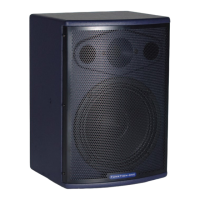
F81 loudspeaker systems do not require particularly exotic cables. Standard pro-audio copper core
loudspeaker cables are usually oxygen-free and perfectly suitable for this application.
Good examples are:
Van Damme Black Series Tour Grade twin-axial (For general portable PA use)
Van Damme Ecoflex Install Grade Speaker Cable LSZH
(For installations in public buildings, clubs and cruise ships where Low Smoke Zero Halogen
cables are specified. These cables are compliant with IEC60092, IEC60332.1, IEC60332.3C,
IEC60754.1, IEC60754.2 and IEC60134.2)
The following table gives the maximum cable lengths allowable to keep level losses below 0.6dB.


 To Next Page