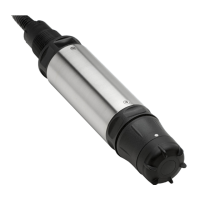
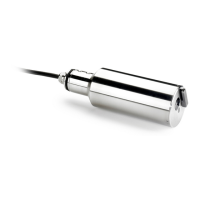
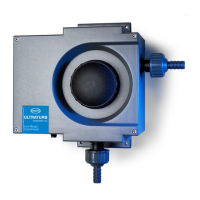
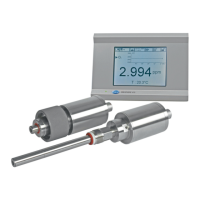
Figure 19 Pipe diameter measurement
5.2 Electrical installation
5.2.1 Wiring safety information
D A N G E R
Electrocution hazard. Always remove power to the instrument before making electrical connections.
5.2.2 Electrostatic discharge (ESD) considerations
N O T I C E
Potential Instrument Damage. Delicate internal electronic components can be damaged by static
electricity, resulting in degraded performance or eventual failure.
Refer to the steps in this procedure to prevent ESD damage to the instrument:
• Touch an earth-grounded metal surface such as the chassis of an instrument, a metal conduit or
pipe to discharge static electricity from the body.
• Avoid excessive movement. Transport static-sensitive components in anti-static containers or
packages.
• Wear a wrist strap connected by a wire to earth ground.
• Work in a static-safe area with anti-static floor pads and work bench pads.
5.2.3 Connect the flow logger
Connect the Flo-Dar sensor to the flow logger.
• FL900 flow logger—Connect the cable from the Flo-Dar sensor to a sensor connector on the flow
logger. If the optional surcharge velocity sensor (SVS) is installed, connect the cable from the SVS
to a sensor connector on the logger.
• FL1500 flow logger—Connect the cable from the Flo-Dar sensor to the correct terminal in the
flow logger. If the optional surcharge velocity sensor (SVS) is installed, connect the cable from the
SVS to the correct terminal in the controller. Refer to the FL1500 flow logger documentation for the
correct terminal locations.
24
English



 To Next Page
 Loading...