55
CHIMNEY AND TOP FLUE
Chimney
Principles
The principle of the chimney is to discharge smoke from the ue
into the atmosphere. Up to 8 feet of approved chimney extensions may be
added to the chimney to discharge smoke to higher levels.
Maintenance
The chimney may be cleaned from the top with a chimney-cleaning device.
Inspect the chimney once a month during the heating
season to ensure there is not an excessive amount of creosote.
If an excessive creosote buildup has occurred, it must be removed promptly
to reduce the risk of a chimney re.
When the unit is shut down for the summer, inspect and clean the chimney for
the next heating season. When the furnace is not in
use, cover chimney so nothing can enter.
Please refer to the “Best Burn Practices” located on the inside
front cover of this Operations and Maintenance Manual.
Chimney Extension(s)
Principle
Chimney extensions discharge smoke higher into the atmosphere. They also
discharge sparks higher into the atmosphere, so they have more chance
of being burned out before they reach the ground. Up to 8 feet of approved
chimney extensions may be added to the chimney to discharge smoke to
higher levels. Discharging smoke at higher levels certainly helps keep above
property level, especially on low pressure or cloudy, hazy or wet days.
Maintenance / Result
1) See chimney maintenance above.
2) Purchase approved chimney extensions that t together correctly. If
the extensions don’t t properly, creosote will run down the
outside of the chimney extensions and cause corrosion to the roof.
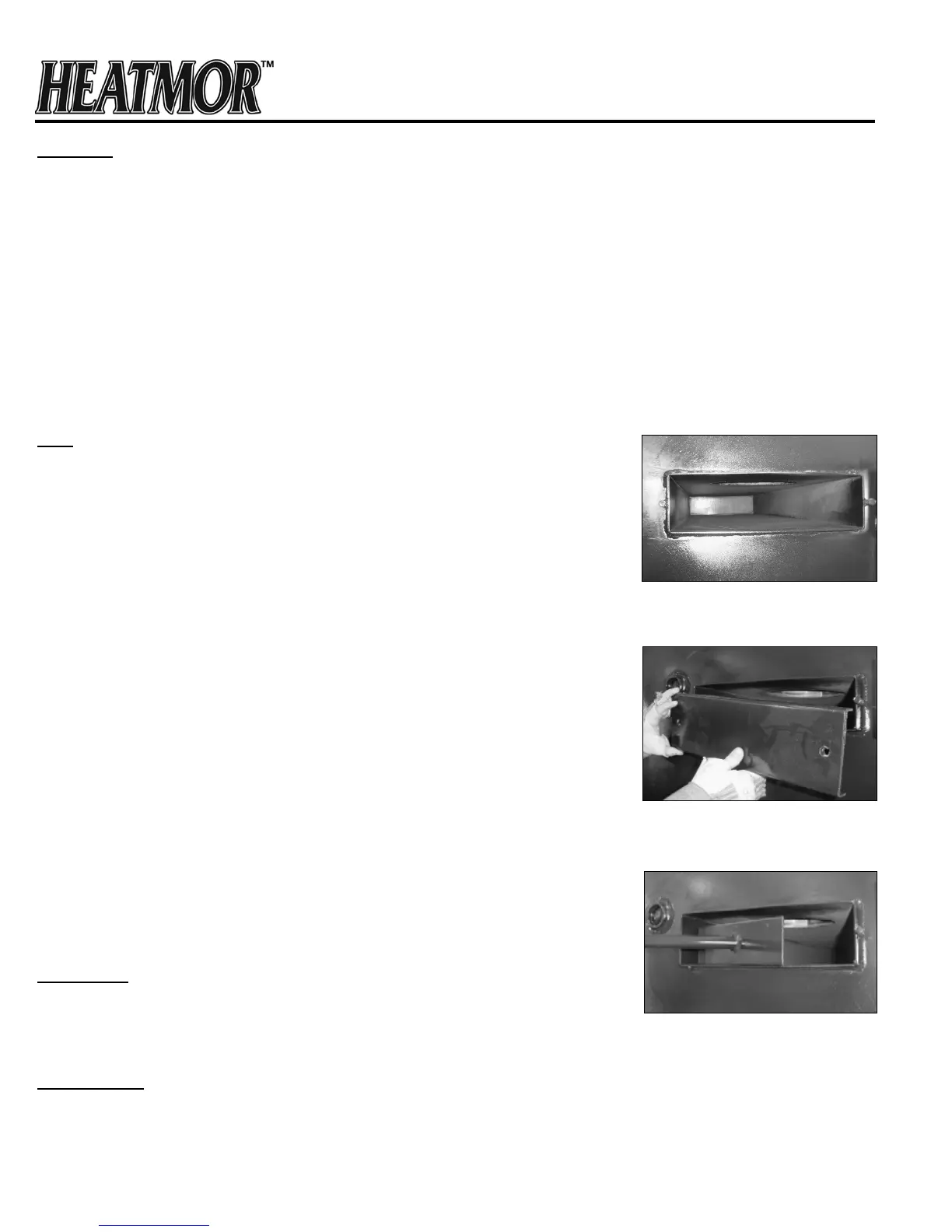
Flue
Removing Flue Cover
Flue Cover
Flue Scraper
Flue
Removing Flue Cover
Flue Scraper
Creosote
Creosote - Formation and Need for Removal -
When wood is burned slowly, it produces tar and other organic vapors, which combine with expelled
moisture to form creosote. The creosote vapors condense in the relatively cool chimney flue of a slow
burning fire. As a result, creosote residue accumulates on the flue lining. When ignited this creosote
makes an extremely hot fire.
The chimney connector and chimney should be inspected ata least twice monthly during the heating
season to determine if a creosote buildup has occurred.
If creosote has accumulate it should be removed to reduce the risk of a chimney fire.
DO NOT connect to a chimney flue serving another appliance.
Flue
Principles of the Flue
The flue allows the passage of heat, smoke, and gases from the firebox
to the chimney. Because the flue is surrounded with water, heat is
transferred to the water surrounding the flue. This captures heat that
would otherwise be lost out the chimney, assisting in the process of a
more efficient burn.
Maintenance
Only dust should accumulate in the flue. If creosote develops, the
cause should be determined an eliminated.
1) Inspect and clean the flue once a month during the heating
season.
2) Remove the one-half inch nuts holding the flue cover and
remove the cover.
3) Using the flue scraper provided with the HEATMOR™
furnace, push the dust to the front of the flue and let it fall down into
the firebox. Remove this dust as you would ashes. If a lot of dust is
dropped down, be certain that the air slot of the front air box is not
covered.
4) Re-attach the flue cover plate, making sure to tighten the nuts to
make an airtight seal.
5) If the HEATMOR™ Furnace unit is shut down for the summer,
inspect and clean the flue for the next heating season.
Flue Cover
Principles
The flue cover is airtight and provides access to the flue for cleanout.
Flue Scraper
Principles
The flue scraper is provided for cleaning the flue only and is not
designed to be used for other purposes.
at least


 To Next Page