9
The night before you go flying, charge the batteries in the plane and in the transmitter overnight.
In addition to the engine starting equipment mentioned near the beginning of the manual, you should start a collection of tools that
may be required for adjustments and maintenance at the flying field. Following is a list of the most suggested items:
Gather Your Tools
Charge the Batteries
Tools:
#1 Phillips screwdriver
#2 Phillips screwdriver
5/16" (or 8mm) socket wrench (for glow plug)
1/16" hex wrench (for wheel collars)
10mm wrench or crescent wrench (for propeller nut)
Pliers
Hobby knife
Spare parts:
10 x 6 propellers
Glow plug
#64 rubber bands (stored in container
with talcum powder or kitty litter)
Flight preparation is to be done at the flying field. Have your instructor perform these steps with you.
Be certain your flight instructor performs these following checks with you.
❏ 1. Get the frequency clip from the frequency control board at your
flying site.
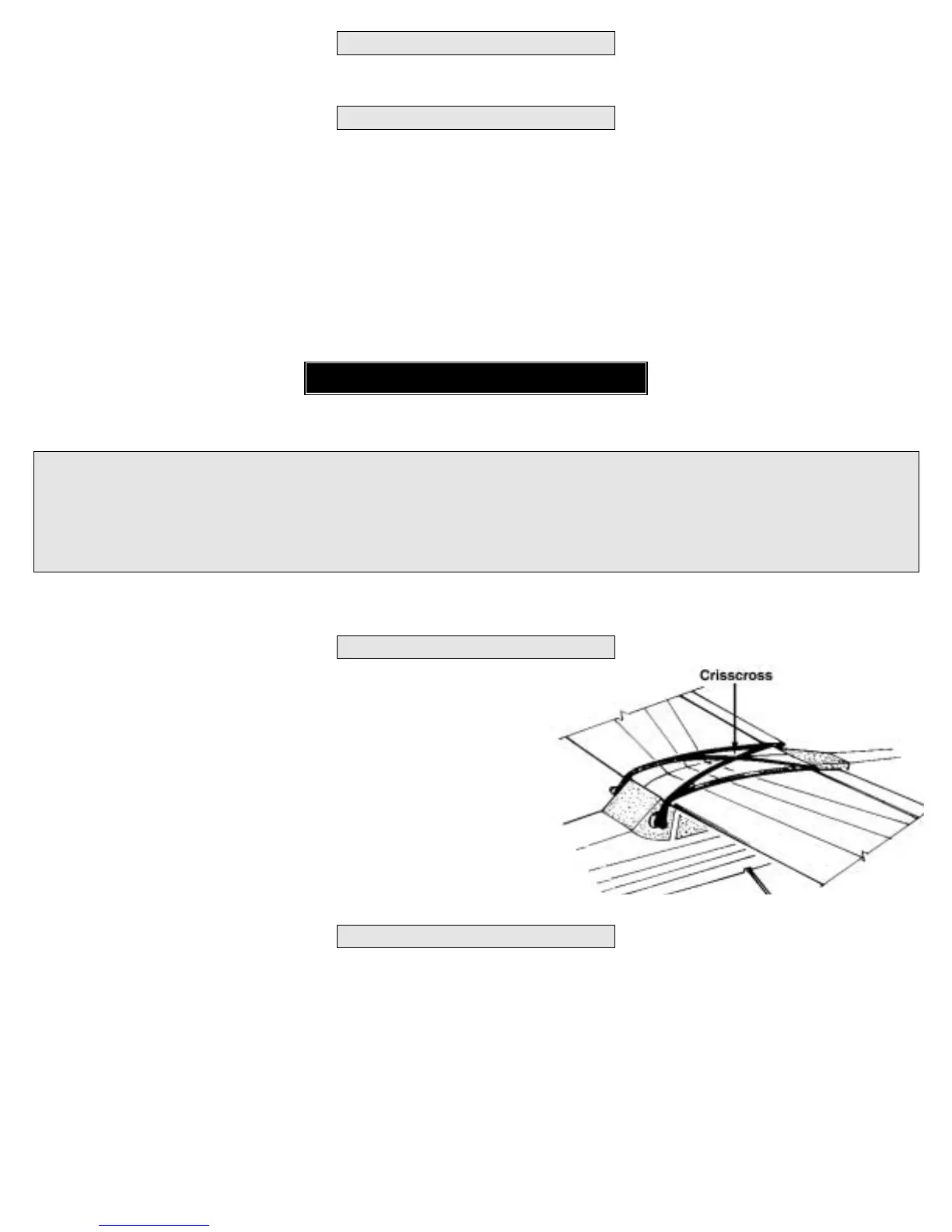
❏ 2. Mount the wing to the fuselage with the #64 rubber bands
supplied with this kit. Ten rubber bands are suggested. Be certain the
final two are “crisscrossed,” thus ensuring that the others remain secure.
❏ 3. Turn on the transmitter and receiver. One at a time, operate
each control on the airplane using the sticks on the transmitter. Make
certain each control is responding correctly. This must be done before
every flight. There are several types of malfunctions that can be
discovered by performing this elementary task, thus saving your model!
A range check must be performed before the first flight of a new model. It is not necessary to do a range check before every flight
(but is not a bad idea to perform a range check before the first flight of each day). A range check is the final opportunity to reveal
any radio malfunctions, and to be certain the system has adequate operational range.
❏ 1. Turn on the transmitter and receiver. Leave the transmitter antenna all the way down. Walk away from the model while
simultaneously operating the controls. Have an assistant stand by the model and tell you what the controls are doing to confirm
that they operate correctly. You should be able to walk approximately 100 feet from the model and still have control without any
“glitching” or unintended servo operation.
❏ 2. If everything operates correctly, return to the model and start the engine. Perform the range check with your assistant
holding the plane with the engine running at various speeds. If the servos chatter or move inadvertently, there may be a problem.
Do not fly the plane! With the assistance of your instructor, look for loose servo connections or binding pushrods. Also be certain
you are the only one on your frequency, and that the batteries have been fully charged.
Range Check the Radio
Check the Controls
IMPORTANT: Your radio control system transmits a signal on a certain frequency. Be certain you know what the frequency is.
This is expressed as a two-digit number (42, 56, etc.), and can be found on the container the transmitter came in and is also
located on the transmitter. There are several different frequencies, but there is still a chance that someone else at the flying field
may be on the same frequency as you. If you turn on your transmitter while that person is flying, a crash will result. NEVER turn
on your transmitter until you have permission from your instructor, and until you have possession of the frequency clip used for
frequency control at the flying site.
PART III: FLIGHT PREPARATION



 To Next Page