Need help?
Do you have a question about the Icom FR5000 and is the answer not in the manual?
Lists essential software, firmware, hardware, and cables required before programming.
Identifies the specific Icom repeater models (FR5000/FR6000) this guide is intended for.
Configuration settings for repeaters operating in analog mode, covering common and memory channel settings.
Defines settings for RX RAN, TX RAN, Unit ID, Talkgroup ID, and Squelch Type in the Memory CH window.
Configuration options for Talkgroup and Unit ID display on the radio during mode changes or reception.
Settings for digital operation, specifically enabling TX All Call and RX All Call functions.
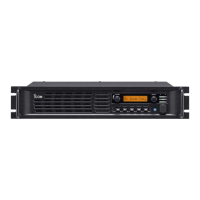
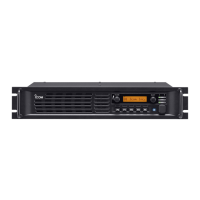
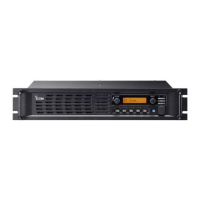
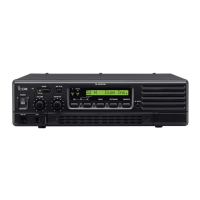
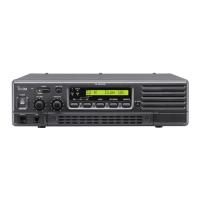
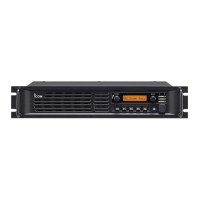
The provided manual describes the Icom FR5000/FR6000 Repeater, an advanced communication device designed for use in land mobile radio systems. This guide focuses on programming the repeater for various operational modes, including IDAS 6.25kHz digital programming and IDAS trunking, emphasizing its role as a repeater rather than a base station. The FR5000/FR6000 is part of the Icom Digital Advanced System (IDAS), which utilizes NXDNTM 6.25kHz digital modulation and a common air interface protocol, supporting both digital and analog land mobile radio communications.
The Icom FR5000/FR6000 Repeater serves as a central hub in a radio communication network, extending the range and improving the reliability of radio signals. Its primary function is to receive radio signals on one frequency and retransmit them on another, thereby allowing radios that are out of direct range of each other to communicate. The repeater supports multiple operational modes, making it highly versatile for different communication needs.
In Analog Repeating mode, the repeater receives and transmits only analog signals. It processes CTCSS (Continuous Tone-Coded Squelch System) and DTCS (Digital Tone-Coded Squelch) tones for squelch control. When programmed for analog, the repeater will receive a carrier squelch and transmit either no tones or a specified TX C.Tone if configured. If no tones are set in the Multiple Table, the repeater will receive any carrier squelch and transmit no tones, unless a specific TX C.Tone is defined in the Memory CH window.
For Digital Repeating, the repeater operates exclusively with digital signals. It uses RAN (Radio Access Number) codes, which are the digital equivalents of CTCSS tones, ranging from 0 to 63. A RAN code of 0 allows the repeater to receive all RAN codes and retransmit using the programmed transmit code for that channel. If no tones are set in the Multiple Table, the repeater will receive any RAN code and retransmit that RX code.
The repeater also offers Mixed Analog Repeating and Mixed Digital Repeating modes. In Mixed Analog Repeating, the repeater can receive both digital and analog signals and retransmit them in the format they were received. The front hand microphone, in this mode, transmits in analog. Similarly, in Mixed Digital Repeating, the repeater receives both digital and analog signals and retransmits in the received format, but the front hand microphone transmits in digital. These mixed modes provide flexibility, allowing the repeater to bridge different types of radio traffic within a system.
The repeater's Trunking Repeater Programming capability allows it to function within a trunked radio system. In this configuration, the repeater operates in full-duplex mode, enabling simultaneous transmission and reception. This is crucial for efficient channel allocation and management in trunked systems, where multiple users share a limited number of communication channels.
Programming the FR5000/FR6000 Repeater is done through the CS-FR5000 cloning software. The software provides a graphical interface with various windows and fields for configuration.
The Multiple Table is a key feature for managing tones and RAN codes. It allows users to define up to 16 tone sets (CTCSS, DTCS, or digital RAN codes) that can be assigned to specific channels. This enables granular control over squelch and access within the radio system. For instance, if a channel is assigned a Multiple Table number, the repeater will use all tone sets referenced in that table for both RX and TX. If no value is entered in the Multiple Table field for analog, the repeater will RX on any tone and transmit on the tone entered in the TX C.Tone field. For digital, if no value is entered, the radio will RX on any matching digital frequency regardless of RAN codes.
The Memory CH Window is where core channel settings are configured. Users can set the Operation Mode (Repeat or Full-Duplex for trunking), enter RX and TX frequencies, assign a channel name (Text), and define the RF Power level (L1: 5W, L2: 25W, High: 50W). The CH Type field determines the modulation type (Analog, Digital, Mixed-Ana, Mixed-Digi). The CW ID > ON/OFF setting controls the repeater's Morse code identification, with timers and ID details configured in the CW window. The TX C.Tone field allows for direct tone assignment for transmit, especially when the Multiple Table is not enabled.
The Common Window contains general repeater settings such as "Others > Digital Function," which must be set to "Enable" for digital operation and to access the Digital window. The "Hold Timer" setting defines the hang time of the repeater, which is the duration the repeater remains active after a transmission ends.
The External I/O Settings provide extensive control over the repeater's external connections via a D-Sub 25-pin connector. Each pin can be configured as an input or output with various functions. For example, pins can be set for P0 Monitor, Busy, EPTT (External PTT), Analog Audible output, Mic Mute, and Hanger functions. This allows the repeater to interface with external devices and systems, such as control panels, indicators, or audio equipment.
A notable external I/O feature is the ability to set Port 10 for power output options, including Power Supply Voltage, Temperature, and RSSI (Receive Signal Strength Indicator).
The Program Settings section, accessible through the Memory CH, Digital/Option, and Expert windows, offers further customization.
While the manual primarily focuses on programming, it includes features that aid in system maintenance and diagnostics.
The External I/O Settings are crucial for maintenance. By configuring specific pins to output data like Temperature or RSSI, technicians can monitor the repeater's operational health. For instance, the Temperature output allows for continuous monitoring of the internal temperature, which can indicate potential overheating issues. The RSSI output provides real-time signal strength information, essential for troubleshooting reception problems or optimizing antenna alignment.
Appendix A: Temperature/Voltage Output Chart provides a detailed table correlating internal repeater temperatures (in Celsius) with corresponding voltage outputs when Port 10 is set to Temperature. This chart is invaluable for interpreting the voltage readings from Port 10, allowing technicians to accurately assess the repeater's thermal state without internal access. This proactive monitoring can help prevent failures due to overheating.
Appendix B: Checking RSSI Levels outlines a procedure for checking RSSI levels using a DMM (Digital Multimeter). By setting Port 10 to RSSI, users can measure the voltage output, which corresponds to the received signal strength. The provided table in this appendix maps voltage readings to signal strength in microvolts (µV). This feature is critical for:
The ability to clone programming files (Read <- TR and Write -> TR) is also a significant maintenance feature. It allows for quick backup and restoration of repeater configurations, as well as efficient deployment of identical settings across multiple repeaters. This minimizes downtime during maintenance or when replacing a unit.
In summary, the Icom FR5000/FR6000 Repeater is a sophisticated and flexible communication device, offering comprehensive programming options for analog, digital, and mixed-mode operations, including trunking. Its detailed external I/O capabilities and diagnostic features like temperature and RSSI monitoring are essential for robust system deployment and ongoing maintenance.
 General
| Output Power | 50 W |
|---|---|
| Modulation | FM |
| Weight | 3.5 kg |
| Power Supply | 13.8 V DC |
| Operating Temperature Range | –30°C to +60°C –22°F to +140°F |

 To Next Page