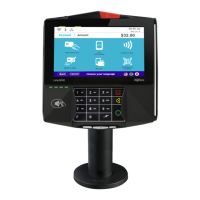
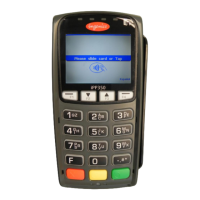
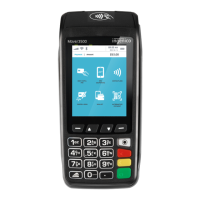
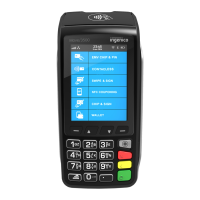
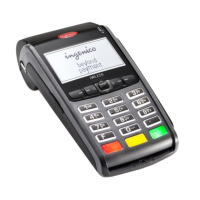
This document serves as a setup guide for the PAR Pay EMV Ingenico Lane series payment devices, specifically covering models 3000, 3600, 7000, and 8000. It outlines the necessary steps for installation, initial registration, re-registration, and verification of network settings, ensuring proper integration with a Point of Sale (POS) system.
Function Description:
The Ingenico Lane series payment devices are EMV-compliant terminals designed to process electronic payments. They function as an interface between the customer and the POS system, allowing for secure card transactions. The devices are programmed and mapped to a specific IP address of a register, obtaining a DHCP address from the local LAN for connectivity. This setup facilitates the communication required for processing payments and ensures that the payment device is correctly linked to its corresponding register. The device's primary role is to accept payment information, securely transmit it to a gateway, and facilitate the completion of transactions.
Important Technical Specifications:
While specific technical specifications like processor speed, memory, or display resolution are not detailed in this guide, the document highlights key connectivity and power requirements. The devices utilize a Y-Adapter cable for both power and network connectivity. The Y-Adapter cable connects to the LAN Port (RJ-45 connector) for network access and to a power adapter cable, which then plugs into an outlet. This indicates that the devices require both network access (via LAN) and a standard power source. The guide also mentions that the devices obtain a DHCP address from the local LAN, implying support for standard network protocols. The devices are designed to be physically installed and routed through a counter, suggesting a compact and integrated form factor suitable for retail environments.
Usage Features:
The Ingenico Lane devices are user-friendly, featuring a keypad and a display screen for interaction. Key usage features include:
- Initial Setup and Registration: The guide details a step-by-step process for registering the device. This involves entering a Store ID, Zip Code, and Lane/Register Number using the keypad and confirming with a green button. The Store ID is crucial for linking the device to the correct store in the Store Place Portal. The Lane/Register Number identifies which POS Register the payment device will connect to (e.g., 1, 2, 3).
- Override Functionality: If a Lane/Register Number is already in use, the device prompts the user with an "Override Lane" message, allowing them to overwrite the existing terminal with the new payment device by selecting "Yes." This feature is useful for replacing existing terminals or reassigning devices.
- Re-registration Process: The device supports a re-registration process, which is initiated by entering specific codes (1957 followed by 911985) on the idle screen to access the AurusPulse Menu. From this menu, users can navigate to "Re-Register" and repeat the registration steps (entering Store ID, Zip Code, and Lane/Register Number). This is important for scenarios where a device needs to be reconfigured or moved.
- Configuration Access: The AurusPulse Menu also provides access to "Edit Config," allowing users to verify and update critical network settings such as the ECR IP and ECR URL. This ensures that the payment device is correctly communicating with the register's IP address.
- Reboot Functionality: After successful registration or re-registration, the device performs an automatic reboot (CCT reboot), which is a standard procedure to apply new settings and ensure proper operation.
- Error Handling: The guide notes that if a previous device was already registered under the same Store ID during re-registration, the initial registration might fail, requiring the user to select "Yes" to override. It also provides a troubleshooting tip: if the register returns a "CCT Not Ready" message after a reboot, restarting PAR POS and performing a test transaction is recommended.
Maintenance Features:
The document implicitly outlines several maintenance-related features and procedures:
- Physical Installation Verification: The initial setup emphasizes ensuring all Ingenico Payment Devices are set up and powered on, and that the PAR Pay EMV Setup is completed and a changeset published. This highlights the importance of correct physical installation and initial configuration.
- Network Configuration Verification: The "Verify ECR IP and ECR URL" section is a key maintenance feature. It allows administrators to check and, if necessary, manually update the IP address of the register (ECR IP) and the ECR URL on the payment device. This is critical for maintaining connectivity and ensuring the device communicates with the correct POS system. The process involves navigating through the AurusPulse Menu, selecting "Edit Config," and then tapping "ECR URL" or "ECR IP" to view and modify the settings. The "Save" button or green button confirms changes, and the "Clear" button can be used to reset entries.
- Troubleshooting Support: The guide concludes by advising users to contact the support team for assistance if they encounter any issues or have questions, indicating a support structure for device maintenance and problem resolution.
- Labeling for Identification: The note about labeling each Ingenico payment device (e.g., Store XXXXXX REG1) to indicate its physical installation location is a simple yet effective maintenance practice for easy identification and management of multiple devices within a store.
In summary, the Ingenico Lane series payment devices, as described in this setup guide, are robust EMV terminals designed for seamless integration into retail environments. They offer straightforward installation, user-friendly registration and re-registration processes, and essential configuration verification tools to ensure reliable payment processing. The emphasis on clear setup steps and network configuration highlights the importance of proper initial deployment and ongoing maintenance for optimal performance.

 Need help?
 General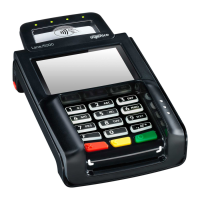






 To Next Page