2.5 Brakes
2.5.1 Manual brakes
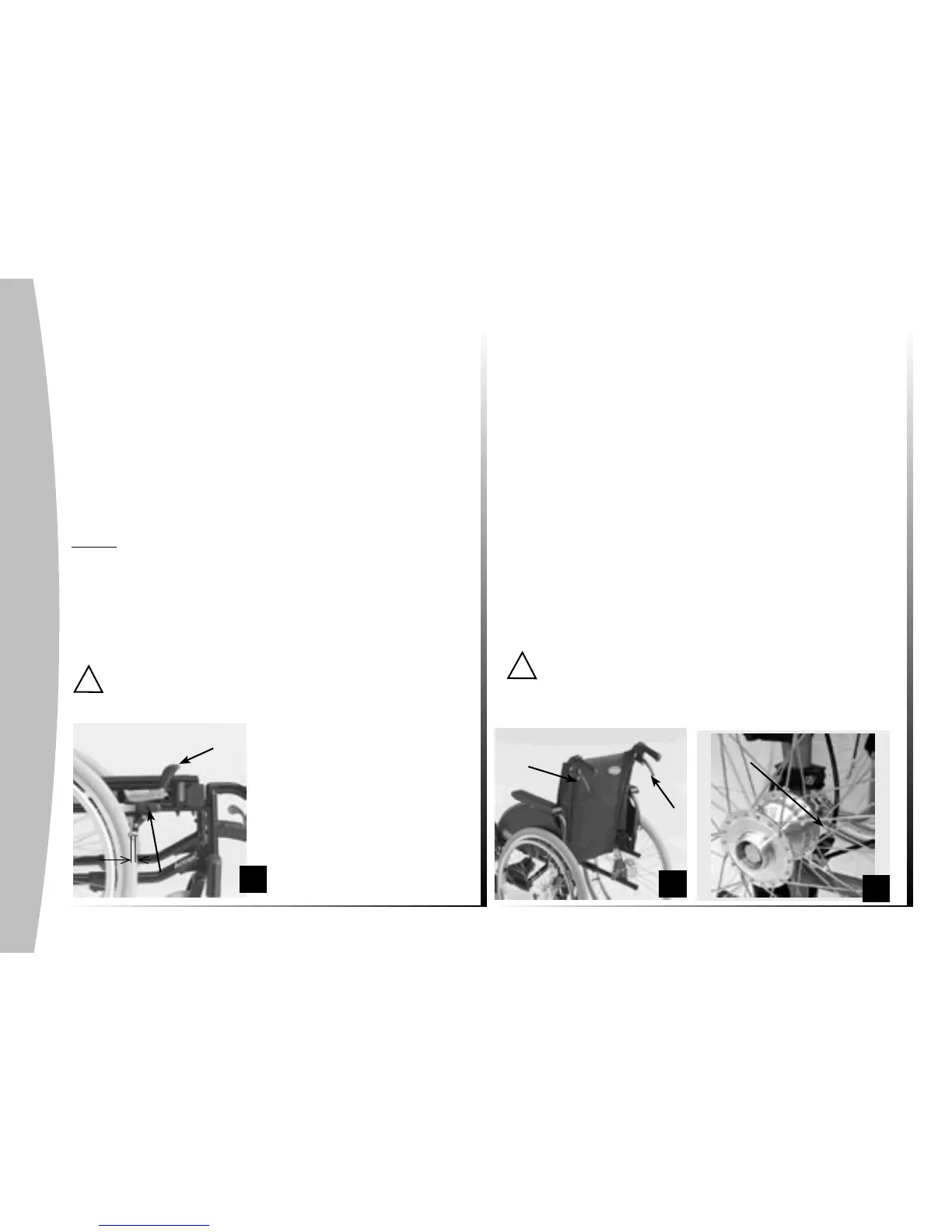
The manual brakes (photo 22) are designed to secure the
wheelchair during long stops. They are not intended to slow
down the wheelchair or to be used as support during a
transfer. They must be operated simultaneously.
In order to brake, push the handle (A) forward. The handle
folds back to facilitate transfers. Draw as a preliminary the
handle upwards ! Once the brakes are engaged, the wheel-
chair should not move at all.
Note :
brakes adjustments are based upon the diameter
and type of the wheels. After repairing a at tyre or in the
event of wear of the pneumatic or solid tyre, you may need
to adjust the brake(s). To adjust the brake(s), loosen the
two screws (B) and slide the brake assembly to obtain the
following value between the wheel and the brake shoe in
unlocked position :
Solid tyre X = 6 mm, Pneumatic tyre X = 5 mm
Firmly tighten the screws (B) after adjustment.
Keep your ngers away from movable parts to prevent injuries !
2.5.2 Hub brakes
Besides the functions provided by manual brakes, the hub
brakes provide the slow down (for example, on a slope) and
improved safety because they are still efcient when you
have a at tyre !
Two versions are available: (photos 23 & 24) attendant con-
trol and dual control (attendant and user).
To slow down, gradually pull the lever (A) upwards.
To lock the brake in parking position, with the lever (A)
tightened, push the lock (B) to engage it in the notches of
the brake handle ; then pull the lock up to unlock.
To adjust braking : turn the screw (C) counterclockwise to
increase braking force and turn clockwise to reduce it.
The specic adjustments of hub brakes must always be
performed by your Dealer.
Always operate the two brakes simultaneously and do
not take slopes exceeding 5% to ensure perfect control of
the wheelchair steering !
24
C
23
A
B
22
A
B
X







 To Next Page