Need help?
Do you have a question about the iPECS 1000i Series and is the answer not in the manual?
Overview of the iPECS phone system and its capabilities, including VoIP technology and mobility.
Explanation of the user guide's structure and how features are presented, noting system variations.
How features are organized logically into groups for quick and easy location by users.
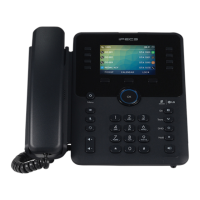
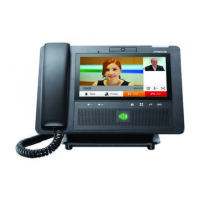
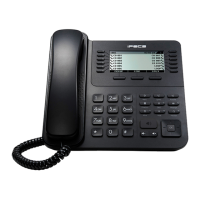
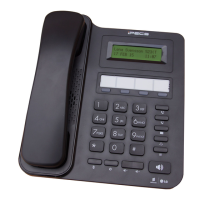
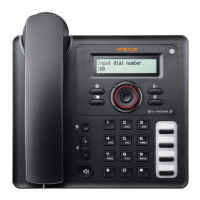
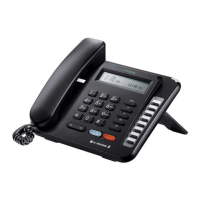
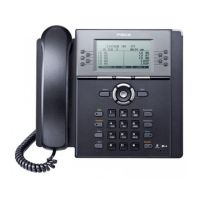
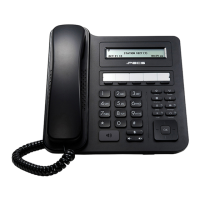
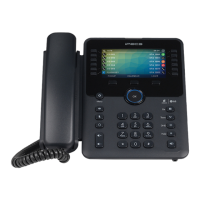
Details on the physical components, technology, and models within the iPECS 1000i series phones.
Explanation of the phone's physical layout, including buttons, keys, and their functions.
Step-by-step instructions for installing the iPECS 1000i phone, including connections and options.
Information on the DSS (Direct Station Selection) add-on modules and their installation procedures.
Detailed guide for securely mounting the iPECS phone on a wall.
Details regarding the Electronic Hook Switch (EHS) adaptor and its compatibility.
Instructions for using a Wi-Fi dongle for wireless connectivity with specific phone models.
Explains methods for entering text, names, and characters using the phone's dial pad.
Explanation of the phone's display, icons, and layout across different iPECS 1000i models.
Visual examples of LCD displays for various iPECS 1000i models, showing icons and information.
Description and meaning of icons shown on the phone's display and flexible buttons.
How to use the speakerphone for calls, including volume and mute controls.
Procedures for answering incoming calls when the phone is not currently in use.
Guidance on how to handle incoming calls when already engaged in another call.
How to use the Answering Machine Emulation feature for call screening and voicemail.
Information on customizing ring tones to differentiate between internal and external callers.
How to pick up calls ringing at other stations or within a station group.
How to activate DND to block all incoming calls and prevent interruptions.
Instructions on how to set up call forwarding to various destinations like other stations or voicemail.
How to forward callers to pre-defined or custom text messages.
Procedures for making calls to other stations within the iPECS system.
How to use Camp-On, Callback, or Voice Over features for busy stations.
How to leave a message waiting indicator for a user who is unavailable.
Detailed procedures for making calls to outside numbers, including restrictions.
How to use account codes for tracking external calls for billing or other purposes.
How to temporarily lock the phone from making external calls using Temporary COS.
How to temporarily bypass dialing restrictions using Walking COS.
How to access and utilize the phone's various directory services for dialing.
Instructions on how to redial the last external number called.
How to save numbers for convenient dialing later from memory.
How to use and set up station-specific speed dial numbers for quick access.
How to utilize system-wide speed dial numbers for frequently dialed numbers.
How to use speed dial numbers that are shared within a specific group.
How to place calls by searching for names in various directories.
How to automatically redial a busy number until the call is successfully connected.
Procedures for transferring active calls to other stations or system resources.
How to place an active call on a waiting state for later retrieval.
How to switch between multiple active calls, acting as a broker.
Steps to establish and manage conference calls with multiple participants.
Instructions on creating and managing dedicated conference rooms with passwords.
How to park a call for later retrieval or paging a user to retrieve it.
How to record active internal or external conversations for later review.
How to respond to message waiting indicators and retrieve messages from other stations.
How to access, manage, and retrieve voice messages from your voicemail box.
How to send and receive short text messages between iPECS display phone users.
How remote users can access system resources like calling and voicemail.
How to activate and use your mobile phone as an iPECS extension.
How to view, manage, and save entries from the phone's call history log.
How to broadcast announcements to stations or groups using paging features.
How to use Push-To-Talk for one-way page announcements within designated groups.
How to set, manage, and stop wake-up alarms on the phone.
Information regarding system voice memos and status announcements available.
How to log in and use a phone as a temporary extension, retaining your station's attributes.
How to assign user-programmable attributes and authorization codes to your station.
How to program flexible buttons for one-touch access to various phone features.
Settings related to connecting the phone to the local area network (LAN).
How to customize phone settings like background images and screen transparency.
Accessing and using the web-based interface for advanced phone configuration.
 General
| Type | IP Phone |
|---|---|
| Speakerphone | Yes |
| HD Audio | Yes |
| Wall Mountable | Yes |
| Number of Lines | Varies by model (see individual model specifications) |
| Connectivity | IP |
| Ethernet Ports | Varies by model (see individual model specifications) |
| Power over Ethernet (PoE) | Yes |
| Power Supply | PoE or AC adapter |
| Supported Codecs | G.711, G.729 |
| Headset Port | Yes |
| Programmable Keys | Yes |
| Dimensions | Varies by model |
| Weight | Varies by model |

 To Next Page