Need help?
Do you have a question about the iPECS LIP-8002E and is the answer not in the manual?
Provides essential warnings and cautions for safe phone operation and installation.
Declares conformity with EU directives for radio and telecommunications terminal equipment.
Addresses FCC/IC regulations regarding radio frequency energy and interference for digital devices.
Provides an overview of the advanced-technology, versatile, fully-featured telecom system.
Explains the user guide's structure and how features are divided for easy location and use.
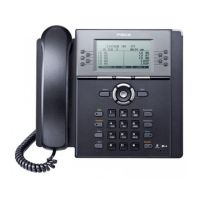
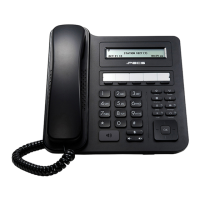
Details the iPECS LIP-8002E/2AE phone and its features accessed via buttons and dial pad.
Covers connecting the phone to an Ethernet switch, power options, and wall mounting.
Explains how to answer incoming calls, including internal, external, and intercom calls.
Describes how to handle incoming calls when already on another call, like call waiting.
Details how to differentiate ringing phones using 14 available ring tones.
Explains how to pick up calls ringing at other stations or within a group.
Guides on activating DND to block incoming calls and its effects on internal callers.
Covers the process and types of call forwarding to other stations, voice mail, or external numbers.
Explains how to place calls to other stations within the system using the Intercom.
Covers placing external calls via CO/IP lines, including restrictions, authorization codes, and waiting for lines.
Details features like LNR, Speed Dial, Dial by Name, and ACNR for efficient dialing.
Guides on performing screened and unscreened call transfers to other destinations.
Explains how to place calls on hold, including system and exclusive hold options.
Describes establishing conferences with multiple parties and setting up conference rooms.
Explains how to park calls and retrieve them, often used with paging.
Explains how to respond to station message waiting indications and message waiting tones.
Guides on accessing and managing voice mail messages, both locally and remotely.
Explains how remote users can access system resources like calling stations or checking voice mail.
Describes how to place and receive calls on a registered mobile phone using the iPECS system.
Details how to configure background music and music on hold for callers.
Explains how to broadcast announcements to stations and external speakers using paging.
Guides on logging in/out of PTT groups and making one-way page announcements.
Explains how to set the station's alarm clock for daily or one-time alerts.
Describes how the system provides voice memos for station status, date, time, and feature information.
Explains how to use special codes to assign attributes like Authorization Codes to iPECS Phones.
Guides on assigning features and functions to the phone's flexible buttons for one-touch activation.
Allows reviewing the current network configuration or modifying the phone's network settings.
 General
| Number of Lines | 2 |
|---|---|
| Power over Ethernet (PoE) | Yes |
| Audio Codec Support | G.711, G.729, G.722 |
| Headset Support | Yes |
| Speakerphone | Yes |
| Wall Mountable | Yes |
| Supported Protocols | SIP |
| HD Audio | Yes |
| Weight | 0.8 kg |
| Display | Graphical LCD with backlight |
| Ethernet Ports | 2 (10/100 Mbps) |

 To Next Page