4.2
Diameter of
Obstruction
Obstruction Distance Signal Loss
.2 m (.7 ft.)
< 2 m (6.5 ft.) 2 dB
< 4 m (1.1 ft.) 1 dB
.4 m (1. ft.)
< 9 m (29.5 ft.) 2 dB
< 1 m (101.8 ft.) 1 dB
.6 m (2 ft.)
< 22 m (72.2 ft.) 2 dB
< 75 m (246 ft.) 1 dB
.8 m (2.6 ft.)
< 40 m (11.2 ft.) 2 dB
1 dB
1.0 m (. ft.)
< 65 m (21.2 ft.) 2 dB
1 dB
Table 4 I 1 Obstruction Signal Loss
Obstructions
around the ADE
Iridium Openport Terminal I 4 Installation
To ensure the best possible connection with the Iridium satellite network
the ADE needs clear exposure, in all directions, to the sky. Two types of
obstruction that should be considered when deciding the placement of
the ADE include: metallic and superstructure.
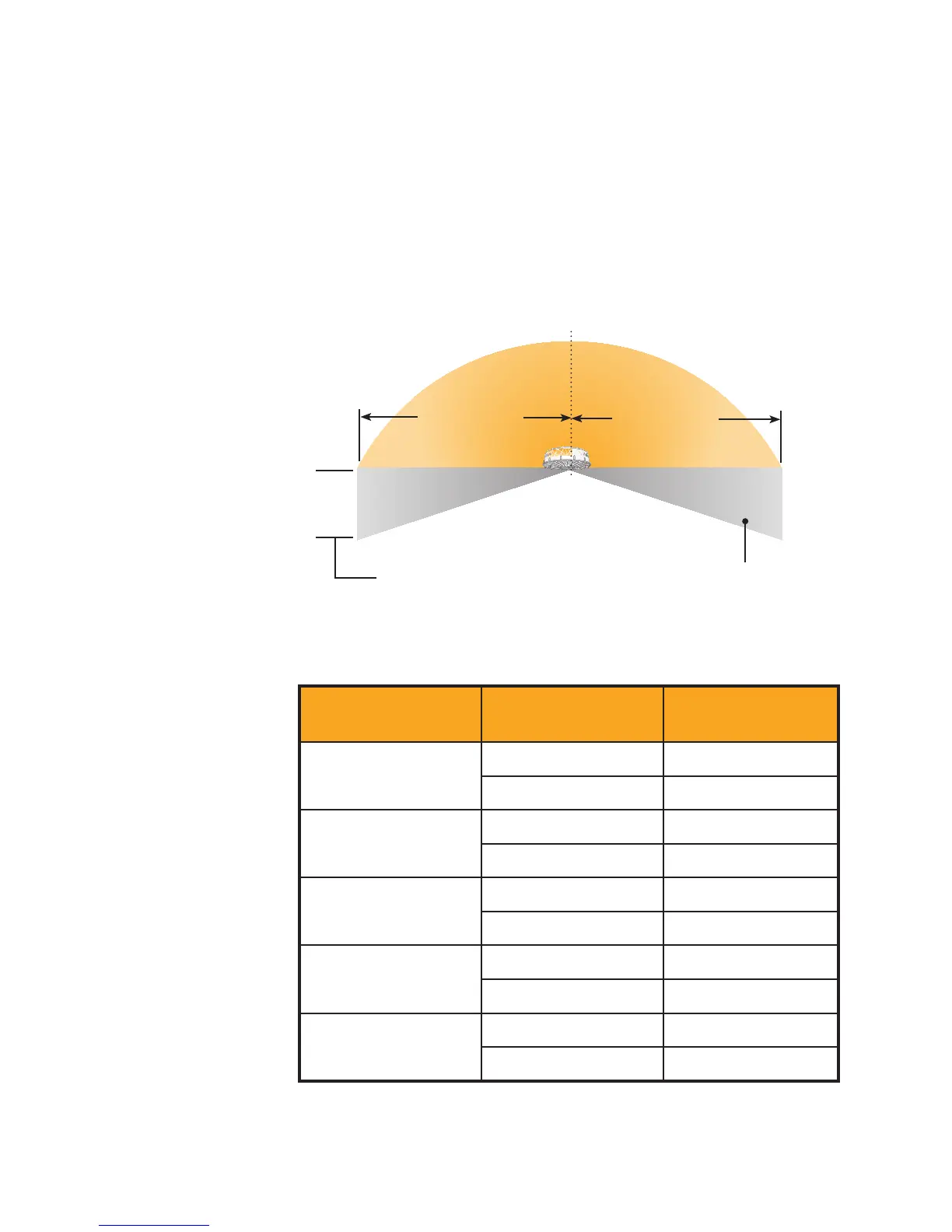
The loss of signal (dB) will increase the closer the obstruction is to the
ADE. The table below shows the correlation between the size of the
obstruction and the distance of the obstruction from the ADE and the
amount of signal loss.
8.0 m (26.2 ft.)
Figure 4 I 1
8.0 m (26.2 ft.)
2.0 m (6.6 ft.)
Minimize
obstructions
Unobstructed view of sky all direction
Unrestricted area for obstructions
Minimize
obstructions
No metallic or concrete
obstructions in grey
shaded area


 To Next Page