INSTRUMENTS & CONTROLS
31
MAIN CLUTCH PEDAL
(MECHANICAL TRANSMISSION)
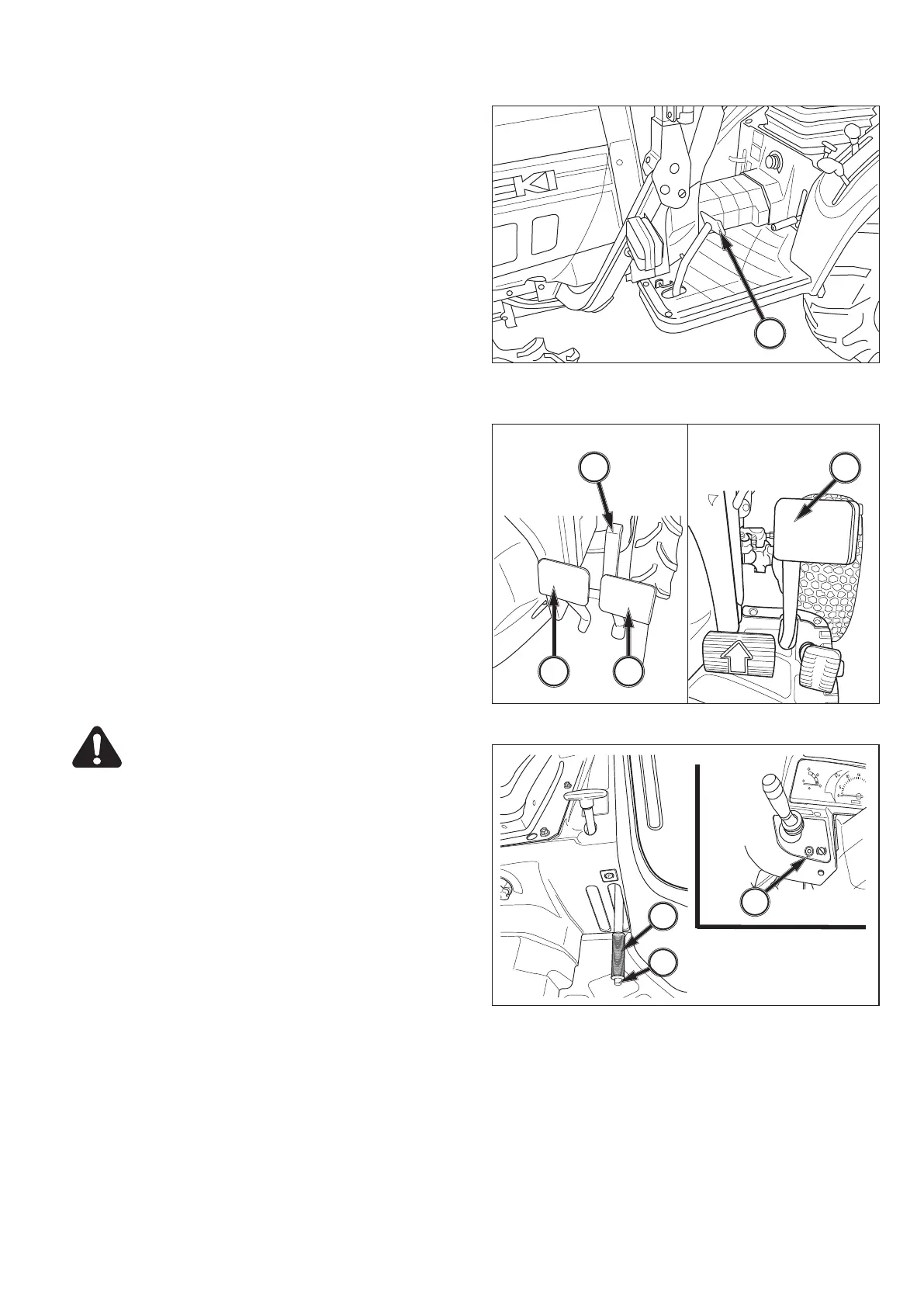
FIG. 45: Foot pedal (1) disengages engine from trans-
mission when fully depressed, to permit engine starting,
selecting / changing gears and stopping tractor move-
ment. PTO and Mid PTO selection (if equipped) also
requires clutch disengagement. Slowly raising the pedal
will engage clutch and resume power to transmission
and PTO.
NOTE: Clutch pedal should be depressed quickly to
prevent abnormal wear. Clutch pedal should be
raised smoothly to prevent sudden movement.
DO NOT “ride” clutch pedal with your foot.
Hydrostatic transmission type is not equipped
with clutch pedal.
IMPORTANT: Correct clutch pedal free-play adjust-
ment is a must. Refer to “Maintenance”
section.
BRAKES
Brake Pedals
FIG. 46: Inner brake pedal (1) and outer brake pedal (2)
independently control the respective left and right wheel
brakes to assist in turning. During traveling on road or
operating at high speed, brake pedals must be latched
together using interlocking plate (3). Hydrostatic models
do not have individual wheel brakes but single brake
pedal (4).
CAUTION: Do not use individual wheel
brakes and latch brake pedals together us-
ing interlocking plate when traveling on
roads or operating at high speed. Make sure
brakes are adjusted evenly.
Parking Brakes
FIG. 47: To engage parking brakes, pull upward on
the parking lever (5) to lock brakes in applied position.
To disengage parking brakes, push in on release but-
ton, (6) and lower the lever (5) to the released position.
IMPORTANT: Release the parking brake before driving
the tractor to prevent increased wear.
NOTE: When the parking brake is applied, the parking
b r a k e l a mp w i l l i l l u mi n at e . ( R e f e r t oF i g. 3 8 ) .
NOTE: When the parking brake is not applied and
engine is turned off, warning alarm and parking
brake warning lamp (7) will let you know to apply the
parking brake.
FIG. 45
FIG. 46
FIG. 47
Mechanical Transmission Hydrostatic Transmission



 To Next Page