EasyManua.ls Logo

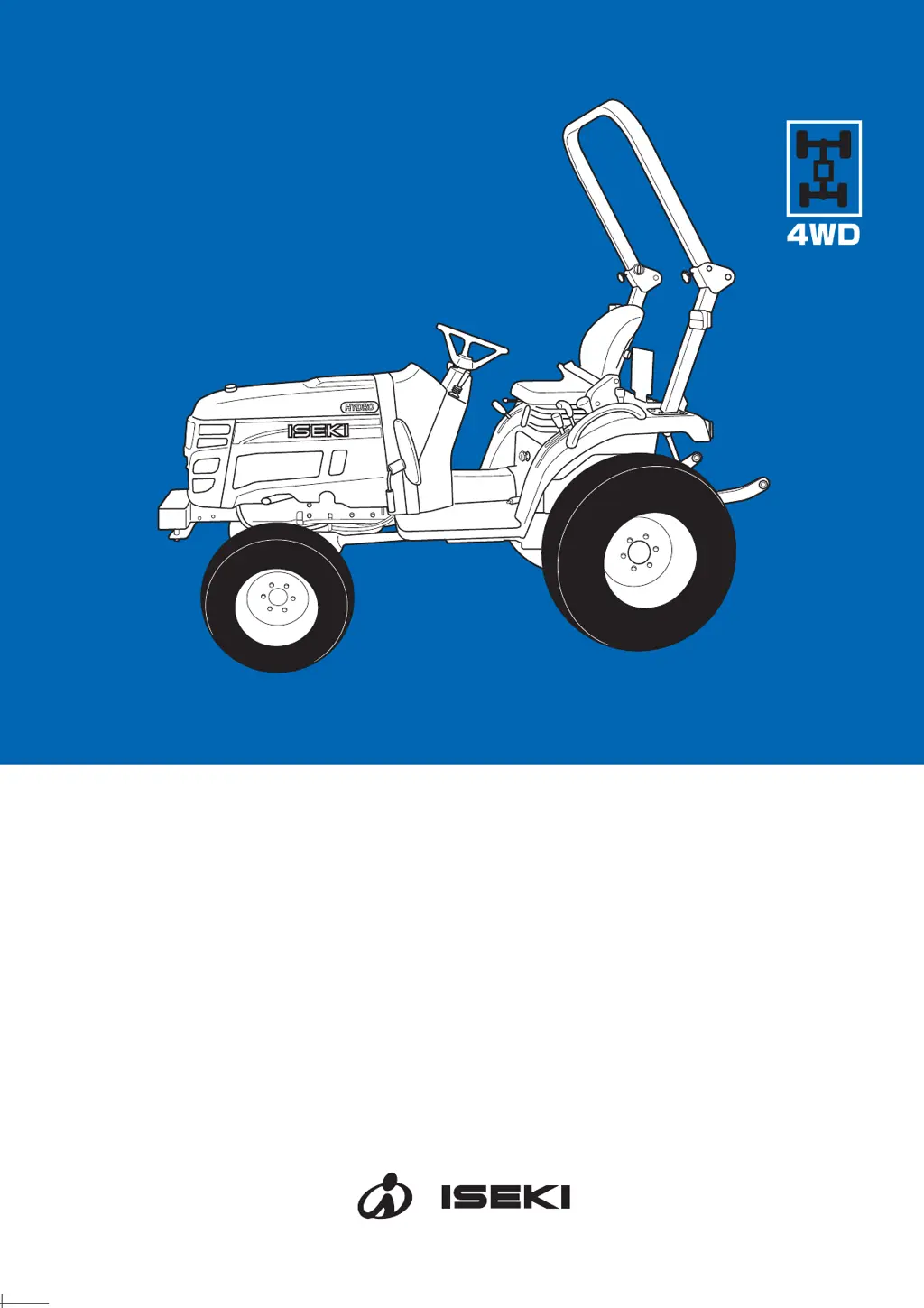
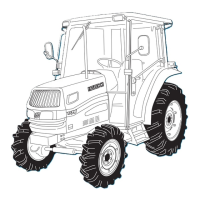
Iseki TM3265 - User Manual

Iseki TM3265
113 pages
Print Icon
To Next Page IconTo Next Page
Loading...
TM3215
TM3245
TM3265
MODELS:
ISEKI TRACTORS
Operators Manual
ENGLISH

Table of Contents

Other manuals for Iseki TM3265

Questions and Answers

  • A
    Ashley WellsAug 12, 2025
    What to do if the starter motor of my Iseki Tractor doesn't operate when the key is turned to START?
    • E
      Elizabeth HoffmanAug 12, 2025
      If the starter motor doesn't operate when you turn the key to START, there are several possible causes: * Ensure the gear shift lever is in neutral; if not, place it in neutral. * Make sure the PTO switch is off; if it's on, turn it off. * Check the battery. If it's discharged, charge it. * Inspect the terminals for looseness or dirt; clean and retighten them securely.
  • J
    Jonathan FletcherAug 16, 2025
    Why is the starter motor on my Iseki TM3265 operating but not at full speed?
    • K
      Kenneth MurphyAug 16, 2025
      If the starter motor operates but not at full speed, it could be due to: * A discharged battery; charge the battery. * Loose or dirty terminals; clean and retighten them securely. * A defective ground; clean and tighten the starter mounting. * Improper oil viscosity; replace with oil of proper viscosity.
  • M
    mcgeeernestAug 20, 2025
    What to do if my Iseki TM3265 Tractor engine is running irregularly?
    • J
      Jane KellyAug 20, 2025
      If your engine is running irregularly, consider the following: * There might be air in the fuel system; air-bleed the fuel system. * The fuel filter may be clogged; clean the filter. * The fuel line could be leaking air; retighten clamps or replace defective pipes.
  • R
    Richard EvansAug 23, 2025
    What to do if the starter motor operates but not at full speed in my Iseki TM3265 Tractor?
    • D
      danielwilliamsAug 23, 2025
      If the starter motor of your Iseki Tractor operates but not at full speed, it could be due to a discharged battery, loose or dirty terminals, a defective ground, improper oil viscosity or a defective engine. Try charging the battery and cleaning and retightening the terminals securely. Also, clean and tighten the starter mounting, or replace the oil with proper viscosity.
  • J
    Jennifer PorterAug 27, 2025
    Why is the oil pressure monitor lit on my Iseki TM3265 Tractor?
    • A
      Amy JamesAug 27, 2025
      If the oil pressure monitor is lit during operation of your Iseki Tractor, it may be caused by insufficient engine oil, oil that is too low in viscosity, a defective pressure switch, a clogged oil filter, or a defective oil pump. Replenish the oil, replace it with oil of proper viscosity, replace the pressure switch, or replace the element cartridge.
  • L
    Lauren DixonAug 31, 2025
    What to do if the starter motor operates but engine doesn't start on my Iseki TM3265 Tractor?
    • T
      Tammy BuchananAug 31, 2025
      If the starter motor of your Iseki Tractor operates but the engine does not start, it could be due to the electric fuel control not operating, air in the fuel system, a clogged fuel filter, fuel not being supplied, an incorrect preheating procedure, or a defective engine. Try air-bleeding the fuel system, cleaning the fuel filter, checking the fuel level and opening the fuel valve, or increasing the use of glow plugs.
  • B
    Benjamin JacksonSep 3, 2025
    Why are the exhaust fumes white on my Iseki TM3265 Tractor?
    • V
      Valerie RuizSep 3, 2025
      If the exhaust fumes from your Iseki Tractor are white, it could be due to a clogged air cleaner, high engine oil level, insufficient fuel delivery, or a cold-running engine. Try cleaning or replacing the air cleaner element(s), inspecting the oil level and correcting it, or allowing the engine to warm up and checking the thermostat.
  • K
    kimberlywalterSep 7, 2025
    What to do if the starter motor of my Iseki TM3265 Tractor operates but the engine does not start?
    • J
      Julie RojasSep 7, 2025
      If the starter motor operates but the engine doesn't start, consider these possibilities: * Check the fuel level and ensure the fuel valve is open, as fuel may not be supplied. * Air might be in the fuel system; in this case, air-bleed the fuel system. * The fuel filter might be clogged; try cleaning it. * Ensure you are using the correct preheating procedure and increase use of glow plugs if needed.

Summary

SAFETY

MACHINE PURPOSE

Defines the intended use and operational scope of the tractor.

PERSONAL SAFETY INSTRUCTIONS

Explains hazard symbols and general safety precautions.

MAKING YOUR TRACTOR A SAFE VEHICLE

How to Maintain Safety

Steps to maintain safety, including avoiding unauthorized modifications.

FOR SAFE OPERATION

How to be a Safe Operator

Operator qualifications, prohibited persons, and PPE recommendations.

When Another Person Operates Your Machine

Instructions for training other operators to prevent accidents.

Loading onto or Unloading from a Truck

Specifications of the Ramps

Requirements for safe and suitable loading ramps.

During Operation

Inspection and Maintenance

Storage

Dismantling and Disposal

MAINTENANCE OF THE ELECTRICAL SYSTEM

To Maintain Electric Wiring

Safety and maintenance tips for electric wiring.

To Handle the Battery

Safe procedures for handling and maintaining the battery.

To Handle Booster Cables

SAFETY DECALS

Maintenance of Safety Decals

Procedures for maintaining and replacing safety decals on the tractor.

Location of Safety Decals

Visual guide showing the location of various safety decals on the tractor.

INTRODUCTION

TRACTOR IDENTIFICATION

STATUTORY PLATE

Details found on the tractor's statutory identification plate.

MODEL TYPE DESIGNATION

Explanation of the tractor's model type designation system.

MODEL; SERIAL NUMBER

MAJOR COMPONENTS

INSTRUMENTS & CONTROLS

FIG. 34: Mechanical Transmission

Diagram and labels for controls on mechanical transmission tractors.

FIG. 35: Hydrostatic Transmission

Diagram and labels for controls on hydrostatic transmission tractors.

INSTRUMENT PANEL AND SWITCHES

Electrical Fuel Shut-Off

Functionality of the electrical fuel shut-off system.

Main Switch

Description of the main switch positions and their functions.

Indicator Light Strip

Tachometer

Horn; Light Turn Switch

Hazard Light Switch

Power Take-Off (PTO) Switch (Hydrostatic Transmission)

MAIN CLUTCH PEDAL (MECHANICAL TRANSMISSION)

BRAKES

Brake Pedals

Independent and combined operation of brake pedals.

Parking Brakes

How to engage and disengage the parking brake.

ENGINE SPEED CONTROLS

TRANSMISSION SHIFT LEVERS

Gear Shift Levers

How to use range and main gear shift levers.

Forward; Reverse Shuttle Lever (Mechanical Transmission)

Operation of the shuttle lever for changing travel direction.

DIFFERENTIAL LOCK PEDAL

4-WHEEL DRIVE SHIFT LEVER

REAR PTO SELECTOR LEVER

MID PTO SELECTOR LEVER

Position Control

Lowering Rate Control Knob

SEAT & SUSPENSION ADJUSTMENT

FIG. 61: COBO GT62; M200

Details on adjusting seat suspension, height, and fore-aft position.

FIG. 62: GRAMMER MSG83; 511 & MSG83; 521

Details on adjusting seat suspension, height, and fore-aft position.

Height Adjustment

FIG. 63: KAB XH2; P2

Seat adjustment details for KAB XH2 / P2 seat models.

FIG. 64: Seat (E6 Type)

Seat adjustment details for the E6 Type seat.

OPERATION

BREAK-IN PERIOD

Guidelines for the initial 50-hour break-in period for optimal performance.

STARTING

Procedures and precautions for starting the tractor engine.

Normal Starting

Restarting Warm Engine

Cold Weather Starting

Warm-Up Period

TABLE 1: Suggested warm-up period

Table showing recommended warm-up times based on ambient temperature.

Operator Observations

GROUND SPEED SELECTION

Mechanical Transmission

Explanation of gear selection for mechanical transmissions.

FIG. 69: Depress clutch pedal and position shift levers...

Steps for shifting gears and engaging the transmission.

FIG. 70: Forward; reverse shuttle lever, 3...

Using the forward/reverse shuttle lever for direction changes.

TABLE 2: Arrangement of gears...

Hydrostatic Transmission

CRUISE CONTROL (HYDROSTATIC TRANSMISSION)

STOPPING TRACTOR

Mechanical Transmission

Stopping procedures for mechanical transmission models.

TABLE 3: Speed chart (Hydrostatic Transmission)

Speed chart for hydrostatic transmission models.

Hydrostatic Transmission

CRUISE CONTROL (HYDROSTATIC TRANSMISSION)

Releasing Cruise Control

DIFFERENTIAL LOCK OPERATION

4-WHEEL DRIVE

POWER TAKE-OFF (PTO)

Rear PTO Shaft

Mid PTO Shaft (M Type)

PTO OPERATING CONTROLS

Mechanical Transmission

Operating PTO controls on mechanical transmission models.

Hydrostatic Transmission

FIG. 88: The pressure control unit, 7...

TABLE 4: Selectable mode

3-POINT HITCH

Hitch Controls

How to use the hitch control quadrant for implement positioning.

FIG. 90: Lowering Rate Control Handle, 2...

Adjustment of the implement lowering speed.

Rear Linkage

Components of the rear linkage for implement attachment.

Attaching Implements

FIG. 96: Slide the ball end of the left lower link, 1...

Detailed steps for attaching lower links and top link to the implement.

FIG. 97: Certain implements require minimal side play.

Adjusting side play using check chains for implement stability.

Detaching Implements

External Auxiliary Hydraulics

ROLL OVER PROTECTIVE STRUCTURE (ROPS)

Rear ROPS Type

Details regarding the rear ROPS, including folding and securing.

Center ROPS Type

REAR HITCH

TABLE 5: Maximum vertical load

Maximum vertical load capacities for rear hitches based on tire size.

TABLE 6: Permissible towable mass

Permissible towable masses for trailers and combinations.

FRONT LOADER FIXATION POINT

FALLING OBJECTS PROTECTIVE STRUCTURE (FOPS) & OPERATORS PROTECTION STRUCTURE (OPS) FIXATION POINT

TOWING

JACKING

SPECIFICATIONS & CAPACITIES

Engine Oil

Engine oil type, viscosity, capacity, and change intervals.

Engine Coolant

Coolant type, capacity, and freezing protection.

Fuel Tank

Fuel tank capacity and recommended fuel types.

Transmission & Differential Housing (Including Hydraulic System)

Lubricant type, capacity, and change intervals for the transmission.

Front Axle

Lubricant type, capacity, and change intervals for the front axle.

Grease Fittings

Greasing interval and recommended grease type.

LUBRICATION; FILL POINTS

TABLE 7: Type and capacity of lubrication (Mechanical Transmission)

Table detailing lubrication types and capacities for mechanical transmission.

Hydrostatic Transmission

TABLE 8: Type and capacity of lubrication (Hydrostatic Transmission)

Table detailing lubrication types and capacities for hydrostatic transmission.

Periodic Inspection and Maintenance Table

LUBRICATION DETAILS

SERVICE ACCESS

Engine Oil & Filter

Transmission Oil & Filters

Front Axle Oil

COOLING SYSTEM

ENGINE AIR CLEANER

FUEL SYSTEM

Fuel Filter

Location and servicing of the fuel filter.

Air-bleeding Procedure

Steps for bleeding air from the fuel system.

Throttle Lever

ELECTRICAL SYSTEM

Battery

Battery location, maintenance, and replacement procedures.

FIG. 145: Battery indicator, 1...

WARNING:

Starting Switches

Wiring; Fuse Arrangement

CLUTCH FREE-PLAY ADJUSTMENT

BRAKE FREE-PLAY ADJUSTMENT

After the adjustment of brake pedal and parking brake

WHEELS & TIRES

Tire Inflation Pressures

Maintaining correct tire inflation pressures for optimal life and safety.

Wheel Bolt Torque

Periodic checks and correct torques for wheel bolts.

Front Wheel Spacing

Adjusting front wheel tread widths for various conditions.

Rear Wheel Spacing

Steering Free-Play

Front Axle End-Float

CLUTCH HOUSING PLUG

TORQUE CHART

STORAGE

WASHING OF THE MACHINE

MAJOR CONSUMABLES LIST

TABLE 17: Load capacity

NOISE DECLARATION

TROUBLESHOOTING

ENGINE

Common engine problems, their possible causes, and remedies.

CLUTCH

BRAKES

HYDRAULIC SYSTEM

STEERING SYSTEM

ELECTRICAL SYSTEM

SPECIFICATIONS

ENGINE:

Engine specifications including make, model, displacement, and performance.

TRANSMISSION:

Transmission type, range, gears, clutch, and brakes.

POWER TAKE-OFF (PTO):

PTO shaft specifications and operating speeds.

HYDRAULICS:

ELECTRICAL SYSTEM:

CAPACITIES:

TREAD WIDTH SETTING:

MAXIMUM AXLE LOADING:

HYDROSTATIC TRANSMISSION

ENGINE:

Engine specifications for hydrostatic models.

TRANSMISSION:

Hydrostatic transmission type, range, gears, clutch, and brakes.

POWER TAKE-OFF (PTO):

PTO specifications for hydrostatic models.

HYDRAULICS:

ELECTRICAL SYSTEM:

CAPACITIES:

TREAD WIDTH SETTING:

MAXIMUM AXLE LOADING:

DIMENSIONS

Rear ROPS Type

Table of dimensions for tractors with rear ROPS.

Center ROPS Type

DIMENSIONAL LIMITS OF IMPLEMENTS

TABLE 17: Load capacity

NOISE DECLARATION

VIBRATION DECLARATION (78; 764; EEC)

ATTACHMENT (OPTION)

INDEX

Iseki TM3265 Specifications

General IconGeneral
Engine TypeDiesel
Engine Power26 hp
TransmissionHydrostatic
Drive Type4WD
PTO Speed540 RPM
Hydraulic SystemOpen center

Related product manuals