.
PRECAUTIONS FOR OPERATION
Injury or death could result if a disabled machine is towed
incorrectly. Always observe the following rules.
Never use a towing method different from the one described in
this manual.
For the method of towing, see METHOD OF TOWING
MACHINE (PAGE 3-139).
When handling a wire rope, always wear leather gloves.
When working with others to prepare for towing, signals should
be agreed upon beforehand.
If your machine is towed by another machine, stop the engine
and release the brake. Please contact your Komatsu distributor
to have the brake released.
If this machine cannot travel under its own power, release the
brakes, then tow the machine with another machine. Please
contact your Komatsu distributor to have the brakes released.
Towing on slopes is dangerous. When doing so, choose a
gentle slope. If no gentle slope is available, make such a slope
by earth-removal work.
When connecting up a towing machine, do not let anyone enter
the area between the towing machine and the equipment being
towed.
Do not straddle the towing cable or wire rope.
When your machine is towed by another machine, ALWAYS
use a wire rope with a sufficient towing capacity.
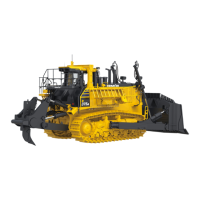
Set the towing machine and the towing connection of the
equipment being towed in a straight line when connecting it.
Take up the slack in the wire rope and tow the machine.
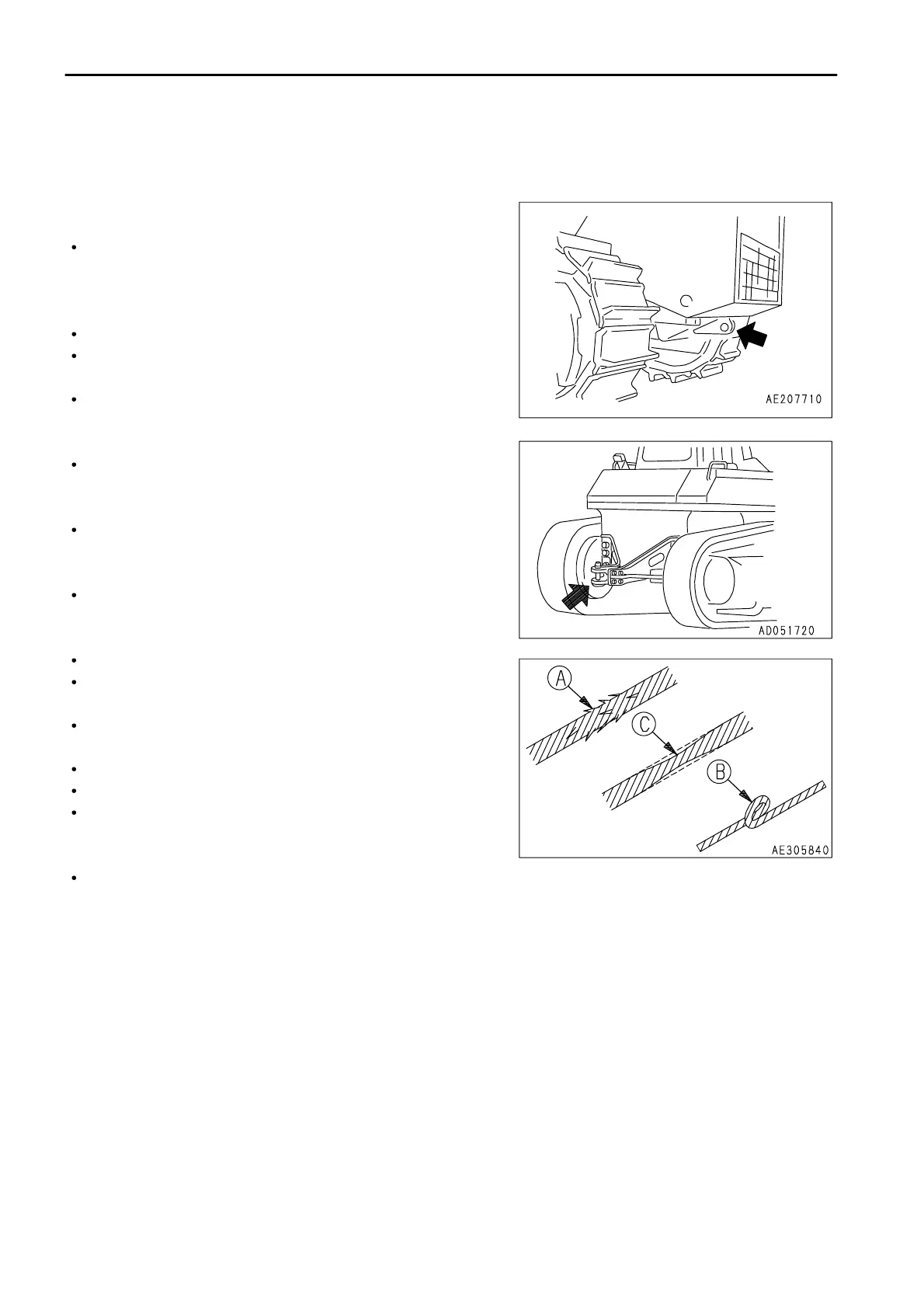
When lifting the machine up, use the towing hook.
If the machine is stuck in sandy soil, dig out the soil around the
towing hook, then use the towing hook to pull the machine out.
Permissible load for towing hook: 71500 kg (701180 N)
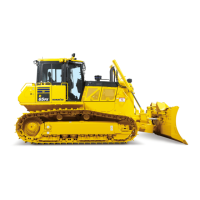
Do not use a broken (A), kinked (B) or frayed (C) wire rope.



 To Next Page