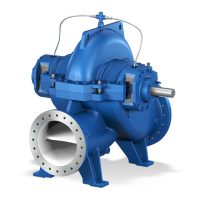
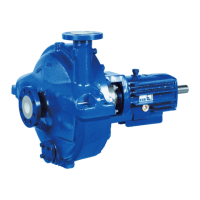
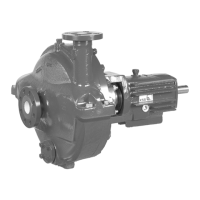
RDL
6
In any case, responsibility for compliance with the specified fluid temperature (operating temperature) lies with the
plant operator. The maximum permissible fluid temperature depends on the temperature class to be complied with.
Due to its design, temperature limit for pumps RDL could be acc. to temperature class T4 to EN 13463-1 and the resulting
theoretical temperature limit of the fluid handled is 120 ºC. In stipulating this temperature, any temperature rise in the shaft seal
area has already been taken into account.
Note: operation with liquids above 105 ºC is permitted only after KSB approval.
Safety note:
The permissible operating temperatures of the pump in question is indicated on the data sheet. If the pump is to
be operated at a higher temperature, the data sheet is missing or if the pump is part of a pool of pumps, the
maximum permissible operating temperature must be inquired from the pump manufacturer.
Based on an ambient temperature of 40ºC and proper maintenance and operation, compliance with temperature class T4 is
warranted in the area of the rolling element bearings.
A special design is required for compliance with temperature class T5 in the bearing area. In such cases, and if ambient
temperature exceeds 40ºC, contact the manufacturer.
2.9.6 Maintenance
Only a pump unit which is properly serviced and maintained in perfect technical condition will give safe and reliable
operation.
This also applies to the reliable function of the rolling element bearings whose actual lifetime largely depends on the operating
mode and operating conditions.
Regular checks of the lubricant and the running noises will prevent the risk of excessive temperatures as a result of bearings
running hot or defective bearing seals (also see section 7.3).
The correct function of the shaft seal must be checked regularly. Any auxiliary systems installed must be monitored, if
necessary, to make sure they function correctly.
Gland packings must be tightened correctly, to prevent excessive temperatures due to packing running hot.
3. Transport and interim storage
3.1 Transport
Transportation of the motor-pump assembly or only pump, should be performed with skill and good sense by trained personnel
observing safety regulations. Lift only motor with eyebolt, never use it to lift motor-pump assembly. In the pump upper casing
there are 2 hooks, which should be used only for disassembly and transport of this part. Do not transport the pump or motor-
pump assembly with these hooks.
The pump can be transported according to fig.2 by ropes or steel cables crossed in the neck of suction and discharge flanges.
For transportation of set with common baseframe for pump and motor (according to figure 3), in case of baseframe deformation
possibility, transport pump, motor and baseframe separately.
If the pump/unit slips out of the suspension arrangement, it may cause personal injury and damage to property!


 To Next Page