Why is my Landa vhp3-2000 making a loud knocking noise?
- AAdriana HahnSep 15, 2025
A loud knocking sound in your Landa Pressure Washer is often due to a pulley loose on the crankshaft. Check the key and tighten the set screw.
Why is my Landa vhp3-2000 making a loud knocking noise?
A loud knocking sound in your Landa Pressure Washer is often due to a pulley loose on the crankshaft. Check the key and tighten the set screw.
Why is there water leakage from under manifold on my Landa vhp3-2000?
If you notice water leakage from under the manifold of your Landa Pressure Washer, it is likely due to worn packing. To resolve this, install new packing.
Why is oil leaking in area of crankshaft on my Landa vhp3-2000 Pressure Washer?
If you notice oil leaking in the area of the crankshaft on your Landa Pressure Washer, it could be due to a worn crankshaft seal or an improperly installed oil seal O-ring. To fix this, remove the oil seal retainer and replace the damaged O-ring and/or seals. Another possible cause is a bad bearing, in which case you should replace the bearing.
How to fix water in crankcase of Landa vhp3-2000?
If you find water in the crankcase of your Landa Pressure Washer, there are a couple of potential causes. It could be due to humid air condensing into water inside the crankcase. To address this, change oil intervals and use any high-grade automotive 30 weight non-detergent oil. Alternatively, it could be due to worn packing and/or piston rod sleeve or worn O-rings on the plunger retainer. In this case, replace the packing and the O-rings.
Why is there water in the crankcase of my Landa Pressure Washer?
Water in the crankcase of your Landa Pressure Washer can be due to: * Humid air condensing into water inside the crankcase. Change oil intervals and use any high-grade automotive 30 weight non-detergent oil. * Worn packing and/or piston rod sleeve, or worn O-rings on the plunger retainer. Replace the packing and O-rings.
Why is the pressure low on my Landa Pressure Washer?
If your Landa Pressure Washer is experiencing low pressure, several factors could be the cause. A worn nozzle may be the culprit, so replace it with a nozzle of the proper size. Belt slippage can also lead to low pressure; in this case, tighten or replace the belt with the correct one. An air leak in the inlet plumbing could be the issue, requiring you to disassemble, reseal, and reassemble the plumbing. The relief valve might be stuck, partially plugged, or improperly adjusted, or the valve seat could be worn. Try cleaning and adjusting the relief valve, and check for worn or dirty valve seats. A kit is available for this. The inlet suction strainer might be clogged or improperly sized, so clean it, use an adequate size, and check it more frequently. Worn packing, abrasives in what's bein...
Why won't the pilot stay on in my Landa vhp3-2000?
If the pilot ignites but will not stay on when the gas cock dial is released on your Landa Pressure Washer, it could be: * The pilot is too far away from the thermocouple. Adjust the thermocouple closer to the flame. * The thermocouple is loose at the regulator safety valve. Tighten it to a firm fit.
Why is my Landa vhp3-2000 relief valve leaking water?
If the relief valve is leaking water on your Landa Pressure Washer, it could be due to: * The wrong nozzle size or debris in the nozzle. Clean or replace it with the correct nozzle.
What to do if there is noise in pump of Landa vhp3-2000 Pressure Washer?
If you notice unusual noise in the pump of your Landa Pressure Washer, it could be due to a broken or worn bearing. In this case, replace the bearing.
What to do if my Landa vhp3-2000 burner won't light?
If the burner on your Landa Pressure Washer won't light, there are several potential reasons: * Check if the gas valve is closed, and open it. * See if the pilot light is out and light it. * The high limit switch might be defective, in which case it should be replaced.
Explains the purpose and content of the Safety and Operations sections.
Explains the purpose and content of the Maintenance section.
Explains the purpose and content of the Parts List section.
Defines the owner's and user's obligations for safe operation and understanding instructions.
Stresses keeping the manual with the machine and specifying model/serial for parts.
Covers reading manual, knowing controls, electrical grounding, and avoiding water near electrical parts.
Addresses risks from flammable liquids, vapor fuel, and operating hot equipment.
Mandates PPE, hearing protection, warns about hot fluids and freezing.
Covers burn hazards from hot surfaces and secure wand gripping.
Addresses risks from high pressure and the need for trained operators.
Covers ventilation, floor type, clearances, operational restrictions, and maintenance.
Covers pump fluid compatibility and operating limits (no dry running).
Requires a back flow device if connected to potable water supply.
Do not spray machine or any people, animals or electrical parts.
Follow safe filling levels and proper use of service valves.
Perform leak tests and ensure tanks are securely positioned and protected.
Store safely, maintain exterior, use trained personnel for repairs, and dispose properly.
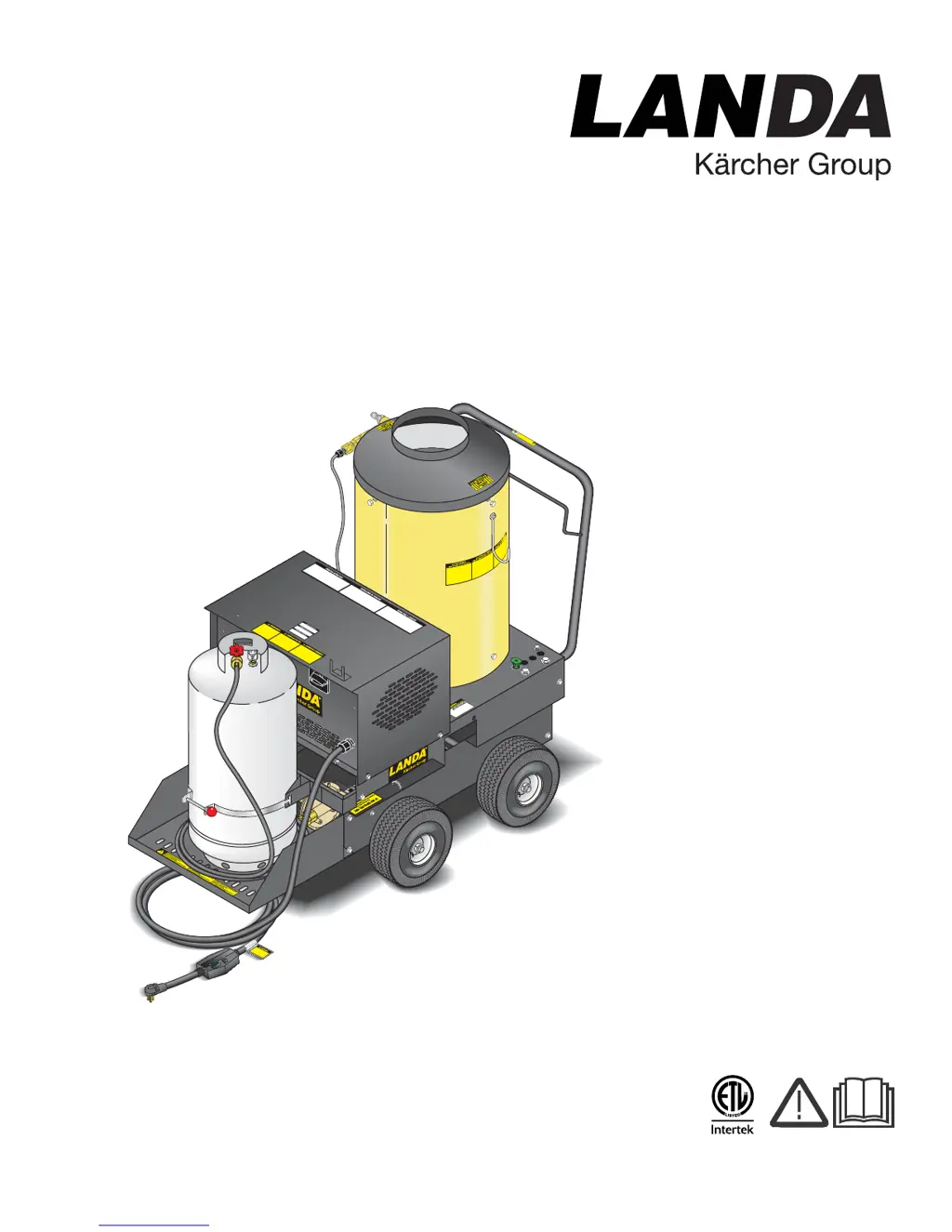
Identifies key parts of the pressure washer unit like switches, tanks, and holders.
Labels parts of the wand, spray gun, and associated nozzles.
Shows water supply, propane hose, high pressure hose, and fittings.
Covers selecting a convenient, level location protected from elements and with proper ventilation.
Addresses ventilation needs, gas codes, and installation compliance.
Covers water supply, electrical grounding, GFCI requirements, and venting.
Covers placement rules, water supply, gas shut-off valve, and coil condensation.
Describes procedures for inspecting the system and testing for gas leaks.
Covers connecting the wand, nozzle, hose, and spray gun.
A checklist of items to verify before starting, including coil leak checks.
Step-by-step guide for manually lighting the pilot light.
Steps to take if a gas odor is detected, including avoiding ignition sources.
Connect power cord and propane hose to their respective sources.
Connect high pressure hose to discharge nipple and spray gun.
Install detergent injector and check oil level.
Stop machine, turn switches off, position LP tank, and flush air from system.
Pull coupler collar, insert nozzle, and secure by pushing collar forward.
Adjust pressure by turning handle and select high/low pressure.
Depress control knob, depress igniter, repeat until pilot is lit and hold knob.
Set gas control to ON, then switch to pump/burner and pull trigger.
For cold water operation, turn handle clockwise to obtain pressure.
Apply detergent at low pressure, allow dwell time, then rinse at high pressure.
Pre-rinse, test area, keep nozzle distance, and use brush for stubborn dirt.
Do not use bleach, solvents, ammonia, or acids as they harm the machine.
Turn off pump/gas, close LP valve, secure tank, and flush detergent lines.
Turn water off, pull spray gun trigger to drain water from the system.
Squeeze spray gun trigger to relieve remaining pressure and engage safety latch.
Store in location below 32°F, detach hoses, drain gas/oil, avoid kinks.
Replenish oil, drain fuel, add oil to cylinder, cover and store in dry, ventilated room.
Thaw hoses before restarting and refer to engine manual for maintenance.
Ensure pump lubrication and flush detergent systems after each use.
Address mineral content, descale coils, and keep burner clean.
Maintain a clean area free of flammables and ensure clear airflow to the burner.
Follow cold weather procedures to prevent freeze damage to pump and coils.
Understand thermostat function, oil specs, and propane cylinder capacity.
Use SAE 10W-40 non-foaming oil and check level via dipstick or window.
Change oil after first 50 hours, then annually or every 500 hours.
Use the provided table to log oil changes and operating hours.
Addresses low pressure, rough operation, and related causes.
Details water leakage from manifold and oil leaks from crankshaft area.
Addresses loud knocking, noise in pump, and excessive play in crankshaft pulley.
Covers pump noise, water in oil, leaks, and vibration.
Troubleshoots burner not lighting, smoking, and pilot light issues.
Covers burner cycling on/off and washer not steaming.
Lists Landa VHP models and introduces the part numbering system.
Reference for part numbers specific to the VHP2-1500 model.
Reference for part numbers specific to the VHP3-2000 model.
Identifies parts of the left side chassis, electrical box, and tank.
Shows ignition, switches, panels, pump protector, and motor mounts.
Labels wheels, axle, and related support structures.
Shows burner ring assembly, coil, and related fittings.
Identifies frame parts, supports, pump unit, control handle, and trigger.
Shows propane system parts, ignition option, and wiring components.
Lists covers, labels, transformers, fuses, and control panels.
Details switches, GFCI plugs, warning labels, unloaders, and elbows.
Lists high pressure hose, swivels, and strainers.
Lists motors, pulleys, belts, and associated hardware.
Details propane regulator, hose, and propane tank parts.
Includes safety switches, ignition cables, and burner-related parts.
Lists ignition reflectors, piezo ignitors, and electrodes.
Details burner ring orifices, gas valves, and tubing.
Lists wheel assemblies, washers, nipples, unions, and pipe fittings.
Covers gas train supports, ignition brackets, and pilot components.
Details propane tank labels, fuel system parts, and burner components.
Lists hoses, bushings, strain relief, and jet orifices.
Identifies the high pressure nozzle and quick coupler parts.
Labels the spray gun handle, trigger, control, and detergent injector.
Shows the main high pressure hose and its connection points.
Lists injector assembly, couplers, and O-rings.
Includes hose, wand, and quick coupler parts.
Lists various high pressure nozzles by type and color.
Identifies crankcase, plunger seals, and oil seals.
Shows manifold, valve assemblies, and valve plugs.
Illustrates shafts, bearings, and provides torque specifications.
Lists valve seats, plates, springs, and cages.
Details seals, seal spacers, plungers, and rod components.
Lists components included in various repair kits for the pump.
Identifies the unloader body, outlet fitting, and associated parts.
Shows the unloader knob and adjustment stem components.
Lists components in repair kits and provides model information.
Procedure for removing components and adjusting pressure nuts.
Start machine, open trigger, turn adjustment knob clockwise to set pressure.
Adjusting nuts to prevent pressure 'spike' from exceeding 500 psi.
Shows the detergent injector and hose barb.
Identifies the hose clamp and clear vinyl tube.
Diagram showing part arrangement and specifying the model number.
Lists the non-adjustable detergent injector for 2-3 GPM.
Lists the hose clamp and clear vinyl tube.
Lists the 1/4" hose barb strainer.
Read instructions, ensure grounding, and avoid electrical hazards.
Warns about flammable liquids, gases, carbon monoxide, and electrical shock risks.
Ensures all installations comply with local codes and regulations.
Handle spray gun securely and do not replace propane tanks while operating.
Warns of high-pressure fluid penetration, fuel risks, and ventilation needs.
Procedure for detecting and responding to gas leaks.
Select a convenient location with proper support, drainage, and environmental protection.
Ensure adequate ventilation, combustion air, gas codes, and electrical requirements.
Connect hoses, wand, nozzle, and spray gun using specified fittings.
Check pipes for leaks, purge air, and disconnect for pressure testing.
Manual pilot ignition procedure, follow instructions strictly.
If gas odor is detected, take immediate safety actions.
Check safety, connect water/power, flush air, light pilot, and activate burner.
Adjust settings for cold water, hot water, and detergent application.
Safely shut down the machine and prepare for freezing conditions.
Maintain pump lubrication and follow winterizing steps to prevent freeze damage.
Flush detergent systems and descale coils to prevent buildup.
Address mineral content, fuel usage, and keep burner clean.
Procedure for periodic cleaning of coils to remove mineral deposits and soot.
Explains the relief valve's role in discharging excess pressure.
Considerations for propane cylinder capacity relative to burner demand.
Some detergents can be harmful if inhaled or ingested.
Connect injector, place suction tube, and apply detergent at low pressure.
Use low pressure for detergent application, then rinse with high pressure.
Labels major parts of the pressure washer unit.
Identifies components of hose, spray gun, wand, and connections.
Labels switches, controls, and safety devices like GFCI.
Explains the purpose and content of the Safety and Operations sections.
Explains the purpose and content of the Maintenance section.
Explains the purpose and content of the Parts List section.
Defines the owner's and user's obligations for safe operation and understanding instructions.
Stresses keeping the manual with the machine and specifying model/serial for parts.
Covers reading manual, knowing controls, electrical grounding, and avoiding water near electrical parts.
Addresses risks from flammable liquids, vapor fuel, and operating hot equipment.
Mandates PPE, hearing protection, warns about hot fluids and freezing.
Covers burn hazards from hot surfaces and secure wand gripping.
Addresses risks from high pressure and the need for trained operators.
Covers ventilation, floor type, clearances, operational restrictions, and maintenance.
Covers pump fluid compatibility and operating limits (no dry running).
Requires a back flow device if connected to potable water supply.
Do not spray machine or any people, animals or electrical parts.
Follow safe filling levels and proper use of service valves.
Perform leak tests and ensure tanks are securely positioned and protected.
Store safely, maintain exterior, use trained personnel for repairs, and dispose properly.
Identifies key parts of the pressure washer unit like switches, tanks, and holders.
Labels parts of the wand, spray gun, and associated nozzles.
Shows water supply, propane hose, high pressure hose, and fittings.
Covers selecting a convenient, level location protected from elements and with proper ventilation.
Addresses ventilation needs, gas codes, and installation compliance.
Covers water supply, electrical grounding, GFCI requirements, and venting.
Covers placement rules, water supply, gas shut-off valve, and coil condensation.
Describes procedures for inspecting the system and testing for gas leaks.
Covers connecting the wand, nozzle, hose, and spray gun.
A checklist of items to verify before starting, including coil leak checks.
Step-by-step guide for manually lighting the pilot light.
Steps to take if a gas odor is detected, including avoiding ignition sources.
Connect power cord and propane hose to their respective sources.
Connect high pressure hose to discharge nipple and spray gun.
Install detergent injector and check oil level.
Stop machine, turn switches off, position LP tank, and flush air from system.
Pull coupler collar, insert nozzle, and secure by pushing collar forward.
Adjust pressure by turning handle and select high/low pressure.
Depress control knob, depress igniter, repeat until pilot is lit and hold knob.
Set gas control to ON, then switch to pump/burner and pull trigger.
For cold water operation, turn handle clockwise to obtain pressure.
Apply detergent at low pressure, allow dwell time, then rinse at high pressure.
Pre-rinse, test area, keep nozzle distance, and use brush for stubborn dirt.
Do not use bleach, solvents, ammonia, or acids as they harm the machine.
Turn off pump/gas, close LP valve, secure tank, and flush detergent lines.
Turn water off, pull spray gun trigger to drain water from the system.
Squeeze spray gun trigger to relieve remaining pressure and engage safety latch.
Store in location below 32°F, detach hoses, drain gas/oil, avoid kinks.
Replenish oil, drain fuel, add oil to cylinder, cover and store in dry, ventilated room.
Thaw hoses before restarting and refer to engine manual for maintenance.
Ensure pump lubrication and flush detergent systems after each use.
Address mineral content, descale coils, and keep burner clean.
Maintain a clean area free of flammables and ensure clear airflow to the burner.
Follow cold weather procedures to prevent freeze damage to pump and coils.
Understand thermostat function, oil specs, and propane cylinder capacity.
Use SAE 10W-40 non-foaming oil and check level via dipstick or window.
Change oil after first 50 hours, then annually or every 500 hours.
Use the provided table to log oil changes and operating hours.
Addresses low pressure, rough operation, and related causes.
Details water leakage from manifold and oil leaks from crankshaft area.
Addresses loud knocking, noise in pump, and excessive play in crankshaft pulley.
Covers pump noise, water in oil, leaks, and vibration.
Troubleshoots burner not lighting, smoking, and pilot light issues.
Covers burner cycling on/off and washer not steaming.
Lists Landa VHP models and introduces the part numbering system.
Reference for part numbers specific to the VHP2-1500 model.
Reference for part numbers specific to the VHP3-2000 model.
Identifies parts of the left side chassis, electrical box, and tank.
Shows ignition, switches, panels, pump protector, and motor mounts.
Labels wheels, axle, and related support structures.
Shows burner ring assembly, coil, and related fittings.
Identifies frame parts, supports, pump unit, control handle, and trigger.
Shows propane system parts, ignition option, and wiring components.
Lists covers, labels, transformers, fuses, and control panels.
Details switches, GFCI plugs, warning labels, unloaders, and elbows.
Lists high pressure hose, swivels, and strainers.
Lists motors, pulleys, belts, and associated hardware.
Details propane regulator, hose, and propane tank parts.
Includes safety switches, ignition cables, and burner-related parts.
Lists ignition reflectors, piezo ignitors, and electrodes.
Details burner ring orifices, gas valves, and tubing.
Lists wheel assemblies, washers, nipples, unions, and pipe fittings.
Covers gas train supports, ignition brackets, and pilot components.
Details propane tank labels, fuel system parts, and burner components.
Lists hoses, bushings, strain relief, and jet orifices.
Identifies the high pressure nozzle and quick coupler parts.
Labels the spray gun handle, trigger, control, and detergent injector.
Shows the main high pressure hose and its connection points.
Lists injector assembly, couplers, and O-rings.
Includes hose, wand, and quick coupler parts.
Lists various high pressure nozzles by type and color.
Identifies crankcase, plunger seals, and oil seals.
Shows manifold, valve assemblies, and valve plugs.
Illustrates shafts, bearings, and provides torque specifications.
Lists valve seats, plates, springs, and cages.
Details seals, seal spacers, plungers, and rod components.
Lists components included in various repair kits for the pump.
Identifies the unloader body, outlet fitting, and associated parts.
Shows the unloader knob and adjustment stem components.
Lists components in repair kits and provides model information.
Procedure for removing components and adjusting pressure nuts.
Start machine, open trigger, turn adjustment knob clockwise to set pressure.
Adjusting nuts to prevent pressure 'spike' from exceeding 500 psi.
Shows the detergent injector and hose barb.
Identifies the hose clamp and clear vinyl tube.
Diagram showing part arrangement and specifying the model number.
Lists the non-adjustable detergent injector for 2-3 GPM.
Lists the hose clamp and clear vinyl tube.
Lists the 1/4" hose barb strainer.
Read instructions, ensure grounding, and avoid electrical hazards.
Warns about flammable liquids, gases, carbon monoxide, and electrical shock risks.
Ensures all installations comply with local codes and regulations.
Handle spray gun securely and do not replace propane tanks while operating.
Warns of high-pressure fluid penetration, fuel risks, and ventilation needs.
Procedure for detecting and responding to gas leaks.
Select a convenient location with proper support, drainage, and environmental protection.
Ensure adequate ventilation, combustion air, gas codes, and electrical requirements.
Connect hoses, wand, nozzle, and spray gun using specified fittings.
Check pipes for leaks, purge air, and disconnect for pressure testing.
Manual pilot ignition procedure, follow instructions strictly.
If gas odor is detected, take immediate safety actions.
Check safety, connect water/power, flush air, light pilot, and activate burner.
Adjust settings for cold water, hot water, and detergent application.
Safely shut down the machine and prepare for freezing conditions.
Maintain pump lubrication and follow winterizing steps to prevent freeze damage.
Flush detergent systems and descale coils to prevent buildup.
Address mineral content, fuel usage, and keep burner clean.
Procedure for periodic cleaning of coils to remove mineral deposits and soot.
Explains the relief valve's role in discharging excess pressure.
Considerations for propane cylinder capacity relative to burner demand.
Some detergents can be harmful if inhaled or ingested.
Connect injector, place suction tube, and apply detergent at low pressure.
Use low pressure for detergent application, then rinse with high pressure.
Labels major parts of the pressure washer unit.
Identifies components of hose, spray gun, wand, and connections.
Labels switches, controls, and safety devices like GFCI.
| Brand | Landa |
|---|---|
| Model | vhp3-2000 |
| Category | Pressure Washer |
| Language | English |
Loading...