41
SINGLE PASS HALF-BLIND DOVETAILS
Chapter 10Super Jig-12-18-24 User Guide
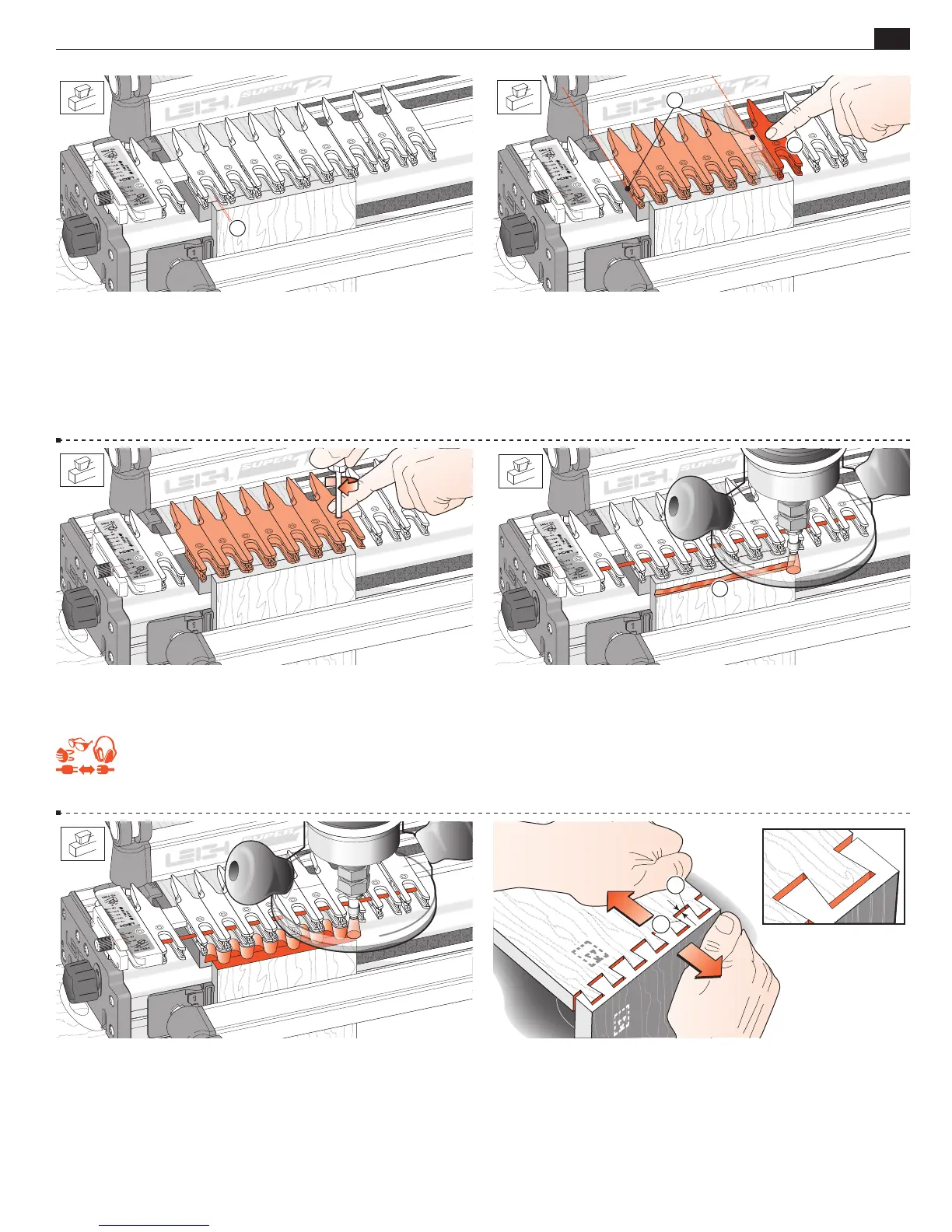
10 -14 With the scale set on
1
⁄2"[12,7mm], raise the finger assem-
bly about
1
⁄16"[2mm] above the drawer front
. The scale is always
set on the 1/2" mark when using the stop rod. See 10-26 for Drawer
Sides (Tail Boards) thicker than 5/8".
1
10 -15 Slide across enough guide fingers to cover the drawer
front width. Position fingers tight together and center the group
of fingers on the board
.
Depending on the exact board width, the outer fingers will either
overhang, be inside, or flush with the board edges. Now add one more
finger to the right of the group
for routing the drawer side.
1
2
10 -16 Tighten the finger’s screws. Move any spare fingers so
that they will support the router and tighten all loose fingers.
Lower the assembly flat onto the two work pieces.
REMEMBER SAFETY!
10 -17 Insert the Stop Rod through the fingers.
For the first light cut move the router from right to left. Make
sure you control it firmly, because it is driven in this direction
by the bit. Only the tip of the bit should be cutting on the first
cut
. This back, or climb routing, leaves a very clean shoulder
when routing side grain.
1
10 -18 Now rout in and out from left to right. Follow the guides
into each finger opening to touch the stop rod. The pins, tails and
sockets are formed simultaneously.
10 -19 Remove the boards and test the joint for fit. If the joint
is loose, as shown here, lower the bit by the same amount as the
gap at the bottom of the pins
when the pins are pulled against
the socket sides
. If the joint is too tight, raise the bit slightly.
Test again. You cannot rout the same board ends again with a
dovetail bit, so use two fresh ends for each test.
90
o
1
2


 To Next Page